

NYU Abu Dhabi scientists synthesize antibiotic that kills drug-resistant bacteria
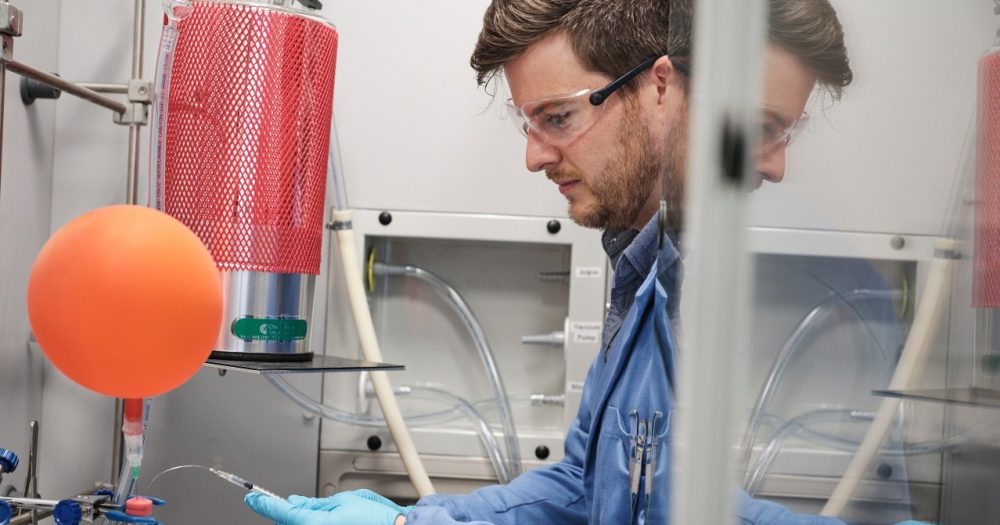
Antibiotic resistance kills more than a million people a year globally, and the pipeline of new drugs to address it has been thin for decades. So when researchers identify a compound that works against carbapenem-resistant bacteria, the medical community pays attention. A team at NYU Abu Dhabi has done exactly that, synthesizing an antibiotic called rhabdobranin in the laboratory and showing it can kill several strains of harmful bacteria, including carbapenem-resistant Klebsiella pneumoniae. Carbapenems are among the most powerful antibiotics in clinical use. When bacteria resist them, clinicians are often left with few good options.
The research, published in the Journal of the American Chemical Society, was led by postdoctoral scientist Woonkee Jo from the laboratory of Associate Professor of Chemistry Alan R. Healy. Jo, who completed his PhD at NYU Abu Dhabi before returning as a postdoctoral researcher, worked with collaborators from the Max Planck Institute for Terrestrial Microbiology, University Hospital Bonn, and the Chinese Academy of Sciences.
How does it work?
Rhabdobranin is a natural compound produced by Xenorhabdus, a genus of bacteria that lives inside parasitic worms which infect insects. Scientists had previously identified the genes responsible for producing it, but they could not isolate enough of the compound from natural sources to study it properly. The NYU Abu Dhabi team solved that problem by building rhabdobranin from scratch in the laboratory through total chemical synthesis.
That process revealed something important. The original published structure of rhabdobranin was wrong. A small structural difference, once corrected, turned out to have a significant effect on how well the compound kills bacteria. By identifying the correct structure, the team was able to pinpoint rhabdobranin's most active form. Laboratory tests then showed it kills bacteria by blocking protein synthesis, a process bacteria depend on to grow and survive. Without the ability to make proteins, the cells cannot function and die.
Why does it matter?
Klebsiella pneumoniae is not a pathogen on the margins. It causes pneumonia, bloodstream infections, and wound infections, and it is increasingly resistant to the drugs designed to treat it. Carbapenem-resistant strains, classified by the World Health Organization as a critical priority pathogen, are particularly dangerous in hospital settings where immunocompromised patients have little reserve to fight severe infection.
Rhabdobranin's activity against these strains gives researchers a new chemical scaffold to study. It is not a clinical drug yet, and the path from laboratory finding to approved medicine is long. But as Healy noted, this is a meaningful starting point. The study also demonstrates that genetic data from bacteria, even those living in obscure ecological niches like the gut of an insect-infecting worm, can point scientists toward compounds with real therapeutic value.
The context
For the Gulf region, this research carries specific weight. The UAE has invested heavily in building a domestic biomedical research base, with NYU Abu Dhabi, Khalifa University, and Mohamed bin Rashid University of Medicine and Health Sciences all expanding their scientific output as part of broader national strategies to reduce dependence on imported knowledge and technology. Abu Dhabi's position as a hub for international scientific collaboration, reflected here in the partnership with European and Chinese institutions, is central to that ambition.
Antimicrobial resistance is also a genuine public health concern across the GCC, where high rates of antibiotic use in clinical and agricultural settings have contributed to resistance patterns that worry infectious disease specialists. Research produced in the region that addresses this problem directly is the kind of output policymakers and health authorities have been pushing for. This study is one data point in that effort, but it's a credible one.
Latest @
Blueprint lands in the UAE as longevity moves from policy to product
M42 launches 10,000-patient wearable pilot in Abu Dhabi to reshape chronic disease care
Unilabs Middle East and Takalam link diagnostics to mental health in one app
Al Ghurair enters healthcare with Trellis Health launch in Dubai
💡Did you know?
You can take your DHArab experience to the next level with our Premium Membership.👉 Click here to learn more
🛠️Featured tool
 Easy-Peasy
An all-in-one AI tool offering the ability to build no-code AI Bots, create articles & social media posts, convert text into natural speech in 40+ languages, create and edit images, generate videos, and more.
👉 Click here to learn more
