

US neurorehabilitation firm Indoma opens in Dubai, bringing home-based brain recovery care to the UAE
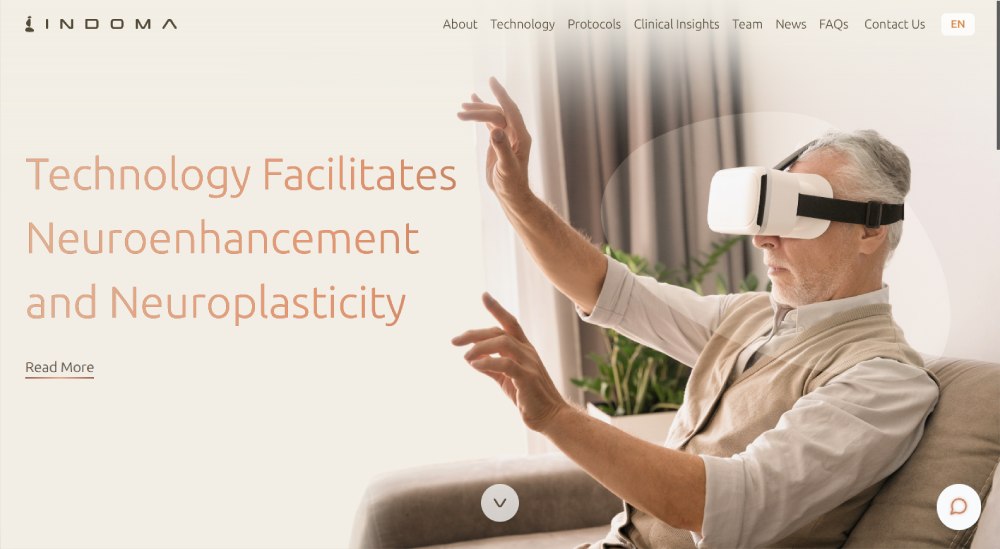
Most patients who survive a stroke or brain injury are discharged from hospital with a referral and a hope. What happens next is often inadequate, fragmented, or simply unavailable. Indoma, a US-based neurorehabilitation company, has launched operations in Dubai with a direct answer to that gap: intensive, technology-supported rehabilitation delivered inside the patient's own home, guided by a physician-led clinical team, and sustained well beyond the point where conventional programmes typically stop.
The company entered international markets earlier this year with a clinical programme in Santiago, Chile. Dubai is its second international market, and the UAE's combination of medical infrastructure, health-conscious policy environment, and patient population makes it a logical next step. Indoma's focus covers stroke recovery, mild traumatic brain injury, Parkinson's Disease, Multiple Sclerosis, and other neurological conditions.
Oren Schneider, Co-founder and Chief Executive Officer of Indoma, was direct about the founding logic. "Hospital discharge is a milestone, not the end of the rehabilitation journey," he said. "We built Indoma to give patients and families a clear path forward when the next step is uncertain." The company name draws on the word 'indomitable', a deliberate signal of the clinical philosophy behind it.
How does it work?
Following a physician-led assessment, Indoma builds a personalised care plan for each patient. That plan brings together medical oversight, a multidisciplinary rehabilitation team, and dedicated care coordination. The emphasis is on high-frequency, high-intensity, repetitive therapy delivered consistently over time — the conditions that neuroplasticity science identifies as necessary for meaningful recovery gains.
The company selects and deploys specific rehabilitation technologies chosen to support each patient's neurological profile. Care is provided at home, not in a clinic. So the environment is familiar, the schedule is organised around the patient's life, and progress is monitored on an ongoing basis by the clinical team.
- Physician-led intake assessment and personalised treatment planning
- Multidisciplinary rehabilitation across physical, cognitive, and neuromuscular function
- Technology-augmented therapy sessions delivered in the patient's home
- Dedicated care coordination and continuous clinical review
- Referral-based integration with the patient's existing medical team
Why does it matter?
Post-acute neurological rehabilitation has long been one of healthcare's most underdeveloped areas. Patients who do not qualify for inpatient rehabilitation, or who have been discharged after reaching what clinicians call a 'plateau', often receive little structured support. But the science behind neuroplasticity, the brain's capacity to adapt and relearn after injury, challenges the assumption that recovery has a fixed endpoint.
Dr. Teo Forcht Dagi, Neurosurgeon and Chairman and Chief Medical Officer of Indoma, put it clearly: "The brain's capacity to recover is not fixed, but can be activated and enhanced by high-frequency, high-intensity, repetitive input and consistent delivery." In the UAE, Dr. Dagi said Indoma intends to work as colleagues to existing neurologists, neurosurgeons, and rehabilitation physicians, and to meet the clinical governance standards expected of any academic centre. Dr. Dagi holds an appointment as Professor of Neurosurgery at the Mayo Clinic College of Medicine and Science.
Leading clinical delivery in Dubai is Dr. Nazakat Hussain, Indoma's UAE Medical Director. He is a locally based Consultant in Physical Medicine and Rehabilitation with over 30 years of experience across the UK and UAE, and also serves as Director of the Spinal Cord Injury Program and Clinical Lead for Neurorehabilitation at the Specialized Rehabilitation Hospital in Abu Dhabi.
The context
The UAE has invested heavily in building a healthcare system capable of handling complex, chronic, and neurological conditions. That investment is visible in Abu Dhabi's specialist rehabilitation infrastructure and in Dubai's growing network of tertiary care providers. Indoma's model is designed to complement, not compete with, that ecosystem. The company says it will build referral relationships with hospitals, physicians, and rehabilitation partners, working alongside the medical teams patients already know.
And the timing is relevant. Neurological conditions are among the fastest-growing contributors to disability-adjusted life years across the GCC, driven by an ageing population, rising rates of cardiovascular disease, and road traffic incidents. A model that extends recovery support into the home, and holds itself to academic clinical standards, fits the direction that Gulf health systems are heading. Indoma will begin accepting patients through referral or direct inquiry in the coming weeks.
Latest @
Blueprint lands in the UAE as longevity moves from policy to product
M42 launches 10,000-patient wearable pilot in Abu Dhabi to reshape chronic disease care
Unilabs Middle East and Takalam link diagnostics to mental health in one app
Al Ghurair enters healthcare with Trellis Health launch in Dubai
💡Did you know?
You can take your DHArab experience to the next level with our Premium Membership.👉 Click here to learn more
🛠️Featured tool
 Easy-Peasy
An all-in-one AI tool offering the ability to build no-code AI Bots, create articles & social media posts, convert text into natural speech in 40+ languages, create and edit images, generate videos, and more.
👉 Click here to learn more
