

Nokia’s Network as Code is replacing SMS passcodes in healthcare — and it could matter for the Gulf
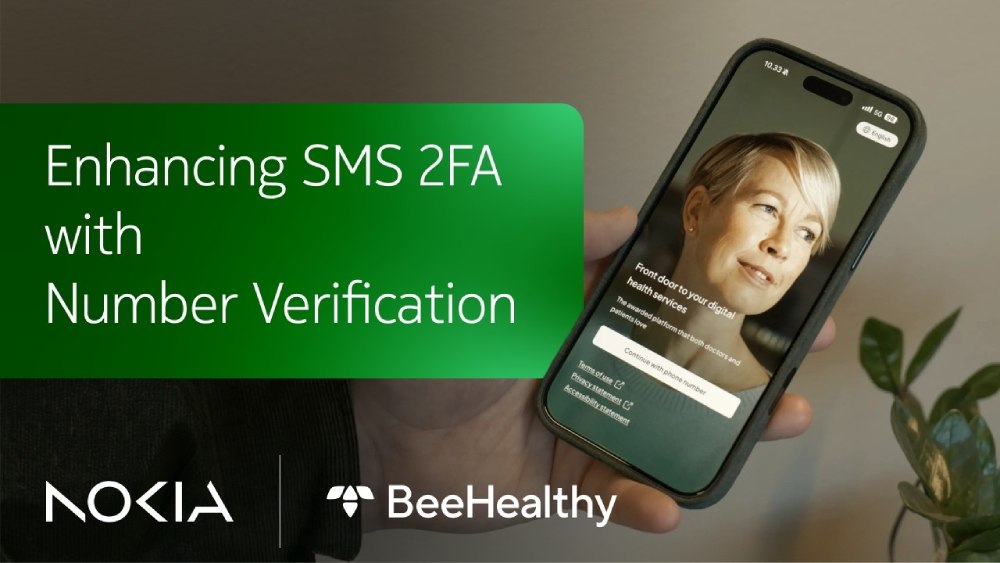
SMS one-time passcodes have long been the default security layer for digital health platforms. They are also, by most security standards, one of the weakest. Nokia is now working with BeeHealthy, a software platform used by healthcare providers across Europe and the Middle East, to replace that outdated mechanism with something considerably more reliable: network-level authentication built directly into the telecom infrastructure.
The partnership uses Nokia's Network as Code platform, which gives software developers direct access to telecom network capabilities through application programming interfaces, or APIs. For BeeHealthy, the result is a login experience that does not depend on a text message arriving, being intercepted, or being entered correctly. Authentication happens at the network layer, silently and with far greater security than a six-digit code sent to a phone.
This is not a minor technical update. Healthcare platforms are high-value targets for cyberattacks, and the Middle East has seen a sharp rise in health sector breaches over recent years. Any tool that reduces credential theft risk without adding friction for clinicians deserves attention from the region's health IT community.
How does it work?
Nokia's Network as Code is a developer-facing platform that exposes telecom capabilities, things like device location, SIM-based identity, and quality of service controls, as APIs that third-party software companies can integrate into their products. BeeHealthy has used one of these APIs, specifically SIM-based authentication, to verify user identity without sending a code via SMS. The telecom network itself confirms that the device attempting to log in is the registered device associated with that user's account. No code is typed. No message is intercepted. The verification is near-instant and invisible to the end user.
Why does it matter?
For healthcare providers, the security upside is clear. SIM-based authentication is significantly harder to spoof than SMS, which is vulnerable to SIM-swap attacks and basic phishing. But the business implications run wider than that. Nokia is positioning this as a monetizable enterprise use case for mobile operators, meaning telecom companies in the GCC and beyond can generate new revenue by opening their network APIs to health tech and other enterprise software developers. That's a meaningful shift in how operators think about their infrastructure, less as a pipe for data, more as a platform with billable capabilities. For GCC operators already under pressure to grow beyond connectivity revenues, that framing is worth taking seriously.
The context
This partnership fits into a broader industry push around network APIs, led in part by the GSMA's Open Gateway initiative, which Nokia's platform is aligned with. Across the GCC, digital health is a national priority. Saudi Arabia's Vision 2030 has placed health technology at the center of its economic diversification agenda, and the UAE has made interoperable, secure health data infrastructure a cornerstone of its health strategy. The adoption of telecom-native security tools by health platforms operating in the Middle East, like BeeHealthy, signals that the region is beginning to benefit from this infrastructure shift in concrete, clinical ways. So the question for regional operators and health IT leaders is not whether network APIs will reshape enterprise software security. It is whether they will be early participants in building that ecosystem or late adopters of it.
Latest @
Blueprint lands in the UAE as longevity moves from policy to product
M42 launches 10,000-patient wearable pilot in Abu Dhabi to reshape chronic disease care
Unilabs Middle East and Takalam link diagnostics to mental health in one app
Al Ghurair enters healthcare with Trellis Health launch in Dubai
💡Did you know?
You can take your DHArab experience to the next level with our Premium Membership.👉 Click here to learn more
🛠️Featured tool
 Easy-Peasy
An all-in-one AI tool offering the ability to build no-code AI Bots, create articles & social media posts, convert text into natural speech in 40+ languages, create and edit images, generate videos, and more.
👉 Click here to learn more
