

Merck and Moderna’s personalized cancer vaccine clears its first major late-stage trial
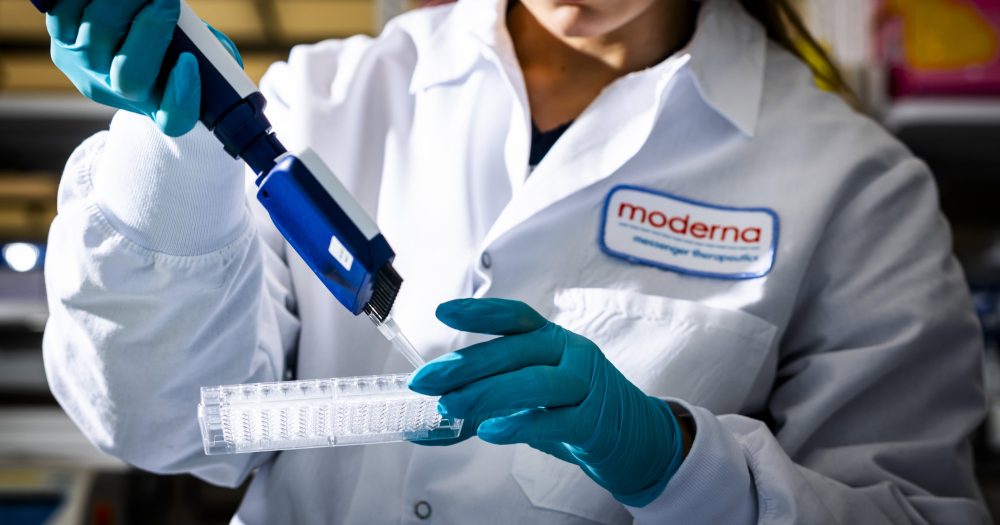
Moderna's stock doesn't move 150% on a quiet day. When it does, the medical world pays attention. On Wednesday, that move came on the back of Phase 3 trial results showing that a personalized mRNA cancer vaccine, developed jointly with Merck, significantly delayed the return of melanoma in patients who had already had their tumors surgically removed. It is the first time this type of individualized cancer vaccine has succeeded at this scale of clinical testing.
The trial enrolled more than 1,100 patients with higher-risk or advanced melanoma whose detectable cancer had been fully removed through surgery. Patients received either Merck's immunotherapy Keytruda alone, or Keytruda combined with the experimental mRNA vaccine. The combination met the trial's primary goal: patients who received it went significantly longer without their melanoma returning. The treatment also reduced the risk of the cancer spreading to other parts of the body.
Merck shares climbed more than 10% on the news. But the scale of Moderna's jump, from roughly $25 billion in market capitalization before the announcement, reflects just how much was riding on these results for the smaller company. As Leerink Partners analyst Mani Foroohar noted ahead of the data release, this Phase 3 readout was effectively a make-or-break moment for Moderna's valuation.
How does it work?
The vaccine is not a standard shot. Every tumor carries a unique set of genetic mutations, even among patients with the same cancer type. Rather than applying a fixed formula across all patients, the vaccine is designed around each individual's specific tumor mutations. The goal is to train the patient's immune system to recognize those unique markers and attack them. That targeted immune response is then combined with Keytruda, which works by releasing the brakes on the immune system and allowing it to fight cancer more effectively.
Merck's head of oncology early development, Dr. Jane Healy, described the results as a "clinically meaningful improvement" over Keytruda alone, and said the side effects were comparable to those seen with conventional vaccines. That tolerability finding matters. Patients with melanoma already face surgery and prolonged anxiety about recurrence. A treatment that adds meaningful protection without a severe side-effect burden changes the risk-benefit calculation significantly.
Why does it matter?
Melanoma accounts for only around 1% of all skin cancers, but it is responsible for the large majority of skin cancer deaths. Most recurrences happen within the first two to three years after initial treatment. So the window for post-surgical intervention is narrow, and the consequences of missing it are serious.
But the bigger story here is not melanoma alone. The results validate a personalized treatment model that Merck and Moderna have spent decades building. The companies are already studying the vaccine in trials for non-small cell lung cancer, bladder cancer, and renal cell carcinoma. A positive Phase 3 result in melanoma is the first real proof that this class of therapy can work at scale, and it opens the door to broader applications across cancer types.
The context
For the Gulf region, these results arrive at a moment of serious investment in oncology infrastructure. Saudi Arabia's Vision 2030 health strategy includes a significant push to expand cancer care capacity and reduce dependence on medical travel abroad. The UAE has made similar commitments through its national health agenda, with Abu Dhabi and Dubai both investing in genomics and precision medicine programs.
Personalized cancer vaccines sit squarely within the precision medicine model that GCC health authorities have been working toward. The clinical and regulatory pathway will unfold primarily in the US and Europe over the coming months, with Merck and Moderna expected to begin discussions with regulators soon. But the commercial and policy implications for this region are real. Health systems that have already invested in genomic sequencing infrastructure will be better positioned to adopt this class of therapy when it reaches approval.
Moderna CEO Stephane Bancel called the results "a big moment for medicine, a big moment for patients." That may be understating it. If this personalized approach holds up across additional cancer types, the implications for how oncology is practiced globally, including across the GCC, could be substantial.
Latest @
Blueprint lands in the UAE as longevity moves from policy to product
M42 launches 10,000-patient wearable pilot in Abu Dhabi to reshape chronic disease care
Unilabs Middle East and Takalam link diagnostics to mental health in one app
Al Ghurair enters healthcare with Trellis Health launch in Dubai
💡Did you know?
You can take your DHArab experience to the next level with our Premium Membership.👉 Click here to learn more
🛠️Featured tool
 Easy-Peasy
An all-in-one AI tool offering the ability to build no-code AI Bots, create articles & social media posts, convert text into natural speech in 40+ languages, create and edit images, generate videos, and more.
👉 Click here to learn more
