

GCC healthtech startups drew $148M in investment – and the region wants to build, not just buy
Saudi Arabia alone accounted for more than half of all healthtech funding deals across the GCC in the 18 months to July 2026. That single data point tells you something important about where Gulf healthcare is heading.
According to PitchBook data, 32 healthtech companies across five GCC markets secured a combined US$148 million in disclosed investment between January 2025 and July 2026. Saudi Arabia led with 17 funded companies; the UAE followed with 11. Deal activity held steady through the period, with 21 transactions closing in 2025 and a further 11 in the first half of 2026 alone. Investment flowed into digital health, telehealth, women's health and AI-driven diagnostics.
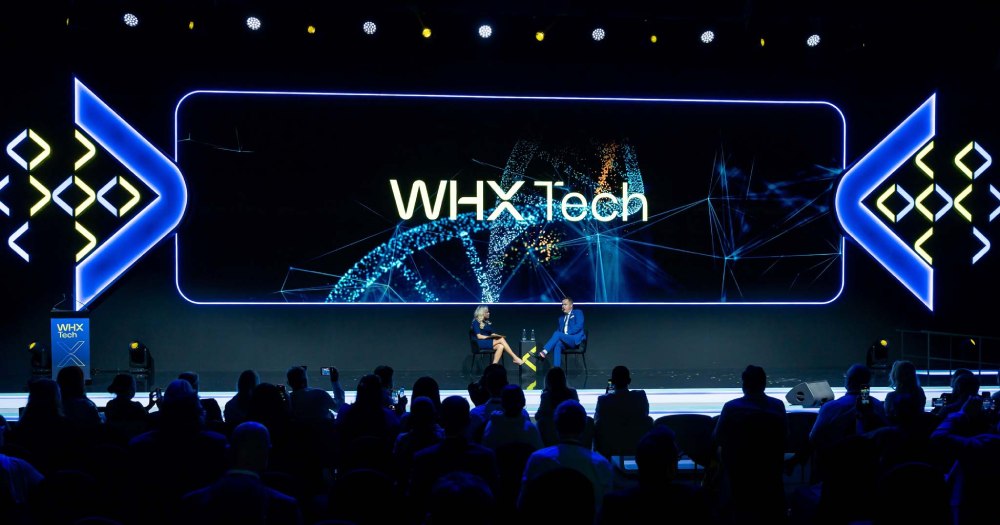
These figures will frame a significant part of the conversation at WHX Tech, the dedicated digital health and healthcare technology event running from 26 to 28 January 2027 at Dubai World Trade Centre. The event brings together startups, investors, healthcare leaders and technology companies, with programming built around data and AI, cybersecurity, connected care and digital health services.
The highlights
- US$148 million in disclosed healthtech investment across the GCC between January 2025 and July 2026, per PitchBook
- 32 companies funded across five GCC markets; Saudi Arabia led with 17 deals, the UAE with 11
- WHX Tech 2027 features an Investor Programme and the Xcelerate Startup Competition for emerging healthtech companies
- Canadian startup BioTwin, piloting virtual human twin technology with Cleveland Clinic Abu Dhabi, is among Xcelerate participants
- WHX Tech forms part of World Healthcare Week, drawing more than 5,000 digital health professionals and participants from over 30 countries
Why does it matter?
The investment numbers are notable, but the more significant shift may be qualitative. Tugce Ergul, Founding Partner of Hypernova Capital and a member of the WHX Tech Investor Programme, describes a change in regional ambition that goes well beyond capital flows.
"What excites me is that the GCC is starting to move from being a buyer of healthcare innovation to actually wanting to build it," Ergul said. "Historically, healthcare investment in the region focused on hospitals, healthcare delivery, drug imports, or the introduction of existing Western business models into the Middle East. That's changing quite quickly."
Ergul points to Abu Dhabi's growing capabilities in genomics, precision medicine, clinical research and health data, alongside Saudi Arabia's push into vaccines, biologics manufacturing and pharmaceutical localisation. These are not passive infrastructure plays. They reflect a deliberate effort to create scientific capacity, not just procurement capacity. "In biotech, capital alone doesn't build an ecosystem. You need patients, data, labs, regulators, manufacturing and researchers around the same table," she said.
Still, investment enthusiasm does not automatically translate into scaled companies. Danielle Brewin Graham, General Partner of Phoenix Fire Ventures and a WHX Tech advisory board member, identifies a consistent gap at the mid-stage. "There's often strong early-stage enthusiasm and government support, but a thinner bench of experienced operators who've scaled a company through Series A and beyond," she said. Platforms that pair operational experience with local capital and government relationships, she argues, are what close that gap fastest.
The context
The GCC's appeal to healthtech founders is speed. Regulatory sandboxes, government-backed pilot programmes and access to large institutional healthcare partners mean that founders can test and validate technologies far faster than in markets like North America or Europe, where the same process can take years. But Brewin Graham is clear that this advantage comes with conditions. Scaling across the region requires early engagement with regulators, governments and healthcare systems across markets that differ meaningfully in culture and compliance environment.
This is where events like WHX Tech play a practical role. The Xcelerate Startup Competition and Investor Programme are structured to connect early and mid-stage companies with the capital and institutional relationships that determine whether a technology moves from pilot to product. BioTwin's participation, bringing virtual human twin technology to breast cancer screening in partnership with Cleveland Clinic Abu Dhabi, is one illustration of how international founders are already engaging the region as a serious innovation partner, not just a market.
For GCC policymakers watching these trends, the investment data and the investor commentary both point in the same direction. The region's health transformation strategies, from Saudi Vision 2030's health sector targets to the UAE's push toward AI-enabled healthcare, are beginning to attract the kind of capital and company-building activity that gives those ambitions commercial substance. The next question is whether the mid-stage funding infrastructure catches up quickly enough to retain what the early stage is creating.
WHX Tech 2027 runs from 26 to 28 January at Dubai World Trade Centre as part of World Healthcare Week. More information is available at worldhealthexpo.com.
Latest @
Blueprint lands in the UAE as longevity moves from policy to product
M42 launches 10,000-patient wearable pilot in Abu Dhabi to reshape chronic disease care
Unilabs Middle East and Takalam link diagnostics to mental health in one app
Al Ghurair enters healthcare with Trellis Health launch in Dubai
💡Did you know?
You can take your DHArab experience to the next level with our Premium Membership.👉 Click here to learn more
🛠️Featured tool
 Easy-Peasy
An all-in-one AI tool offering the ability to build no-code AI Bots, create articles & social media posts, convert text into natural speech in 40+ languages, create and edit images, generate videos, and more.
👉 Click here to learn more
