

AI symptom checker matches and sometimes beats clinicians at differential diagnosis, major study finds
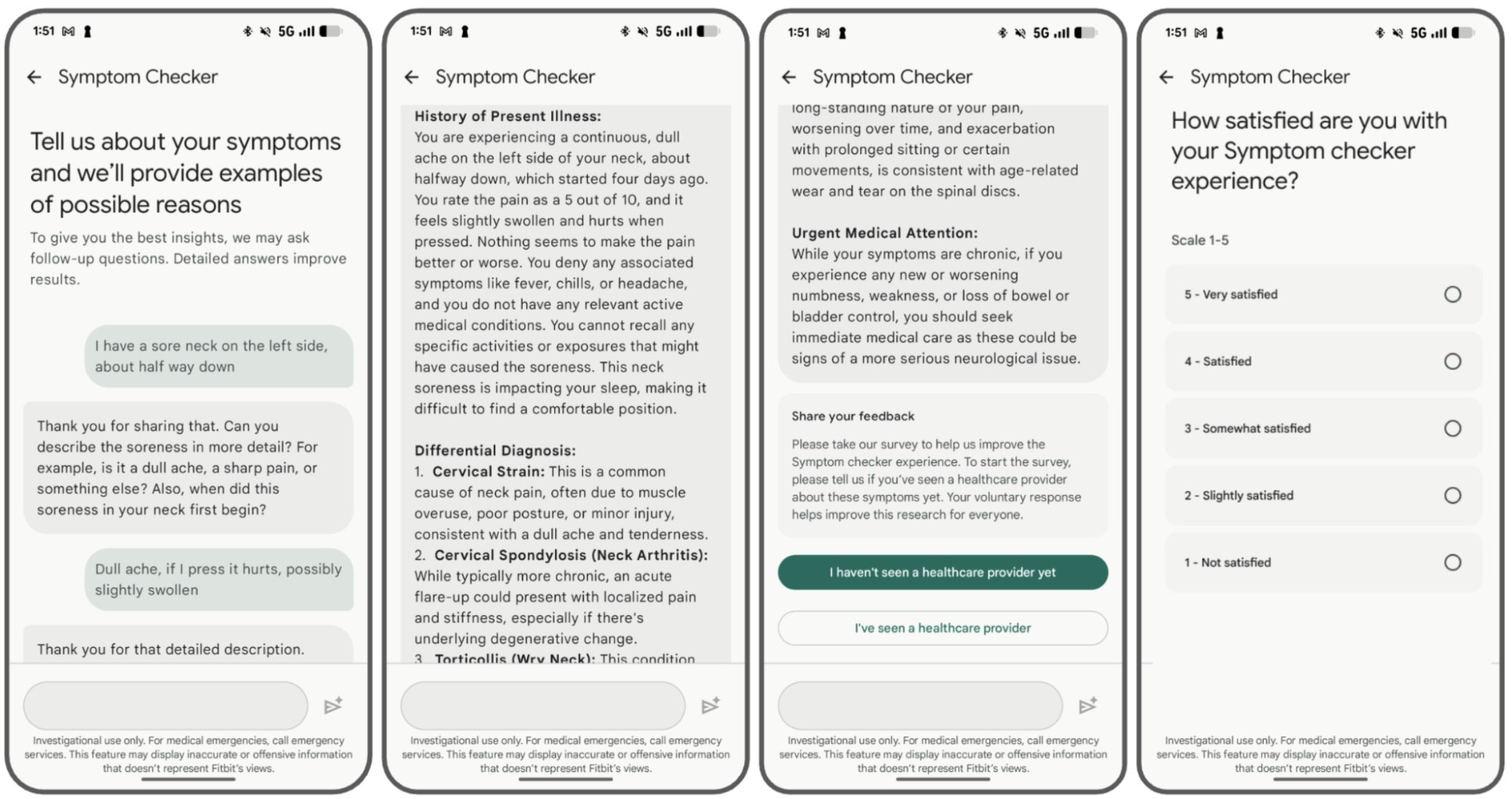
Board-certified clinicians preferred the AI's diagnostic output over their own colleagues' assessments in more than half of cases. That is not a minor footnote. It is the headline finding from one of the largest real-world evaluations of a conversational AI diagnostic tool ever conducted, and it has significant implications for how health systems, particularly those across the GCC, think about AI-assisted care.
Google Research published the study, titled "SymptomAI: Towards a Conversational AI Agent for Everyday Symptom Assessment," earlier this month. It was led by Joseph Breda and Jake Sunshine at Google Research and represents a departure from how AI diagnostic tools are usually tested. Most prior evaluations rely on carefully constructed clinical case vignettes, tidy, complete patient descriptions written by medical professionals. SymptomAI was tested on real people, describing real symptoms, in their own words.
The study enrolled 13,917 consenting participants across the United States. Each person had a live conversation with one of five versions of the SymptomAI agent, built on Google's Gemini Flash 2.0 model. After their conversation, participants were asked to see a healthcare provider and report back two weeks later with any diagnosis they received. That real-world clinical outcome became the benchmark against which the AI was measured.
How does it work?
Each participant described their symptoms to a SymptomAI agent, which then asked follow-up questions and produced a differential diagnosis list, essentially a ranked list of the most plausible conditions. The five agent variants tested different approaches to the clinical interview:
- Two "Dynamic" agents had full freedom to ask any follow-up questions they judged relevant
- Two "Canonical" agents worked from a fixed set of standard history-taking questions used in medical education
- One "Base" agent asked no follow-up questions at all, reflecting what happens when a user simply types symptoms into a general-purpose AI chatbot
A panel of three board-certified clinicians then reviewed the conversation transcripts, generated their own differential diagnoses independently, and ranked all outputs, including the AI's, without knowing which was which. The study also pulled in wearable biosignal data from participants' Fitbit devices in the 30 days before their interaction with SymptomAI, allowing researchers to cross-reference the AI's diagnostic conclusions against physiological patterns.
Why does it matter?
The results cut in several directions. First, SymptomAI's differential diagnoses were rated as more accurate by the clinical panel more often than those produced by the human clinicians themselves. Second, every agent-driven version of SymptomAI, including the most constrained canonical approaches, significantly outperformed the Base condition where the AI asked no questions. That finding alone carries a practical message: the quality of AI-assisted diagnosis depends on the quality of the conversation, not just the underlying model.
There is also a finding that will interest anyone working on AI tools for resource-limited settings. SymptomAI's advantage over human clinicians was largest precisely in the cases where clinicians felt least confident in their own assessments. So the AI was not just matching experts on easy cases. It was outperforming them on hard ones.
The biosignal correlation adds another layer. For participants whose conversations led to a diagnosis with an infectious disease cause, Fitbit data showed clear physiological shifts in the days before they reported symptoms, patterns consistent with an immune response. The researchers argue this demonstrates that an accurate, scalable symptom-checking system could eventually enable population-level analysis of wearable health data, something that is currently impractical because clinical labelling is too expensive and time-consuming to do at scale.
The context
For health leaders in the Gulf, this research arrives at a pointed moment. Saudi Arabia's Vision 2030 has placed digital health infrastructure at the centre of its healthcare transformation agenda. The UAE has made AI integration in health services an explicit national priority, with the Ministry of Health and Prevention already running several AI-assisted triage and diagnostics pilots. Across the GCC, governments are investing heavily in reducing the burden on primary care and improving health access in underserved or geographically remote communities.
A validated conversational AI that can conduct a clinical-quality symptom interview at scale is directly relevant to those goals. It is not a replacement for the physician. The study is careful on this point, and all AI outputs were for research purposes only. But it does suggest that AI-assisted triage, used appropriately, could extend the reach of clinical expertise to populations who currently face real barriers to accessing it. And in a region where expatriate communities, rural populations, and language diversity all complicate healthcare access, that matters.
The study has limitations. It was conducted in the United States, in English, with a population that had both internet access and a wearable device. Replication across Arabic-speaking populations, different health literacy levels, and GCC-specific disease patterns will be essential before any regional deployment could be responsibly considered. But as proof of concept, this is serious work. It sets a new standard for how AI diagnostic tools should be evaluated, and it raises the bar for what they might eventually be expected to do.
Latest @
Blueprint lands in the UAE as longevity moves from policy to product
M42 launches 10,000-patient wearable pilot in Abu Dhabi to reshape chronic disease care
Unilabs Middle East and Takalam link diagnostics to mental health in one app
Al Ghurair enters healthcare with Trellis Health launch in Dubai
💡Did you know?
You can take your DHArab experience to the next level with our Premium Membership.👉 Click here to learn more
🛠️Featured tool
 Easy-Peasy
An all-in-one AI tool offering the ability to build no-code AI Bots, create articles & social media posts, convert text into natural speech in 40+ languages, create and edit images, generate videos, and more.
👉 Click here to learn more
