

Google hands over Open Health Stack to the Linux Foundation
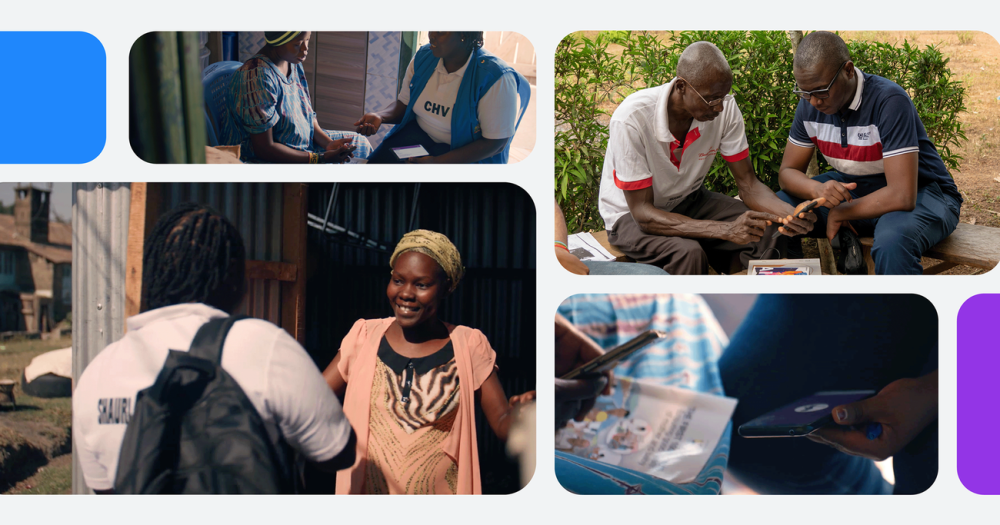
Around 4.6 billion people worldwide don't have access to basic health services. Mobile technology and AI could help close that gap, but the global digital health infrastructure is fragmented, which holds back progress, especially in places with limited resources.
To tackle this, Google Research and the World Health Organization launched Open Health Stack in 2023, a collection of open-source tools to help developers build digital health applications. Now Google is taking the next step: transferring the entire project to the Linux Foundation, which will use it to launch the Open Health Stack Software Foundation (OHS-SF).
The move puts the project in the hands of the broader global community rather than a single company. Google.org is also committing a $3 million grant to support the foundation's long-term growth.
How will it work?
The OHS-SF will be vendor-neutral and community-governed, meaning no single organization controls its direction. Alongside Google, several organizations have already expressed support for the foundation:
- The World Health Organization
- Anthropic
- Microsoft
- Endless Health
- PATH
- Regional health networks in Asia and Africa
The foundation's work is built around three pillars:
- FHIR foundations - the original Open Health Stack libraries, extended to make it easier to work with modern healthcare data standards
- A multi-platform toolkit - designed to reduce the time it takes to get health applications deployed
- AI commons - a shared space for collaborating on safe, effective AI projects in health
The foundation is also launching a program to let local startups, small businesses, and individual developers take part in its governance without any financial barriers. That's a meaningful detail: it means developers in low-income countries get a real seat at the table.
Why does it matter?
Open Health Stack already has a track record. Over the past three years, technical partners including Argusoft, Ona, IntelliSOFT, IPRD Solutions, KushiBaby, and Living Goods have used it to build and deploy health solutions across Sub-Saharan Africa, South Asia, and Southeast Asia.
Transferring ownership to a foundation makes those tools more durable. When a project lives inside one company, its future depends on that company's priorities. Under a neutral foundation, the tools can keep evolving even if Google's focus shifts. For governments and health organizations building long-term infrastructure on these tools, that kind of stability matters a lot.
The inclusion of an AI commons pillar also signals where this is heading. Health workers in low-resource settings need AI tools that are safe and actually work for their context, not just adapted from products built for high-income markets. A shared, community-driven space for that work could produce better outcomes than each organization building AI health tools in isolation.
The context
The Linux Foundation already hosts dozens of major open-source projects, including the Linux kernel itself, Kubernetes, and OpenSSF. Its governance model is well understood by the developer community, which makes it a sensible home for a project that needs global trust and participation.
The broader push to standardize digital health infrastructure around open standards like FHIR (Fast Healthcare Interoperability Resources) has been building for years. Governments, health ministries, and large NGOs have pushed for interoperability so that patient data and health apps can work across different systems and borders. Open Health Stack was designed with that goal in mind from the start, and the new foundation structure keeps that focus intact while opening participation to a much wider group of contributors.
For Google, the transfer also reflects a broader pattern in how large tech companies handle open-source projects with public-interest implications. Handing off to a neutral foundation reduces the perception of corporate control while keeping the company involved as a contributor and funder, which is often better for adoption in public sector and NGO contexts.
Latest @
75,000 samples in: inside Abu Dhabi's AI wastewater early-warning system
Dubai-founded Enhance raises $18.2 million to push deeper into US gym market
Saudi health minister signs MoU with Portugal in push to build global health partnerships
Neuratia Labs names ten fellows for its first global neuroscience research program
💡Did you know?
You can take your DHArab experience to the next level with our Premium Membership.👉 Click here to learn more
🛠️Featured tool
 Easy-Peasy
An all-in-one AI tool offering the ability to build no-code AI Bots, create articles & social media posts, convert text into natural speech in 40+ languages, create and edit images, generate videos, and more.
👉 Click here to learn more
