

Egypt’s health ministry explores tech partnership with Samsung Electronics
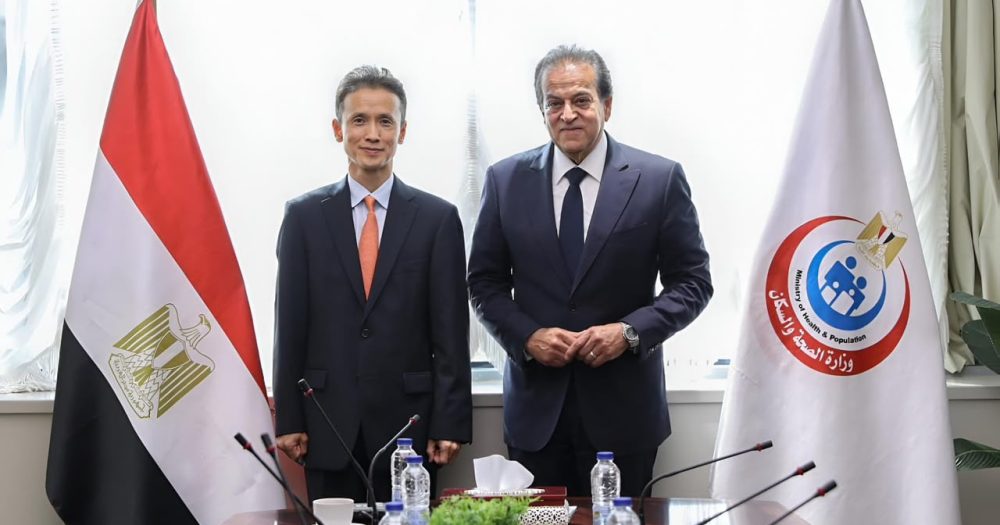
Egypt's Minister of Health and Population, Khaled Abdel Ghaffar, sat down with Byungmoo Shin, CEO and President of Samsung Electronics Egypt, to talk about deepening ties between the government and the tech giant on healthcare development.
The discussions covered three main areas: medical training, digital transformation, and modernising the country's training infrastructure. Egypt's Ministry of Health and Population confirmed the meeting in an official statement, describing it as part of a broader push to bring private sector expertise into the public health system.
No specific deals or agreements were announced, but the meeting signals that both sides are actively exploring what a formal partnership could look like.
How will it work?
Details are still thin, but the conversation centred on a few clear priorities:
- Expanding medical training programs, likely using Samsung's technology and devices
- Pushing digital tools further into Egypt's healthcare workflows
- Upgrading the physical and technical infrastructure used to train health workers
Samsung Electronics already has an established presence in Egypt, which gives this kind of public-private conversation a practical foundation rather than a speculative one.
Why does it matter?
Egypt has one of the largest populations in Africa and the Middle East, with over 105 million people. Improving healthcare delivery at scale requires more than funding. It requires better systems, better-trained staff, and technology that works reliably in high-demand environments.
Bringing a company like Samsung into that equation matters because the firm has experience rolling out health tech solutions in other markets, from hospital display systems to medical imaging support. If Egypt can structure a real partnership rather than a photo-opportunity meeting, there is genuine potential to speed up the country's digital health agenda.
The context
Egypt has been working to modernise its health sector for several years, partly through its Universal Health Insurance program, which is one of the most ambitious public health reforms the country has attempted. Digital infrastructure is a known weak point in that rollout.
Across the region, governments are increasingly turning to large technology companies to help close gaps in healthcare capacity. Saudi Arabia, the UAE, and Jordan have all signed similar cooperation agreements with major tech firms in recent years. Egypt's conversation with Samsung fits that wider pattern, even if it is still at an early stage.
Whether this meeting leads to something concrete will depend on what both sides agree to fund, build, and measure. For now, it is a signal of intent more than a done deal.
Latest @
Blueprint lands in the UAE as longevity moves from policy to product
M42 launches 10,000-patient wearable pilot in Abu Dhabi to reshape chronic disease care
Unilabs Middle East and Takalam link diagnostics to mental health in one app
Al Ghurair enters healthcare with Trellis Health launch in Dubai
💡Did you know?
You can take your DHArab experience to the next level with our Premium Membership.👉 Click here to learn more
🛠️Featured tool
 Easy-Peasy
An all-in-one AI tool offering the ability to build no-code AI Bots, create articles & social media posts, convert text into natural speech in 40+ languages, create and edit images, generate videos, and more.
👉 Click here to learn more
