

Google Pixel Watch 5 puts health monitoring and AI assistance on your wrist
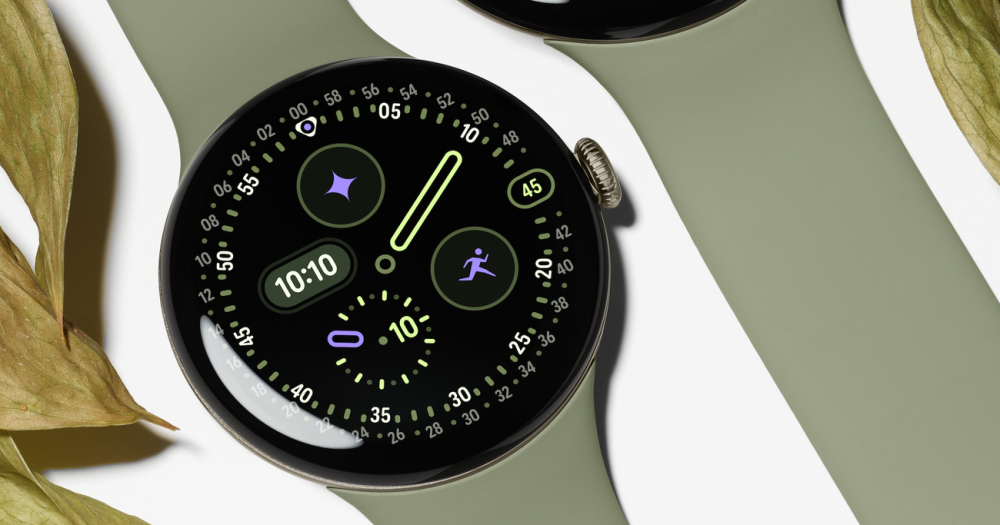
A smartwatch that can detect a breathing emergency and automatically call for help, even when you are unconscious, is no longer science fiction. With the Pixel Watch 5, Google is pushing wearable health technology into territory that blurs the line between consumer electronics and medical-grade monitoring. For a region where chronic disease rates are among the highest globally, and where governments from Riyadh to Abu Dhabi are investing heavily in preventive healthcare, that distinction matters.
What's new?
The Pixel Watch 5 arrives as a direct successor to Pixel Watch 4, carrying forward its design language while introducing significant upgrades across health monitoring, AI assistance, and hardware performance. The chip powering it is the Qualcomm Snapdragon W5 Gen 2 Accelerated processor, giving the watch 50% more RAM and a 12% CPU boost over its predecessor, translating to roughly 20% faster overall performance.
The headline health feature is Breathing Emergency Detection, described by Google as an industry first for wrist-worn devices. Using a combination of PPG sensors, an accelerometer, and a barometer, the watch continuously monitors blood oxygen saturation. If it detects a severe, persistent drop in oxygen levels, and the wearer is unresponsive, the watch automatically contacts emergency services and transmits the wearer's exact location. Google says this can cover scenarios including drug toxicity, severe pneumonia, and choking. The feature launches first in Europe, with broader availability expected to follow.
Beyond emergency response, three new monthly health trend summaries are rolling out through the Google Health app:
- Blood pressure trends, tracked passively over time
- Sleep breathing quality trends, aimed at identifying respiratory disruptions during sleep
- Insulin resistance trends, a feature with clear relevance given the Gulf's elevated rates of Type 2 diabetes
These summaries are built on what Google calls Health Foundation Models, trained on billions of minutes of sensor data from opted-in users and validated against clinical measurements. Your first detailed summary appears after one month of continuous wear.
On the fitness side, GPS accuracy has improved significantly. Google claims 2x greater precision compared to previous Pixel Watch generations in challenging environments, including dense urban areas with tall buildings. The company applied technology from Google Maps to trace satellite signals through 3D building models and integrated data from a global network of atmospheric reference stations. Google says the result outperforms Apple Watch Ultra 3 and Garmin Fenix 8 Pro in GPS route accuracy, a bold claim that independent testing will need to verify.
Sleep tracking also sees an upgrade, with 15% more accurate sleep stage detection. A new Smart Wake feature monitors heart rate and movement in the 30 minutes before your alarm and wakes you during a lighter sleep phase, the idea being that you feel more alert when you rise. Bedtime automations include pausing audiobooks when the watch detects you have fallen asleep.
The Gemini AI assistant is more embedded here than in any previous Pixel Watch. Raise to Talk allows wrist-lifted voice commands, processed on-device for low latency even offline. Proactive Suggestions from Gemini surface relevant information without being asked, pulling from your calendar, Gmail, and other Google services to display it directly on the watch face.
Why does it matter?
Across the GCC, non-communicable diseases including diabetes, cardiovascular conditions, and sleep disorders represent a major public health challenge. Saudi Arabia's Vision 2030 and the UAE's National Agenda both place preventive health and digital health infrastructure at the center of their long-term strategies. Tools that can flag insulin resistance trends, identify sleep breathing abnormalities, or trigger emergency response autonomously are aligned with exactly the kind of early-intervention model these governments are trying to build.
The insulin resistance trend tracking is particularly worth noting in this context. The Gulf has some of the highest rates of Type 2 diabetes and metabolic syndrome in the world. A wearable that gives users a monthly read on how their body is managing glucose, without a blood draw or clinic visit, could support public health goals in ways that a standard fitness tracker cannot.
So the Pixel Watch 5 is not just a faster, smarter watch. It is part of a broader shift in how health data is collected, interpreted, and acted upon outside of a clinical setting.
The context
Google is not alone in this space. Apple has been expanding health features on the Watch Series for several years, and Samsung's Galaxy Watch line has made similar moves with blood pressure and ECG monitoring. But the Pixel Watch 5 represents Google's most direct attempt to position its wearable as a health platform, not just a notification screen on your wrist.
The monthly trend summaries, in particular, suggest a longer-term relationship between user and device. Rather than real-time alerts alone, Google is building toward longitudinal health monitoring, where the watch learns your baselines over weeks and flags deviations. That model is closer to how preventive medicine actually works.
Pricing and full regional availability have not yet been confirmed for GCC markets. The watch comes in 41mm and 45mm sizes, with up to 30 and 40 hours of battery life respectively, and features a 3,000-nit display rated for outdoor visibility. Monthly health trend summaries will also be available on other Google wearables, including the new Google Fitbit Air, extending the platform beyond the Pixel Watch line.
Latest @
Blueprint lands in the UAE as longevity moves from policy to product
M42 launches 10,000-patient wearable pilot in Abu Dhabi to reshape chronic disease care
Unilabs Middle East and Takalam link diagnostics to mental health in one app
Al Ghurair enters healthcare with Trellis Health launch in Dubai
💡Did you know?
You can take your DHArab experience to the next level with our Premium Membership.👉 Click here to learn more
🛠️Featured tool
 Easy-Peasy
An all-in-one AI tool offering the ability to build no-code AI Bots, create articles & social media posts, convert text into natural speech in 40+ languages, create and edit images, generate videos, and more.
👉 Click here to learn more
