

UAE performs its first balloon pulmonary angioplasty, ending a patient’s decade-long battle to breathe
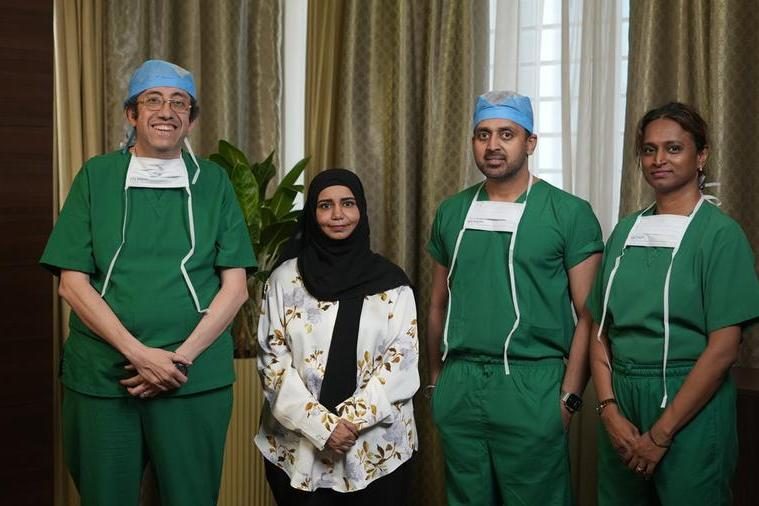
For 11 years, Sara Al Matari struggled to breathe. A rare condition called Chronic Thromboembolic Pulmonary Hypertension, or CTEPH, had left chronic blood clots blocking the arteries in her lungs, putting her heart under constant strain. She had open-heart surgery. She flew to the UK for a highly specialized procedure. Yet she still returned home with residual blockages that left her breathless walking with her children or finishing a shift at work.
That changed in July 2026, when doctors at Medcare Hospital Sharjah performed the UAE's first advanced Balloon Pulmonary Angioplasty, a minimally invasive technique that opened the blocked vessels in her lungs without the need for another major operation. The procedure took place without complications, and Al Matari was walking within 24 hours.
The case marks a turning point not just for one patient, but for how the UAE handles a condition that has historically forced patients to seek treatment abroad. Until now, UAE residents needing this specific procedure had to travel to specialized centers in the UK or the United States.
How did it work?
Balloon Pulmonary Angioplasty, or BPA, is a catheter-based procedure. Surgeons access the body through a small point in the leg, then thread a thin tube carrying a tiny balloon up into the pulmonary arteries. Once in position, the balloon is inflated to open narrowed or blocked sections of the artery and restore blood flow to the lungs.
The procedure was led by Dr. A.B. Gopalamurugan, a structural interventional cardiologist at Medcare Hospital Sharjah. He explained that BPA requires specialized expertise, advanced imaging, and a coordinated team, which is why only a handful of centers worldwide have historically offered it.
Al Matari's case was particularly complex:
- She had already undergone major open-heart surgery after her initial diagnosis
- She had also had a pulmonary thromboendarterectomy in the UK in 2017, which gave partial improvement
- The remaining blockages were in smaller blood vessels, making another major surgery too risky
The team confirmed an immediate drop in lung pressure during the procedure itself, a sign the treatment was working. Al Matari remained awake throughout. She was discharged shortly after being able to walk unassisted the following day.
Her care involved multiple specialists, including Dr. Hani Sabbour, who had managed her condition for nearly a decade, and Dr. Yogeeswari Vellore Satyanarayanan, who leads the cardiology and pulmonary hypertension unit at the hospital.
Why does it matter?
CTEPH is rare, but it is also the only form of pulmonary hypertension that can potentially be cured. That distinction matters, because pulmonary hypertension is frequently misdiagnosed. Its main symptom, breathlessness, is easy to attribute to more common conditions, meaning many patients go years without the right diagnosis.
Dr. Jishan Madathil, Chief Operating Officer at Medcare Hospitals Sharjah Cluster, put it plainly: patients who needed BPA had no choice but to travel abroad. That added cost, logistical complexity, and stress on top of an already serious illness.
Having the procedure available locally means:
- Patients no longer need to organize treatment trips to Europe or the US
- Follow-up care and monitoring can happen at the same facility
- The UAE's capacity to diagnose and manage complex pulmonary hypertension cases improves overall
Al Matari said she can already feel the difference. "Breathing has become easier, and I feel more optimistic about the future," she said. Full assessment of long-term outcomes will take a few more months.
The context
Pulmonary hypertension refers to high blood pressure specifically in the arteries that supply the lungs. CTEPH is a subset caused by blood clots that don't dissolve properly, scar the arterial walls, and progressively restrict blood flow. Left untreated, the condition puts increasing pressure on the right side of the heart and can lead to heart failure.
BPA was developed as an alternative for patients who either cannot tolerate open surgery or have blockages in vessels too small to reach surgically. The technique has been refined primarily in Japan and at a small number of European and American centers over the past decade, and clinical outcomes have improved significantly as expertise has grown.
The UAE's healthcare sector has been investing heavily in bringing complex, high-specialty procedures onshore rather than relying on medical travel. This case fits that broader pattern. Medcare Hospital Sharjah is part of Medcare, a private hospital group operating under Aster DM Healthcare, one of the larger healthcare companies in the Gulf region.
Doctors at the hospital are also stressing the importance of early referral. Patients who experience unexplained breathlessness, especially with a history of blood clots in the lungs, are being encouraged to seek specialist evaluation rather than assuming a more common cause.
Latest @
Blueprint lands in the UAE as longevity moves from policy to product
M42 launches 10,000-patient wearable pilot in Abu Dhabi to reshape chronic disease care
Unilabs Middle East and Takalam link diagnostics to mental health in one app
Al Ghurair enters healthcare with Trellis Health launch in Dubai
💡Did you know?
You can take your DHArab experience to the next level with our Premium Membership.👉 Click here to learn more
🛠️Featured tool
 Easy-Peasy
An all-in-one AI tool offering the ability to build no-code AI Bots, create articles & social media posts, convert text into natural speech in 40+ languages, create and edit images, generate videos, and more.
👉 Click here to learn more
