

Tiny Health raises $33 million to push microbiome science into mainstream medicine
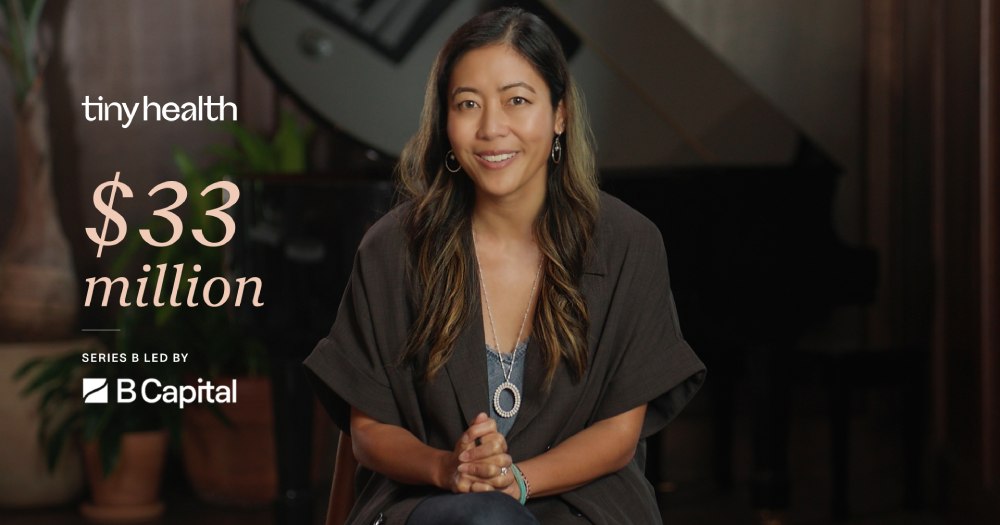
An interventional trial that reduced infants' odds of developing eczema by 83%. That single finding, published in Pediatric Allergy and Immunology in 2025, tells you more about where Tiny Health sits in the microbiome field than any funding announcement could. And now, with a $33 million Series B round closed and a $5 million research program launched alongside it, the Austin-based company is moving to turn that kind of evidence into the foundation of a much larger clinical operation.
The round was oversubscribed and led by B Capital, with existing investors Spero Ventures, The Venture City, and Overwater Ventures returning, and new names including Black Opal Ventures, Denver Ventures, Pave Health Ventures, Alumni Ventures, Gaingels, and Pari Passu Ventures coming in. Total funding now stands at $46 million. Nick Whitehead, Senior Principal at B Capital, will join the Tiny Health board.
Tiny Health was founded in 2020 by Cheryl Sew Hoy, who built the company initially to address her own family's health needs. It launched commercially in 2022 with the first gut microbiome test for babies, built on shotgun metagenomic sequencing, alongside gut and vaginal microbiome testing for mothers. The science behind the product is grounded in what researchers call the first 1,000 days of life, the period when the gut microbiome is most changeable and its influence on long-term immune health is most significant. Today, the platform has nearly 200,000 customers and more than 6,000 healthcare practitioners across hospitals, longevity clinics, and precision medicine organisations.
How does it work?
Tiny Health uses shotgun metagenomic sequencing, which the company describes as the gold standard in microbiome analysis, to detect microbes across more than 120,000 genomes down to the strain level. The platform surfaces data on metabolic capacity, immune markers, and pathogenic organisms, among other factors. Critically, the company owns its full in-house bioinformatics pipeline, which gives it direct control over how samples are processed and interpreted.
The capital will go toward advancing clinical research, expanding education for healthcare practitioners, and scaling its B2B offering called Powered by Tiny. That platform grew fourfold last year and now counts enterprise partners including Fullscript, Mayo Clinic's Executive Health and Longevity Programs, Atria Institute, and Superpower.
Central to the next phase is TinyAI, an artificial intelligence system trained on the company's proprietary dataset of nearly 200,000 microbiome profiles. The system is designed to deliver personalised, evidence-based guidance tied directly to a user's test results. As the dataset grows, the guidance sharpens. It's a feedback loop built on real clinical data, not generic health advice.
The new Microbiome Research Program, backed by $5 million, will open Tiny Health's testing infrastructure, data, and research capabilities to external researchers, clinicians, and scientific partners. Active research areas include inflammatory bowel disease, menopause, GLP-1 drug response, and oncology.
Why does it matter?
The numbers behind the market context are striking. According to the CDC and JAMA data from 2025, 75% of US adults and 45% of US children are living with at least one chronic condition. The gut microbiome is increasingly understood to be connected to immune function, metabolism, and the development of those chronic conditions. But the gap between published science and actual clinical practice remains wide.
Tiny Health's published randomised controlled trial, the only one in the gut microbiome testing space, is a meaningful differentiator. Most companies in this category sell testing without the clinical evidence to back specific interventions. With four published papers, a second RCT underway, and collaborations with Stanford Medicine, Mayo Clinic, and Massachusetts General Hospital, Tiny Health is building the kind of evidence base that payers, hospital systems, and regulators actually respond to.
Adult testing has now surpassed pediatric testing in volume on the platform, which reflects a deliberate expansion toward longevity and healthy ageing. New tools including Gut Microbiome Age, Gut Resilience, and Gut Body Connections position the microbiome not as a standalone metric but as part of a broader biological picture.
The context
For health policymakers and business leaders across the GCC, this funding round is worth watching for reasons that go beyond the company itself. Saudi Arabia's Vision 2030 has placed preventive healthcare and precision medicine at the centre of its health sector ambitions. The UAE has similar priorities embedded in its national health strategy, with significant investment flowing into genomics, AI-driven diagnostics, and personalised care. Microbiome science sits squarely at that intersection.
Regional health systems are grappling with some of the highest rates of metabolic disease, obesity, and diabetes in the world. These are conditions where gut health research is generating real, peer-reviewed evidence of relevance. A platform that translates microbiome data into clinical guidance, backed by a growing body of interventional trial data, is exactly the kind of precision health infrastructure that GCC healthcare planners have said they want to build or attract.
Tiny Health is not yet operating in the Gulf. But as the company scales its B2B platform and builds out its research partnerships, the conditions for regional collaboration, whether through enterprise health programmes, longevity clinics, or academic partnerships, are becoming more visible. The microbiome field is still early. But the evidence base is growing fast, and the companies building rigorous methodology now will be the ones positioned to define clinical standards later.
Latest @
Blueprint lands in the UAE as longevity moves from policy to product
M42 launches 10,000-patient wearable pilot in Abu Dhabi to reshape chronic disease care
Unilabs Middle East and Takalam link diagnostics to mental health in one app
Al Ghurair enters healthcare with Trellis Health launch in Dubai
💡Did you know?
You can take your DHArab experience to the next level with our Premium Membership.👉 Click here to learn more
🛠️Featured tool
 Easy-Peasy
An all-in-one AI tool offering the ability to build no-code AI Bots, create articles & social media posts, convert text into natural speech in 40+ languages, create and edit images, generate videos, and more.
👉 Click here to learn more
