

Saudi Arabia becomes one of the first countries to approve a device that monitors glucose and ketones simultaneously
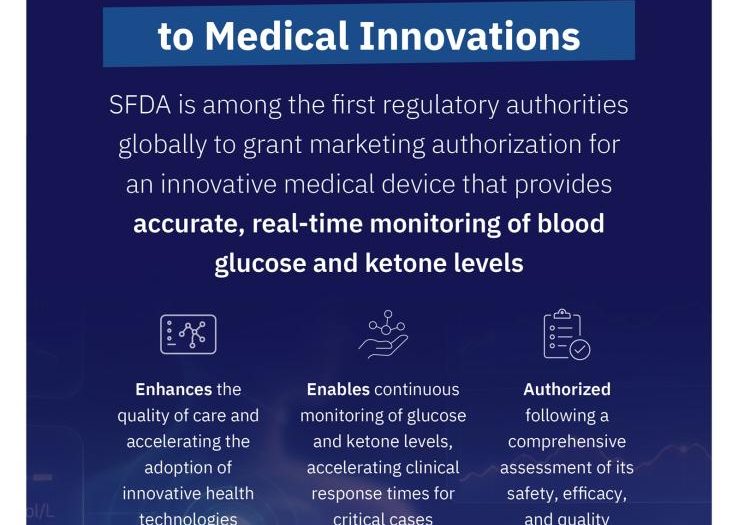
Diabetic ketoacidosis kills. It is one of the most dangerous acute complications of diabetes, and it can develop quickly, often before a patient or clinician has time to react. So when a device comes along that can monitor both blood glucose and ketone levels continuously and in real time, around the clock, that is worth paying attention to. Saudi Arabia's Food and Drug Authority, the SFDA, has just become one of the first regulatory bodies in the world to authorize one.
The approval was issued under the SFDA's Innovative Medical Devices Pathway, a dedicated fast-track route created to bring advanced health technologies to the Saudi market without compromising on safety or clinical evidence. The device, a first of its kind in the Kingdom, uses next-generation biosensor technology to deliver simultaneous, continuous readings of both glucose and ketone levels. No switching between tests, no separate strips, no delay.
How does it work?
The device is a wearable continuous monitor built on biosensor technology that tracks two biomarkers at once. Traditional continuous glucose monitors, or CGMs, measure glucose only. This device adds real-time ketone tracking to that feed, giving clinicians and patients a more complete picture of metabolic status at any given moment. The SFDA's review covered full technical and clinical documentation, safety and performance data, and verified clinical trial results before authorization was granted.
- Continuous, real-time monitoring of blood glucose levels
- Simultaneous tracking of ketone levels around the clock
- Early detection of physiological changes linked to diabetic ketoacidosis
- Support for faster clinical decision-making in high-risk patients
- Designed for use by both patients and healthcare providers
Why does it matter?
Diabetic ketoacidosis, or DKA, is dangerous because it often progresses fast. By the time ketone levels are high enough to cause symptoms, the patient may already be in serious trouble. A device that catches the early signs of both elevated glucose and rising ketones in real time gives clinicians a meaningful head start. That is not a small thing in emergency and intensive care settings, where minutes matter.
But this also changes something for patients managing diabetes day to day. Knowing your ketone levels in real time, not just your glucose, means you can act earlier, adjust faster, and potentially avoid a hospital visit altogether. That shift toward proactive management, rather than reactive treatment, is central to how modern healthcare systems want to operate. Saudi Arabia now has a regulatory-approved tool that supports exactly that.
The context
This approval fits squarely into the Health Sector Transformation Program, one of the core pillars of Saudi Vision 2030, which has made accelerating the adoption of advanced medical technologies a national priority. The SFDA's Innovative Medical Devices Pathway is one of the practical mechanisms built to make that happen, and this authorization shows it working as intended.
The Kingdom also has a genuine clinical need here. Diabetes prevalence across the GCC remains among the highest in the world, and Saudi Arabia is no exception. Better monitoring tools are not a luxury in this context. And being among the first regulators globally to authorize this class of device positions the SFDA alongside agencies like the FDA and CE mark bodies in Europe, which is a meaningful signal about the maturity of Saudi Arabia's regulatory infrastructure. That reputation matters when attracting medical technology companies to seek early approval in the Kingdom rather than treating it as a secondary market.
Latest @
Blueprint lands in the UAE as longevity moves from policy to product
M42 launches 10,000-patient wearable pilot in Abu Dhabi to reshape chronic disease care
Unilabs Middle East and Takalam link diagnostics to mental health in one app
Al Ghurair enters healthcare with Trellis Health launch in Dubai
💡Did you know?
You can take your DHArab experience to the next level with our Premium Membership.👉 Click here to learn more
🛠️Featured tool
 Easy-Peasy
An all-in-one AI tool offering the ability to build no-code AI Bots, create articles & social media posts, convert text into natural speech in 40+ languages, create and edit images, generate videos, and more.
👉 Click here to learn more
