

Suki bets that healthcare AI needs an operating system, not another app
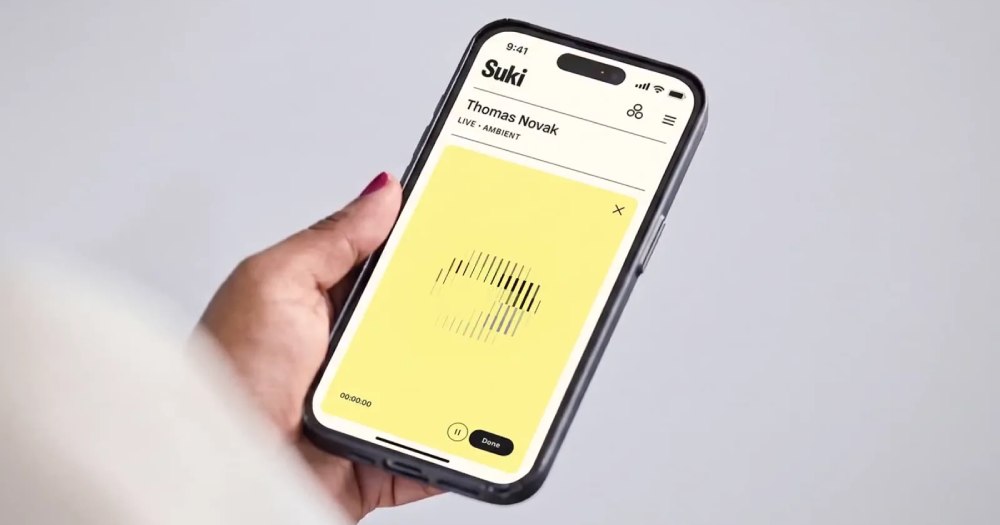
Hospitals do not have an AI shortage. They have an AI pile-up. Every new tool promises to cut paperwork, and every one adds another login, another data silo and another vendor to manage. Suki, the ambient clinical intelligence company, says the answer is a layer that sits above all of it. At HLTH 2026 in Las Vegas, it introduced Suki OS, an agentic operating system built to connect fragmented systems and turn clinical context into completed tasks.
The pitch is simple. Ambient AI already listens to the patient visit and drafts the note. Suki now wants that same context to trigger work elsewhere: authorizations, coding, follow-up. And it is putting its own fees behind the claim.
How does it work?
Suki OS rests on three pillars. The Suki Partner Ecosystem delivers third-party intelligence to clinicians at the point of care through Suki for Clinicians. AI agents run multi-step workflows with human oversight and enterprise governance. The Suki Guarantee ties the company's revenue to customer results.
Suki describes the patient journey in three stages. Before a visit, it can prepare patient summaries, while agents could check insurance eligibility and flag care concerns. During the encounter, it drafts documentation and orders for clinician review, and agents could surface medication costs and prior authorization requirements. Afterward, agents could help close coding gaps, advance authorizations and coordinate follow-up. Some of this exists today. Much of it is still described in the conditional.
Two agents come first. The Prior Authorization Agent identifies requirements, gathers supporting clinical documentation and streamlines submission. The Clinical Documentation Improvement Agent will look for documentation gaps and improve accuracy for coding and revenue cycle work. More agents are planned across clinical, operational and financial workflows.
The partner side is growing too. Stellar Health and ECLAT are the newest Suki Insights Partners, joining Optum and Wolters Kluwer UpToDate. Stellar brings value-based care and quality measure insights tied to monthly provider incentives. ECLAT applies agentic AI to medical records to surface risk, quality and screening gaps. Suki also says it already powers AI features for more than 30 healthtech companies, and it is building an integration framework based on Model Context Protocol so third-party apps and agents can connect.
On pricing, the Suki Guarantee is the notable detail. Eligible customers may recover up to 100% of their Suki fees if agreed targets are missed. Metrics include clinician adoption, engagement, coding accuracy and HCC capture. Terms are contractual and measured with customer-provided data. Suki has not published a general availability date for the full platform.
Why does it matter?
Outcome-based pricing is rare in health IT, and it changes the conversation. Buyers have heard efficiency promises for years. A refund clause makes the vendor share the risk.
The architecture matters as well. Suki says organizations can add AI without replacing existing systems. For health systems already juggling an EHR, a revenue cycle vendor and several point solutions, that is the more realistic route.
CEO Punit Soni framed the ambition bluntly: the opportunity is not to speed up today's processes but to question why so many exist. That is a big claim for a product whose first two agents tackle prior authorization and documentation. Still, those are exactly the processes that drain clinician time.
The context
Suki is working with Google Cloud on agent development, with a patient research agent planned for Google Cloud's Cancer AI Symposium in December. It has also agreed to hold joint innovation workshops with University of Miami Health System to prioritize workflows where agents could cut administrative load.
For the GCC, the relevance is direct. Saudi Arabia's Vision 2030 health transformation, the UAE's push toward unified digital records and AI-enabled care, and national insurance expansion all create the same pressure Suki describes: more systems, more data, more administration. Value-based care models and insurer authorization rules are tightening across the region, and claims quality is becoming a board-level issue for hospital groups.
Suki's products are built around US workflows, so regional hospitals should not expect a plug-and-play fit. Arabic-language support, local data residency rules and regional payer logic would all need answers. But the model is worth watching. A governed agent layer with a performance guarantee is the kind of procurement standard GCC health authorities could start asking for.
Latest @
Suki bets that healthcare AI needs an operating system, not another app
Noom puts a wearable inside its weight-loss program, and gives it to payers for free
Patients are warmer to AI in care than doctors think
Ambient AI cut 277,000 clicks for nurses in 90 days. Now comes the hard part
DawaDose closes its seed round to build the pharmacy platform Saudi Arabia has been missing
💡Did you know?
You can take your DHArab experience to the next level with our Premium Membership.👉 Click here to learn more
🛠️Featured tool
 Easy-Peasy
An all-in-one AI tool offering the ability to build no-code AI Bots, create articles & social media posts, convert text into natural speech in 40+ languages, create and edit images, generate videos, and more.
👉 Click here to learn more
