

Noom puts a wearable inside its weight-loss program, and gives it to payers for free
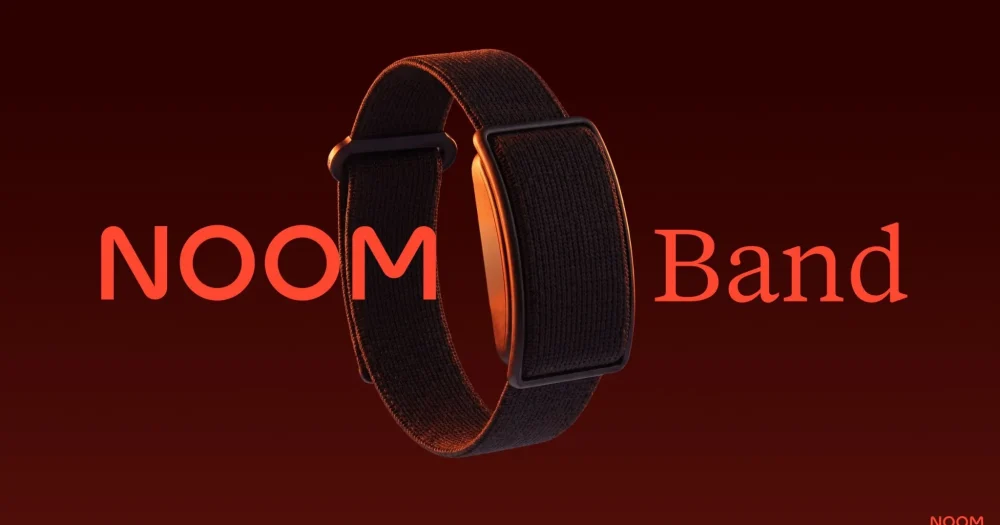
Free hardware is rarely free. So when Noom announced that every employer and health plan client of Noom Health will get its new Noom Band in 2027 at no up-front cost, the real question is whether the data justifies the giveaway. The company says early numbers point that way. The evidence is still thin.
The announcement came on November 16, 2026, at HLTH USA in Las Vegas. Noom Band is a wearable built into the company's enterprise programs, and it is meant to track what matters for weight and metabolic health rather than athletic performance.
How does it work?
The band is powered by Sensor Bio, a Texas company whose sensors capture heart rate, heart rate variability (HRV), blood oxygen, sleep and activity around the clock. That data feeds Noom's behavior-science engine, which shapes the coaching members receive. Sensor Bio says its platform gives partners access to raw physiological data, not only processed scores.
Noom ran two analyses. In the first, covering 144,593 Noom Med users, people on a GLP-1 medication who connected a wearable were 34% more likely to lose 20 pounds by month four. That study was observational. Users with wearables also started with a slightly higher median BMI, 30.0 versus 29.4, and people who connect a device may simply be more engaged to begin with.
The second analysis drew on clinical trial participants. Among 499 members who received the band, sleep rose by about 13 minutes a night on average. Among 103 members who began with under seven hours a night, the gain was about 21 minutes a night over the first two months. Neither dataset has been peer-reviewed.
Why does it matter?
Sleep is closely tied to appetite, glucose control and weight. A tool that nudges people toward more rest while they take GLP-1 drugs addresses a real gap. And the pricing model matters. Wearables often end up unused in a drawer. Noom's pitch is that a device bundled into a program, with a coach and a clinical pathway behind it, is more likely to be worn.
For payers, the cost shifts from a hardware purchase to a bet on outcomes. That is attractive, but only if the results hold up under independent scrutiny.
The context
This is a US announcement, but Gulf health leaders should pay attention. Diabetes and obesity rates across the GCC are among the highest in the world, and GLP-1 prescribing is growing quickly. Saudi Vision 2030's health sector transformation programme and the UAE's national digital health strategies both stress prevention and data-driven care. Employer-sponsored and insurer-led programs, such as those under Dubai's and Abu Dhabi's mandatory insurance frameworks, could adopt a similar model.
Several questions would need answers first:
- Does the evidence apply to Gulf populations, whose diets, sleep patterns and genetics differ from those of Noom's US members?
- How would continuous biometric data be handled under regional data protection rules, including the UAE's health data law and Saudi Arabia's Personal Data Protection Law?
- Would insurers fund a bundled device model without peer-reviewed outcomes?
Noom has also said it is building toward an integrated system that combines wearables, clinical care, diagnostics and pharmacy. That direction mirrors what regional health systems are attempting with national health records and telehealth platforms.
For now, the Noom Band is a promising idea with early, unreviewed numbers. If peer-reviewed results confirm them, the model deserves a serious look in the Gulf.
Latest @
Noom puts a wearable inside its weight-loss program, and gives it to payers for free
Patients are warmer to AI in care than doctors think
Ambient AI cut 277,000 clicks for nurses in 90 days. Now comes the hard part
DawaDose closes its seed round to build the pharmacy platform Saudi Arabia has been missing
💡Did you know?
You can take your DHArab experience to the next level with our Premium Membership.👉 Click here to learn more
🛠️Featured tool
 Easy-Peasy
An all-in-one AI tool offering the ability to build no-code AI Bots, create articles & social media posts, convert text into natural speech in 40+ languages, create and edit images, generate videos, and more.
👉 Click here to learn more
