

Saudi hospital cuts surgery time 30% with in-house 3D printing program
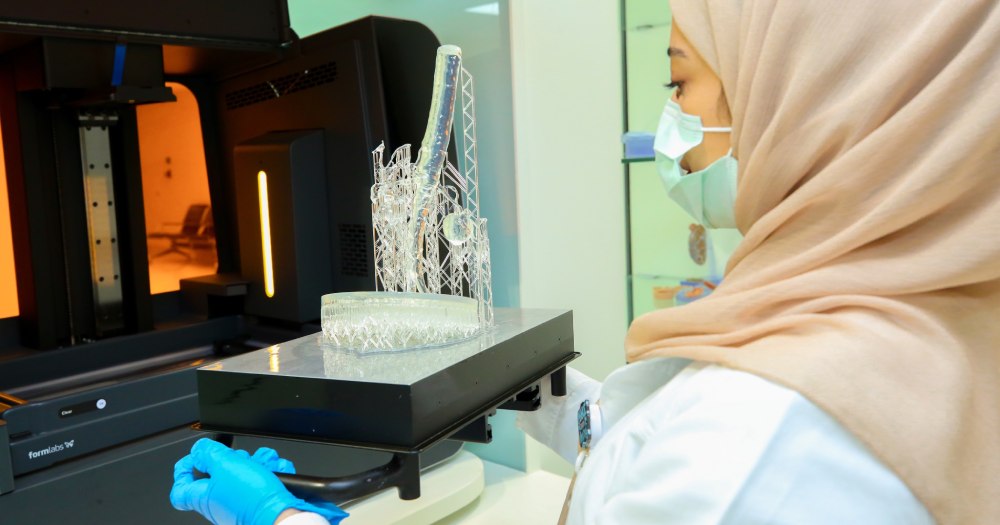
King Faisal Specialist Hospital and Research Centre (KFSH) in Riyadh has built an in-house 3D printing program that's changing how surgeons prepare for complex operations. The system lets doctors create exact replicas of patient anatomy, allowing them to practice procedures before entering the operating room.
The results are significant. Surgery times have dropped by up to 30%, and patient outcomes have improved across the board. It's part of a growing trend where hospitals bring manufacturing capabilities directly into medical facilities rather than outsourcing to external providers.
How does it work?
The program works by turning medical scans into physical models that surgeons can hold and manipulate. Here's the process:
- Doctors take CT or MRI scans of the patient
- The hospital's 3D printing team converts the scans into printable files
- They print exact anatomical replicas using specialized medical-grade materials
- Surgical teams use these models to plan and practice the actual procedure
This approach combines engineering, medical imaging, and clinical expertise in a single workflow. Surgeons can test different approaches, identify potential complications, and refine their technique before making the first incision.
Why does it matter?
The program addresses several critical issues in modern surgery. Complex procedures often involve uncertainty - surgeons can't always predict exactly what they'll find once they begin operating. By practicing on accurate models first, they reduce surprises and make better decisions during the actual surgery.
The benefits extend beyond the operating room:
- Shorter surgery times mean less time under anesthesia for patients
- Reduced complications lead to faster recovery
- Hospital stays become shorter, freeing up beds for other patients
- Overall healthcare costs decrease
For patients, this means safer procedures and better outcomes. For hospitals, it means more efficient use of expensive operating room time and resources.
The context
KFSH's program reflects a broader shift in healthcare toward precision medicine and personalized treatment. Hospitals worldwide are investing in advanced manufacturing technologies, artificial intelligence, and digital simulation tools to improve patient care.
The hospital has gained international recognition for this work and recently participated in the C3 Davos of Healthcare Silicon Valley Summit 2026, where it shared insights on integrating advanced manufacturing with clinical practice.
KFSH ranks as the top medical center in the Middle East and North Africa, and 12th globally among academic medical centers for 2026. The hospital has also earned recognition from Newsweek as one of the world's best hospitals and smart hospitals for 2026.
This type of in-house manufacturing capability is becoming increasingly important as hospitals look to reduce dependence on external suppliers and gain more control over their treatment processes. The technology is particularly valuable for rare or complex cases where standard approaches may not work.
Latest @
Blueprint lands in the UAE as longevity moves from policy to product
M42 launches 10,000-patient wearable pilot in Abu Dhabi to reshape chronic disease care
Unilabs Middle East and Takalam link diagnostics to mental health in one app
Al Ghurair enters healthcare with Trellis Health launch in Dubai
💡Did you know?
You can take your DHArab experience to the next level with our Premium Membership.👉 Click here to learn more
🛠️Featured tool
 Easy-Peasy
An all-in-one AI tool offering the ability to build no-code AI Bots, create articles & social media posts, convert text into natural speech in 40+ languages, create and edit images, generate videos, and more.
👉 Click here to learn more
