

Samsung teams up with Alcedis to bring Galaxy Watch data into clinical trials
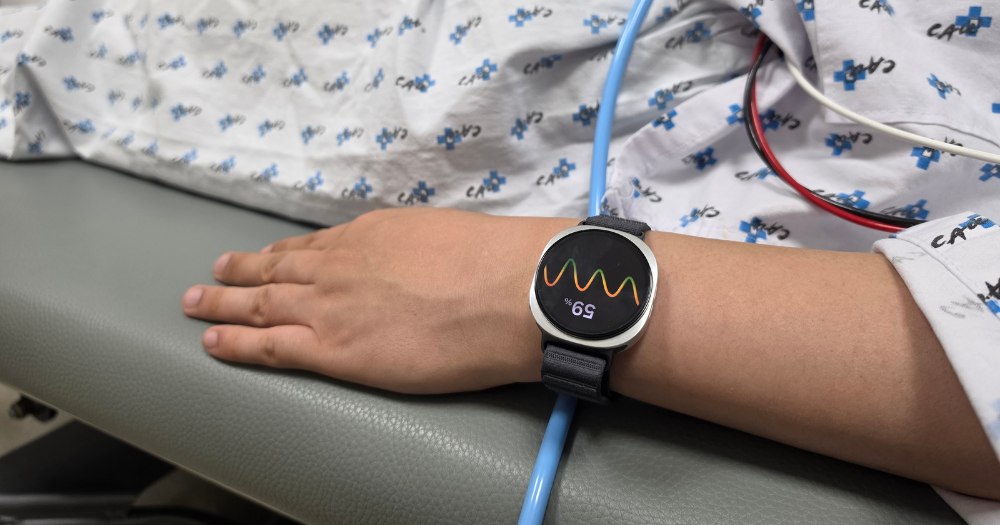
Samsung has announced a partnership with Alcedis, a clinical research organization focused on data-driven trials, to use biometric data collected by Galaxy Watch devices as valid evidence in clinical research. The goal is to make clinical trials faster and cheaper by tapping into the continuous health data that wearables already collect.
The challenge has never really been about collecting data. Wearables are everywhere, and they generate enormous amounts of health information around the clock. The real problem is turning that raw signal into something a clinical trial can actually use. That gap between consumer health tracking and scientifically valid evidence is exactly what this partnership is trying to close.
Under the arrangement, Alcedis will handle study execution and participant engagement, while Samsung supplies the wearable technology and research infrastructure. Samsung's Galaxy Watch already carries several medical-grade software features, including sleep apnea detection, ECG monitoring, atrial fibrillation detection, and blood oxygen measurement, which form the backbone of what the two companies plan to use.
How will it work?
Samsung's research platform gives clinical trial teams direct access to biosensor data at both the participant and device level, with controls that let researchers configure exactly what gets measured and when. That kind of fine-grained access is not typical in consumer wearable setups, where data is usually processed and summarized before anyone sees it.
The platform is built around a few key components:
- Galaxy Watch hardware and biosensors that collect physiological data continuously in real-world settings
- Software as Medical Device (SaMD) features for sleep apnea, ECG, and AFib detection
- Tools for developing digital biomarkers and measurement methodologies
- Infrastructure to support study setup, data access, and evidence generation across a trial's full lifecycle
Alcedis brings its experience running digital-first clinical trials to the table, taking on participant recruitment, study management, and day-to-day execution. Samsung handles the technology layer. The idea is that combining both sides produces something neither could do as well alone.
Why does it matter?
Clinical trials are expensive and slow. A big part of that cost comes from how hard it is to collect health data outside a clinical setting. Patients have to come in, get measured, and go home, which means researchers only see snapshots of health rather than the full picture.
Wearables change that equation. A participant wearing a Galaxy Watch can generate continuous data for weeks or months without ever visiting a clinic. If that data can be validated as clinically meaningful, it could cut the cost and time of certain trial phases significantly.
There is also a patient-centric angle here. Trials that rely less on clinic visits are easier for participants to stick with, which helps with one of the chronic problems in clinical research: dropout rates. Better retention means better data and faster results.
The context
This partnership fits into a broader push by Samsung to position its health technology as something more than a consumer product. The company has been building out medical-grade features on Galaxy Watch for several years, and regulatory clearances for features like sleep apnea detection in the United States have given it a credible foundation to pitch to the pharmaceutical and research sectors.
Samsung is not alone in this space. Apple has pursued similar ambitions with Apple Watch, and several startups have built businesses specifically around wearable data for clinical research. What Samsung is betting on is that the combination of its hardware scale, its medical software features, and partnerships with established clinical research organizations gives it a more complete offering than competitors.
Alcedis, for its part, is a Germany-based CRO that has focused on building digital infrastructure for clinical trials. Partnering with a major device manufacturer gives it access to validated hardware and a global installed base of potential trial participants who already own the device. That is a meaningful advantage when recruiting for studies that require wearable participation.
It is worth noting that Samsung's medical features carry important limitations. The sleep apnea detection tool is not intended for users already diagnosed with the condition, and the ECG and AFib features are not replacements for clinical diagnosis. These caveats will matter when designing trials that depend on this data, and how researchers work around them will shape what kinds of studies the platform can actually support...
Latest @
Blueprint lands in the UAE as longevity moves from policy to product
M42 launches 10,000-patient wearable pilot in Abu Dhabi to reshape chronic disease care
Unilabs Middle East and Takalam link diagnostics to mental health in one app
Al Ghurair enters healthcare with Trellis Health launch in Dubai
💡Did you know?
You can take your DHArab experience to the next level with our Premium Membership.👉 Click here to learn more
🛠️Featured tool
 Easy-Peasy
An all-in-one AI tool offering the ability to build no-code AI Bots, create articles & social media posts, convert text into natural speech in 40+ languages, create and edit images, generate videos, and more.
👉 Click here to learn more
