

Samsung and Abbott are using VR headsets to make blood donation less stressful
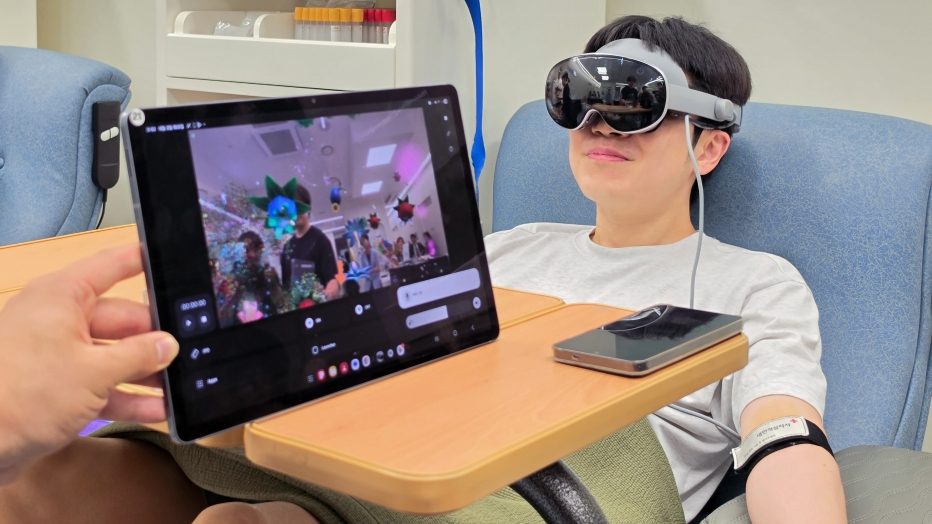
Giving blood is not most people's idea of a good time. You sit still for several minutes, a needle stays in your arm, and there's not much to do but stare at the ceiling. Samsung and healthcare company Abbott think a VR headset can change that.
The two companies partnered with the Korean Red Cross on June 2 to run what they're calling Korea's first extended reality (XR) blood donation campaign. The event took place at Samsung Digital City in Suwon, and Samsung employees were the test subjects. Instead of watching a blank wall while donating, they put on Galaxy XR headsets and spent a few minutes inside a virtual Zen garden.
The timing was deliberate. June 14 is World Blood Donor Day, an annual WHO-recognized event that draws attention to the global need for voluntary blood donation. Blood shortages are a persistent problem in many countries, and anything that lowers the anxiety barrier for first-time or reluctant donors is worth paying attention to.
How does it work?
The experience is designed to be passive and calming. Donors put on the Galaxy XR headset and find themselves in a garden environment. There are no controllers and no hand gestures required. The only interaction is gaze-based: you look at a spot on the ground, and a virtual flower seed plants itself there. Over the next three to five minutes, flowers and trees grow around you while music from the Chicago Symphony Orchestra plays in the background.
The hands-free design was a deliberate choice for a medical setting. Because donors cannot move their arms during a blood draw, the headset had to work without any physical input. Medical staff can still monitor donors easily since the headset does not obscure the donation site or require any movement from the patient.
Miguel Carrazza from Abbott's Transfusion Medicine division noted that the headset is "well-suited for healthcare settings" because staff can keep an eye on donors while the donors stay calm and engaged.
Why does it matter?
Blood donation rates are a real public health concern. Many people who are eligible to donate never do, and anxiety about the process is a commonly cited reason. If immersive content can make the experience feel shorter or less stressful, that could have a measurable effect on donation rates over time.
Abbott and Red Cross organizations have been running blood donation campaigns together since 2016, covering nearly 30 countries. Adding XR to that existing infrastructure is not starting from scratch. The scale is already there. The question is whether the technology can move the needle on donor willingness and repeat donations.
Feedback from the Samsung campus event suggests it can, at least anecdotally. One donor, Gangsu Kim from Samsung's Visual Display Business, was making his 20th blood donation when he tried the headset. He said the gaze-responsive content was "especially fascinating." Another donor said the experience made sitting still feel far less tedious.
The context
Samsung launched Galaxy XR in late 2025. The device runs Android XR, Google's operating system for mixed reality hardware, and Samsung has been positioning it as more than a consumer entertainment product. The company has been pushing enterprise and social-impact use cases alongside gaming and productivity features.
The blood donation program fits that strategy. It gives Samsung a concrete, visible example of Galaxy XR being used in a healthcare context, which matters as the company tries to convince businesses and institutions to adopt the hardware.
The program is now expanding beyond South Korea:
- At the Augmented World Expo (AWE) in Long Beach, California, running June 15-18, Samsung and Abbott will host a four-day blood drive for conference attendees.
- Later in June, the initiative will appear at the International Society of Blood Transfusion (ISBT) Congress in Kuala Lumpur, Malaysia, where more than 100 blood bank decision-makers will be able to see the technology in action.
Both events put the program in front of exactly the people who would decide whether to adopt it at scale. AWE draws XR industry insiders, while ISBT reaches the healthcare professionals and blood bank administrators who actually run donation programs around the world.
Latest @
Blueprint lands in the UAE as longevity moves from policy to product
M42 launches 10,000-patient wearable pilot in Abu Dhabi to reshape chronic disease care
Unilabs Middle East and Takalam link diagnostics to mental health in one app
Al Ghurair enters healthcare with Trellis Health launch in Dubai
💡Did you know?
You can take your DHArab experience to the next level with our Premium Membership.👉 Click here to learn more
🛠️Featured tool
 Easy-Peasy
An all-in-one AI tool offering the ability to build no-code AI Bots, create articles & social media posts, convert text into natural speech in 40+ languages, create and edit images, generate videos, and more.
👉 Click here to learn more
