

UAE’s MoHAP bets that the next health fix will come from its own corridors
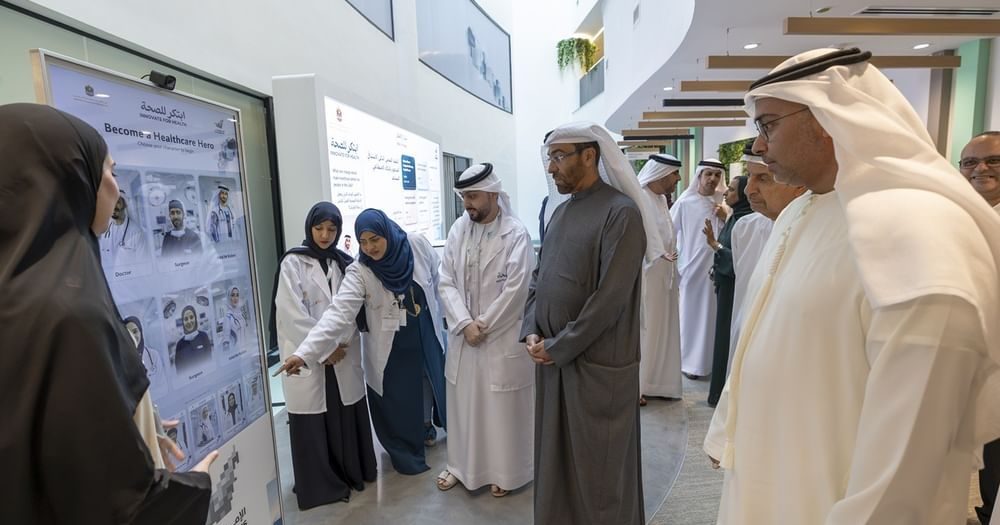
Most health ministries talk about innovation as something that happens elsewhere, in a startup, a lab or a vendor's pitch deck. The UAE Ministry of Health and Prevention (MoHAP) is making a different argument. Its flagship UAE Innovation Month event, held at its Dubai headquarters, treated the people already inside the system as the source of the next good idea.
The event ran under the theme 'Innovate for Health'. Its stated aim was to turn pioneering ideas into practical solutions that anticipate challenges, and to give employees and partners a greater role in shaping them. That last part matters. It shifts innovation from a specialist unit to a shared responsibility.
How will it work?
The announcement describes the intent more than the mechanics, so it is worth being precise about what is known. The ministry wants to move ideas from concept to solution, with an emphasis on foresight: spotting problems before they reach patients or overload services. Staff and partners are meant to take a bigger part in that process, rather than waiting for directives from the top.
In practice, programmes of this kind tend to rely on a few familiar pieces:
- Open channels for frontline staff to submit ideas
- Partnerships with private and academic institutions to test them
- A route from successful pilots into everyday services
MoHAP has not detailed in this announcement which of these it will use or on what timeline. That is the part to watch.
Why does it matter?
Health systems rarely fail for lack of ideas. They stall in the gap between a good idea and a funded, approved, staffed service. Nurses, pharmacists and administrators see the friction points first, and they are often the last to be asked about them. Giving them a formal role can shorten that gap.
The focus on anticipating challenges also fits the pressures facing the UAE and its neighbours. Chronic disease, an ageing population and rising demand for specialist care are all pushing costs up. A ministry that spots these trends early can act on them. One that reacts after the fact cannot.
But a theme is not a result. The real test is whether ideas raised at an event like this reach patients, and whether partners see their contributions adopted rather than politely noted.
The context
UAE Innovation Month is a national campaign in which federal and local entities showcase new thinking. For MoHAP, it sits alongside a wider push to digitise care, from electronic records to telehealth, and to shift the system from treatment toward prevention. The ministry's own name makes that priority plain.
The same logic runs across the GCC. Saudi Arabia's Vision 2030 health transformation programme, Qatar's national health strategy and Oman's Vision 2040 all place heavy weight on innovation, private-sector participation and better use of data. Gulf governments have the funding and the political will. What they need is a culture where new approaches move quickly from the margins into routine practice.
That is why an internal event at one ministry's headquarters deserves attention. Culture change is slow and hard to announce. If MoHAP can show that staff suggestions become working services, it will offer a model other health authorities in the region can copy. If not, 'Innovate for Health' will be another good slogan. The coming months should show which it is.
Latest @
A new MRI-guided cancer centre brings adaptive radiotherapy to Sharjah
UAE's MoHAP bets that the next health fix will come from its own corridors
Dubai and Abu Dhabi bring their AI research bodies together
Dubai bets on precision medicine with a new dedicated centre
Abu Dhabi wants to find lung cancer in X-rays it has already taken
💡Did you know?
You can take your DHArab experience to the next level with our Premium Membership.👉 Click here to learn more
🛠️Featured tool
 Easy-Peasy
An all-in-one AI tool offering the ability to build no-code AI Bots, create articles & social media posts, convert text into natural speech in 40+ languages, create and edit images, generate videos, and more.
👉 Click here to learn more
