

Dubai bets on precision medicine with a new dedicated centre
Medicine has long worked on averages. A dose that suits most patients is the dose everyone gets, and the minority who respond badly are treated as a footnote. Dubai now wants to change that default, and it has signed an agreement to build an institution around the idea.
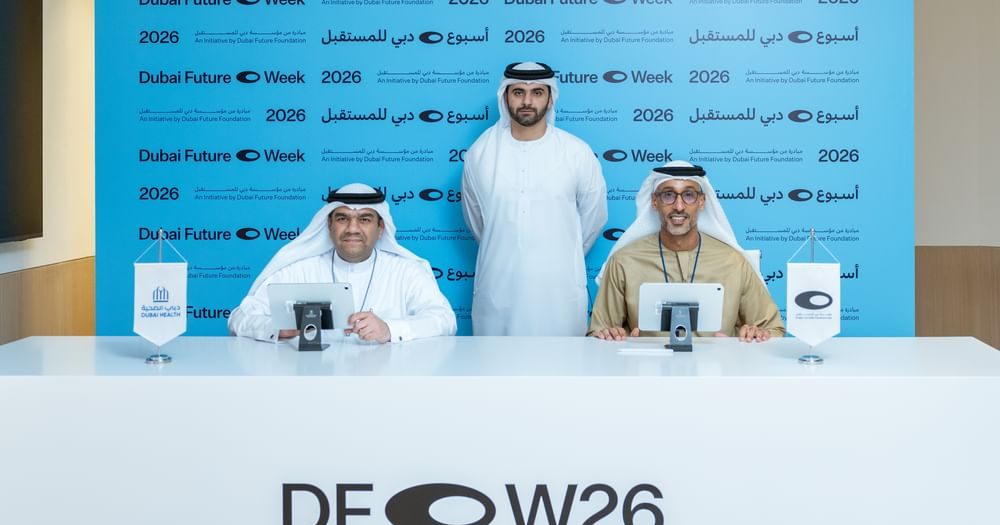
H.H. Sheikh Mansoor bin Mohammed bin Rashid Al Maktoum, Vice Chairman of the Dubai Health Board of Directors, witnessed the signing of a memorandum of understanding between Dubai Future Foundation (DFF) and Dubai Health. The agreement establishes the Dubai Precision Medicine Centre. It was signed during Dubai Future Week.
How will it work?
The source announcement is short on operational detail, so it is worth being clear about what is known. The centre will be created jointly by DFF, the government body that incubates new technologies and policy ideas, and Dubai Health, the emirate's academic health system. That pairing is the design. One side brings experimentation and speed. The other brings patients, clinicians and research capacity.
Precision medicine generally means tailoring prevention and treatment to a person's genetic profile, lifestyle and environment. In practice, that tends to involve genomic sequencing, large health datasets, and clinical teams able to turn results into decisions at the bedside. Whether the Dubai centre will cover all of these, and on what timeline, has yet to be spelled out. Healthcare leaders should expect further announcements on governance, data protection and patient access.
Why does it matter?
Because the region's disease burden is specific. Diabetes, cardiovascular disease and inherited disorders are significant concerns across the GCC, and high rates of consanguinity raise the stakes for genetic screening. Much of the world's genomic evidence comes from European populations. Arab patients are underrepresented, which limits how well global findings apply to them.
A local centre can start to close that gap. It can build datasets that reflect the people actually being treated, and it can give clinicians in the UAE evidence they can trust. That is good medicine. It is also good economics, since earlier detection and better-targeted therapy reduce the cost of managing chronic illness over decades.
And there is a commercial angle. Life sciences companies, diagnostics firms and health-tech startups look for credible clinical partners. A government-backed centre with a clear mandate gives them one.
The context
This move fits a pattern. The UAE has been investing in genomics for several years, including national programmes to sequence citizens and build a population database. Saudi Arabia is pursuing similar goals under Vision 2030, with its own genome efforts and a push to grow local biotech. Across the Gulf, governments are treating personalised healthcare as a pillar of economic diversification, not just a clinical upgrade.
Dubai's version carries the emirate's usual stamp: announce a clear ambition, connect the right institutions, then build quickly. That approach has worked in logistics, finance and aviation. Healthcare is harder. Trust, privacy and clinical validation cannot be rushed.
Still, the direction is right. If the centre delivers on data governance and real patient benefit, it could become a regional reference point. The MoU is the starting line, and the details that follow will show how serious the race is.
Latest @
A new MRI-guided cancer centre brings adaptive radiotherapy to Sharjah
UAE's MoHAP bets that the next health fix will come from its own corridors
Dubai and Abu Dhabi bring their AI research bodies together
Dubai bets on precision medicine with a new dedicated centre
Abu Dhabi wants to find lung cancer in X-rays it has already taken
💡Did you know?
You can take your DHArab experience to the next level with our Premium Membership.👉 Click here to learn more
🛠️Featured tool
 Easy-Peasy
An all-in-one AI tool offering the ability to build no-code AI Bots, create articles & social media posts, convert text into natural speech in 40+ languages, create and edit images, generate videos, and more.
👉 Click here to learn more
