

Korean researchers create smart wound patch that uses light to control drug release
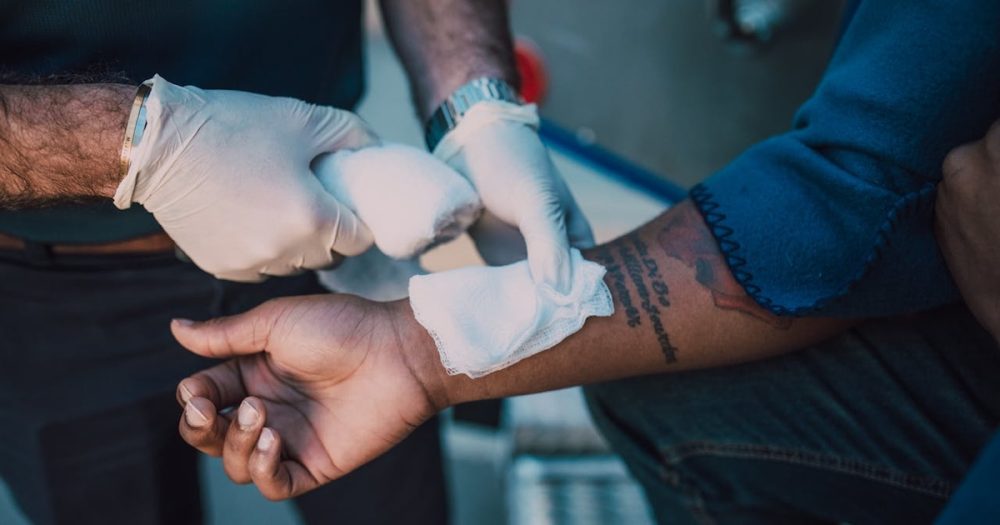
Korean researchers have created a smart wound patch that automatically adjusts drug delivery based on how much light it receives. The patch could replace traditional ointments and bandages for treating wounds.
A research team at the Korea Advanced Institute of Science & Technology (KAIST) developed what they call a "self-regulating" wound healing patch. It combines organic light-emitting diodes (OLEDs) with a drug delivery system that responds to the patient's condition.
How does it work?
The patch uses a 630-nanometer OLED that delivers light evenly across the wound. This light triggers two things: cell regeneration and the controlled release of antioxidant drugs like Centella asiatica extract, also known as tiger grass.
The system works through reactive oxygen species (ROS), which are produced during light-based treatment. These ROS act as a biological switch that controls drug release from tiny particles embedded in the patch.
"The amount of [ROS] generated varies according to the intensity of light, and the amount of drug release is naturally regulated accordingly," KAIST said in a media release.
Key features of the patch include:
- Temperature maintained at about 31 degrees Celsius during use
- Wearable design that reduces light energy loss
- Stable light output for about 434 hours (roughly 1,300 treatment sessions)
- Operation at skin-safe temperatures
In tests on mice, the combined light and drug treatment achieved a 67% wound closure rate after 14 days. That compares to 47% for light therapy alone, 57% for drug-only treatment, and 35% for controls with no treatment.
Why does it matter?
Current wound treatments have significant limitations. Ointments can cause side effects when overused, while light therapy becomes less effective beyond a certain dose. The KAIST patch solves this by automatically adjusting both light and drug delivery based on the wound's actual condition.
"Ointments can cause side effects when overused, while the effects of photobiomodulation treatment, which helps cell regeneration using light, can decrease after exceeding an appropriate amount," KAIST explained.
The patch represents a shift from fixed dosing to feedback-controlled treatment. Instead of giving patients the same amount of medicine regardless of their healing progress, the patch responds to biological signals in real time.
Study lead Kyung Cheol Choi, a KAIST professor, plans to develop the technology into "an intelligent treatment technology that can be applied to various wounds and diseases and [that] reacts on its own according to the patient's body condition."
The context
This research is part of a broader trend toward smart medical devices that can monitor and treat patients automatically. Similar projects are emerging across Asia, particularly in Singapore.
In 2023, researchers from the National University of Singapore (NUS) and A*STAR's Institute of Materials Research and Engineering introduced an AI-powered smart patch that runs without a battery and can determine wound healing status within 15 minutes.
Another NUS research team, working with iHealthtech and Singapore General Hospital, developed a chip-based smart wound sensing bandage for live chronic wound assessment.
The Korean research, published in Materials Horizons, received support from the National Research Foundation of Korea under the South Korean Ministry of Science and ICT. The findings suggest smart patches could become a standard part of wound care, offering more precise treatment than current methods.
Latest @
Blueprint lands in the UAE as longevity moves from policy to product
M42 launches 10,000-patient wearable pilot in Abu Dhabi to reshape chronic disease care
Unilabs Middle East and Takalam link diagnostics to mental health in one app
Al Ghurair enters healthcare with Trellis Health launch in Dubai
💡Did you know?
You can take your DHArab experience to the next level with our Premium Membership.👉 Click here to learn more
🛠️Featured tool
 Easy-Peasy
An all-in-one AI tool offering the ability to build no-code AI Bots, create articles & social media posts, convert text into natural speech in 40+ languages, create and edit images, generate videos, and more.
👉 Click here to learn more
