

January AI brings patient meal data directly into Epic EHR through Mayo Clinic Platform
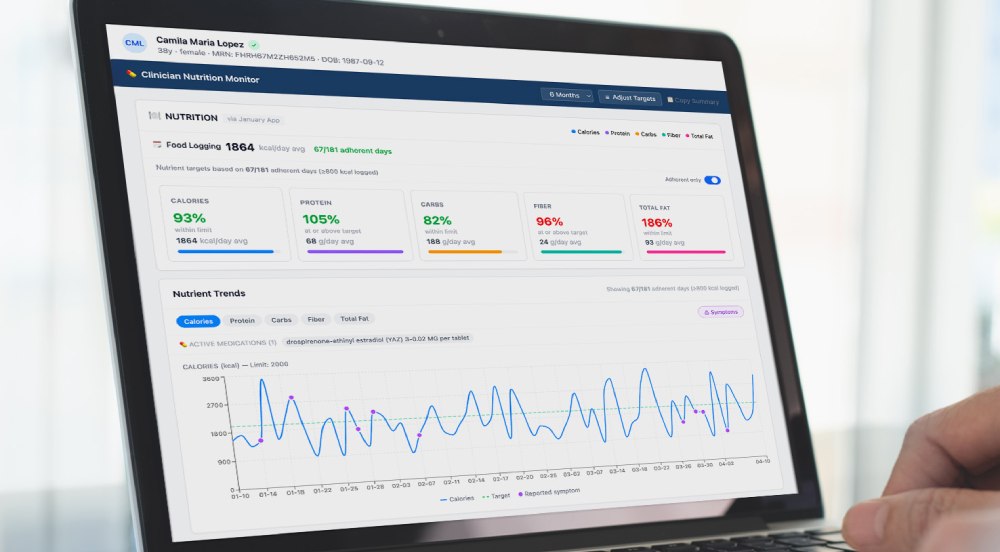
What patients eat between doctor visits has always been a blind spot in clinical care. Dietary recall is notoriously unreliable, and there has never been a clean way to connect a patient's daily food choices to their medical records. A new tool from January AI aims to fix that.
The company announced that its Clinician Nutrition Monitor has been qualified as a solution on Mayo Clinic Platform. The tool pulls meal-logging data from the January AI app and surfaces it directly inside Epic, the dominant electronic health record system used by most major health systems in the United States. Clinicians get a longitudinal view of what their patients are actually eating, alongside medications, weight trends, and BMI, without leaving Epic or switching between systems.
Qualification on Mayo Clinic Platform is not a rubber stamp. The program puts each solution through a structured review process covering clinical performance, algorithmic fairness, and intended use. Getting through that process gives the tool a level of credibility that matters when health systems are deciding which third-party apps to trust with patient data.
How does it work?
Patients log their meals through the January AI mobile app using several methods:
- Photo scan
- Voice input
- Barcode scan
- Text search across a database of more than 54 million foods
That data is then aggregated and displayed inside Epic as a structured clinical view. Clinicians see nutrition summaries, symptom tracking, medication overlays, and weight trends all in one place. The tool also includes pre-built summaries and a copy-to-chart function, which cuts down on documentation time.
The goal is to turn food logging from a patient-facing wellness feature into something clinically useful. Instead of asking a patient to recall what they ate last week, a clinician can pull up months of actual meal data and look for patterns that relate to treatment response or symptom flare-ups.
Why does it matter?
Nutrition is one of the most significant factors in chronic disease management, yet it has historically been the hardest thing for clinicians to track. Most electronic health records have no native way to capture dietary behavior over time. What exists tends to be a brief note from a dietitian or a self-reported intake form that is filed and rarely revisited.
January AI's approach changes the dynamic in a few meaningful ways:
- It makes food data continuous rather than episodic
- It connects nutrition directly to clinical variables like medications and weight
- It requires no extra login or workflow change for clinicians already using Epic
For health systems managing large populations of patients with diabetes, obesity, cardiovascular disease, or other diet-related conditions, having this kind of data in the chart could support more precise care decisions. It also gives patients a reason to log consistently, because their data is actually going somewhere useful.
The context
January AI was co-founded by Noosheen Hashemi and Dr. Michael Snyder of Stanford University. The company built its early reputation around a predictive glucose monitor that estimates blood sugar responses to specific foods using a photo or barcode scan. That product is now used by around 200,000 people.
The Clinician Nutrition Monitor is part of a broader push by the company into enterprise healthcare. Earlier this year, January AI was named one of the first third-party apps in the CMS Medicare App Library, which gives it access to more than 69 million Medicare beneficiaries.
Mayo Clinic Platform, which supported this qualification, is a program designed to help digital health developers bring tools into real clinical and administrative workflows. It does not endorse the tools it qualifies, but its review process is detailed enough that qualification carries weight in purchasing decisions. The platform has been working to build an ecosystem of third-party solutions that can plug into existing health system infrastructure, which is exactly the kind of distribution channel that a company like January AI needs to reach clinicians at scale.
The broader trend here is the shift toward continuous, real-world health data in clinical settings. Wearables, remote monitoring devices, and now food logging apps are all pushing in the same direction: more data, collected passively, flowing into the places where clinical decisions are made. The challenge has always been integration. January AI's qualification on Mayo Clinic Platform and its native Epic presence suggest it has at least cleared that first hurdle.
Latest @
Blueprint lands in the UAE as longevity moves from policy to product
M42 launches 10,000-patient wearable pilot in Abu Dhabi to reshape chronic disease care
Unilabs Middle East and Takalam link diagnostics to mental health in one app
Al Ghurair enters healthcare with Trellis Health launch in Dubai
💡Did you know?
You can take your DHArab experience to the next level with our Premium Membership.👉 Click here to learn more
🛠️Featured tool
 Easy-Peasy
An all-in-one AI tool offering the ability to build no-code AI Bots, create articles & social media posts, convert text into natural speech in 40+ languages, create and edit images, generate videos, and more.
👉 Click here to learn more
