

Huawei’s first glucose monitor took 35 months to build, and it shows
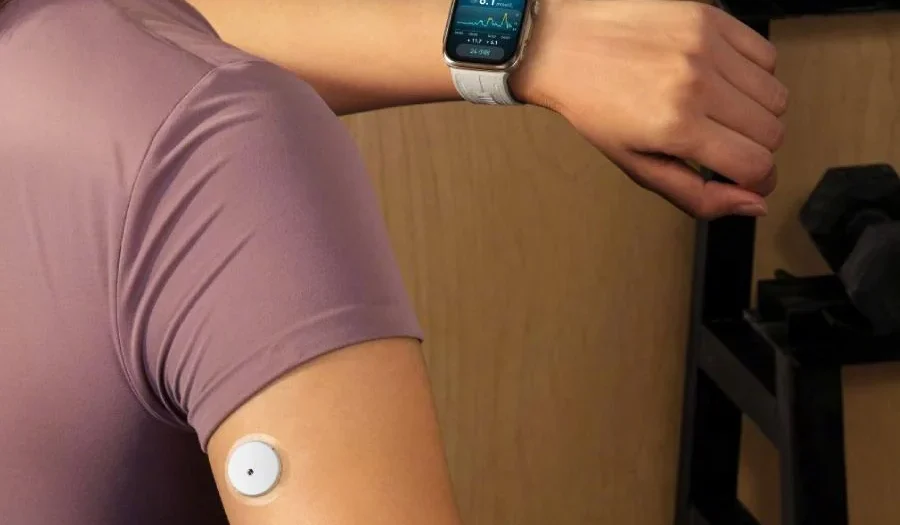
Most smartwatch makers talk about health. Huawei has now spent nearly three years building something that regulators treat as a genuine medical product. The Huawei Sense G1, the company's first continuous glucose monitor (CGM), has been approved in China as a Class III device, the highest risk category the country has. That puts it in the same bracket as cardiac stents and artificial joints.
It is a small, round sensor, and the teaser poster suggests it looks a bit like an Apple AirTag. It sticks to the arm and reads glucose around the clock. Users can check numbers on a phone or a smartwatch, and the system alerts them when readings drift outside normal ranges. Huawei has not yet announced a price or a sale date. The company may say more at an event later this month, where the Mate X8 foldable and MateBook Fold S are also expected.
The key details, as shared so far:
- Worn on the arm, with a tiny filament under the skin
- Single-user design, with no calibration needed
- Sensor life of up to 16 days
- Reported MARD below 10%, according to a tipster
- Readings that may lag actual blood sugar by about 5 to 15 minutes
How does it work?
A thin needle sits just beneath the skin and samples the fluid surrounding cells. The sensor uses glucose oxidase and electrodes to measure glucose in that fluid, then converts the result into a blood sugar reading. There is no finger prick for each measurement, which is the main appeal over traditional meters.
Accuracy is where CGMs are judged. The figure to watch is the mean absolute relative difference, or MARD. It shows how closely a sensor matches laboratory reference values, and a lower number is better. A MARD under 10% would be competitive, but that claim comes from a report, not a confirmed Huawei specification. Treat it with care until the company publishes its own data.
The lag matters too. Fluid under the skin trails blood by a few minutes, so a reading can be 5 to 15 minutes behind reality. That is normal for the category. Still, clinicians will want to know how the alerts handle fast drops.
Why does it matter?
The Sense G1 fills a gap Huawei has been circling for years. Its watches can already estimate diabetes risk, but they cannot measure glucose directly. Now the company has a sensor that can. Pair it with the TruSense health monitoring system, introduced in 2024, and Huawei has a credible route from screening to daily management.
Li Xiaolong, CTO of Huawei Terminal BG, calls it the longest development project the company has undertaken. He first wore a test version in December 2023. That is roughly 35 months of work, and it explains the Class III approval. Regulators do not grant that status to gadgets.
For healthcare professionals, the real question is data. Continuous readings that flow into a phone or watch can give clinicians a fuller picture than a few finger-prick values a day. And for patients, fewer needles means better odds of sticking with monitoring.
The context
Diabetes is a heavy burden in the Gulf. The UAE, Saudi Arabia, Kuwait and Bahrain all report some of the highest prevalence rates in the world. Governments have responded with screening drives, national prevention programmes and, under Vision 2030 and similar agendas, a push toward digital, preventive care. CGMs fit that direction neatly.
Today the market is led by established medical device makers. A consumer electronics giant entering with a regulated product could change pricing and expectations, particularly if the sensor connects smoothly to the wearables many people already own. Huawei has a strong presence in the region, so the interest is real.
But some caution is needed. The approval comes from China's National Medical Products Administration. GCC buyers would need clearance from regulators such as the UAE's Ministry of Health and Prevention or the Saudi Food and Drug Authority before any launch here. No regional plans have been announced.
So the Sense G1 is a serious product, not yet a regional one. Pricing, accuracy data and international approvals will decide whether it becomes a practical option for Gulf patients or stays a milestone in China.
Latest @
ChatGPT for Healthcare gets agents that click, type and chase the paperwork
WHOOP bets that a verified heartbeat can fix social media's bot problem
Huawei's first glucose monitor took 35 months to build, and it shows
Apple wants to know if you trust health AI, and it is asking 200,000 people
Morocco makes it easier to report a bad reaction to a medicine
💡Did you know?
You can take your DHArab experience to the next level with our Premium Membership.👉 Click here to learn more
🛠️Featured tool
 Easy-Peasy
An all-in-one AI tool offering the ability to build no-code AI Bots, create articles & social media posts, convert text into natural speech in 40+ languages, create and edit images, generate videos, and more.
👉 Click here to learn more
