

Fakeeh Health bets on AI to give doctors their time back
Ask any physician what they like least about modern medicine and many will say the same thing: the typing. Hours spent on clinical notes are hours not spent with patients. Fakeeh Health is now trying to fix that, and it has picked a Boston-based partner to help.
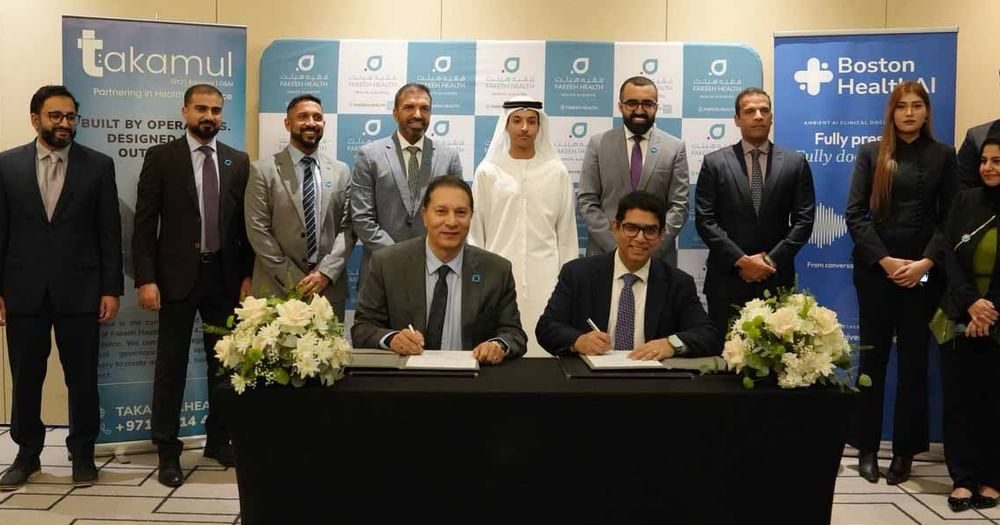
On the sidelines of its 5th Annual International Conference, Fakeeh Health signed two strategic agreements with Boston Health AI. The first brings AI-supported clinical documentation to Fakeeh Health facilities. The second, signed through Takamul Innovative Health Solutions, covers joint development of further AI tools. The source material is brief, so details such as pricing, timelines and the specific hospitals involved have not been made public.
How will it work?
AI-supported documentation generally means software that listens to or reads a clinical encounter and drafts the note, which the doctor then reviews and signs. The clinician stays in charge. The machine does the first pass.
The two agreements work on different tracks:
- Deployment of AI clinical documentation across Fakeeh Health's care network.
- Joint development of new AI solutions through Takamul Innovative Health Solutions.
The first track is about adoption. The second is about building, which is harder and more interesting. Co-development lets a hospital group shape tools around its own workflows, patient mix and language needs, including Arabic and English used side by side in the same consultation.
Why does it matter?
Documentation burden is a global cause of clinician burnout, and Gulf health systems are not immune. Saudi Arabia is expanding capacity quickly while competing for a limited pool of experienced doctors and nurses. Giving each clinician back even a few minutes per patient adds up across a large hospital group.
There is a quality argument too. Cleaner, more complete records feed better coding, smoother insurance processing and more reliable data for population health work. That matters as the Kingdom moves toward a more integrated, outcomes-focused model of care.
But the real test is trust. Doctors will only use these tools if the drafts are accurate and the patient data stays protected under Saudi privacy rules. Fakeeh Health will need to show results, not just sign agreements.
The context
The deal fits neatly into Vision 2030, which puts digital health and private sector participation at the centre of healthcare reform. Saudi Arabia has pushed hard on AI through national strategy and bodies such as SDAIA, and private groups like Fakeeh Health are increasingly expected to turn that policy into daily practice.
The same pattern is visible across the GCC. The UAE has backed AI in clinical settings through its own health initiatives, and hospital operators from Abu Dhabi to Doha are testing ambient documentation and decision support. Partnerships with international AI firms are becoming the standard route, with local joint ventures like Takamul helping keep know-how in the region.
So the question is no longer whether Gulf hospitals will use AI. It is who will use it well, and who will measure the benefit honestly. Fakeeh Health has made its move. The next conference will show what it delivered.
Latest @
A new MRI-guided cancer centre brings adaptive radiotherapy to Sharjah
UAE's MoHAP bets that the next health fix will come from its own corridors
Dubai and Abu Dhabi bring their AI research bodies together
Dubai bets on precision medicine with a new dedicated centre
Abu Dhabi wants to find lung cancer in X-rays it has already taken
💡Did you know?
You can take your DHArab experience to the next level with our Premium Membership.👉 Click here to learn more
🛠️Featured tool
 Easy-Peasy
An all-in-one AI tool offering the ability to build no-code AI Bots, create articles & social media posts, convert text into natural speech in 40+ languages, create and edit images, generate videos, and more.
👉 Click here to learn more
