

Dubai hospital uses robotic waterjet to treat prostate nine times its normal size
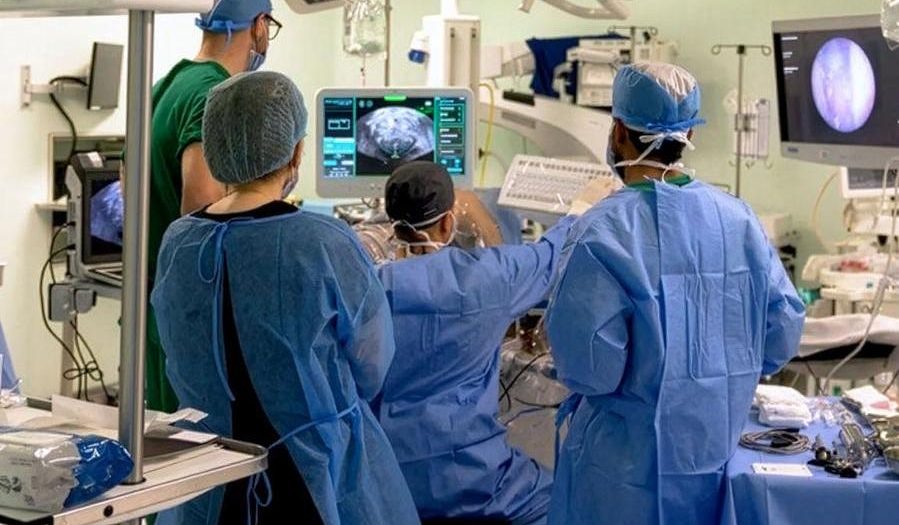
A Dubai hospital has successfully treated one of the most severe prostate enlargement cases seen in the region, using a robotic waterjet system that removed excess tissue without a single surgical cut. The patient, a 72-year-old Dubai resident, had been living with a prostate weighing 170 grams, roughly nine to ten times the normal size, and had been relying on a catheter just to urinate.
The procedure, called aquablation, uses a high-pressure, image-guided waterjet controlled by a robotic system to precisely remove prostate tissue. No heat is involved, and no incisions are made. The patient left the hospital within three days and no longer needs a catheter.
For context, a prostate this large would almost always require open surgery, which carries longer recovery times, a higher risk of complications, and a more difficult rehabilitation process. This case shows what the technology can do at the extreme end of the severity scale.
How did it work?
Aquablation works differently from most prostate treatments. Traditional surgical approaches either cut or burn tissue to reduce the size of the prostate. Aquablation does neither. Instead, it uses a robotic arm to direct a concentrated waterjet, guided in real time by ultrasound imaging, to strip away only the tissue that is blocking urine flow.
The key advantages of this approach are:
- No heat applied to surrounding tissue, which reduces the risk of nerve damage
- Robotic precision means the treatment area is mapped and targeted before the procedure begins
- The procedure works on very large prostates that would otherwise require open surgery
- Patients typically recover faster and report fewer side effects than with traditional methods
In this case, the urology team at Medcare Hospital Al Safa also handled a separate patient in a single session who had both an enlarged prostate and multiple bladder stones. Surgeons removed the stones using laser technology while simultaneously treating the prostate with aquablation, two procedures combined into one.
Since Medcare introduced aquablation in December 2025, the hospital has completed 16 procedures. The hospital says Medcare is one of only three medical providers offering this technology in the UAE.
Why does it matter?
Benign prostatic hyperplasia, the medical term for an enlarged prostate, is extremely common in older men. It causes symptoms that significantly affect daily life:
- Weak or interrupted urine flow
- Frequent urination, including at night
- Difficulty starting or stopping urination
- In severe cases, complete urinary retention requiring a catheter
Despite how common the condition is, many men delay seeking treatment because of stigma or simply not knowing what options are available. The availability of a minimally invasive option for even the most severe cases could change that calculation for a lot of patients.
For hospitals, the ability to treat extreme cases without open surgery also matters from a resource and risk management perspective. Shorter hospital stays, fewer complications, and faster recoveries all reduce pressure on inpatient capacity.
The context
This case fits into a broader shift happening across healthcare in the UAE and the wider Gulf region. Hospitals are moving quickly to adopt robotic and AI-assisted systems across multiple specialties, not just urology.
Medcare, which operates as the premium healthcare brand under Aster DM Healthcare, has been expanding its technology portfolio at a fast pace. In the past 12 months alone, the group has:
- Introduced AI diagnostics in cardiology and radiology
- Added a new robotic surgical system at Medcare Hospital Sharjah
- Installed brain navigation surgical systems and robotic-guided orthopaedic surgery capabilities
- Planned a second major robotic system for Medcare Hospital Al Safa before the end of 2026
The aquablation case is a concrete example of what that investment looks like in practice. Robotic surgery platforms are only as valuable as the outcomes they produce, and a patient going home in three days after what would have been major open surgery is a straightforward way to measure the difference.
All Medcare hospitals hold Joint Commission International accreditation, which is widely considered the benchmark standard in global healthcare quality assessment.
Latest @
Blueprint lands in the UAE as longevity moves from policy to product
M42 launches 10,000-patient wearable pilot in Abu Dhabi to reshape chronic disease care
Unilabs Middle East and Takalam link diagnostics to mental health in one app
Al Ghurair enters healthcare with Trellis Health launch in Dubai
💡Did you know?
You can take your DHArab experience to the next level with our Premium Membership.👉 Click here to learn more
🛠️Featured tool
 Easy-Peasy
An all-in-one AI tool offering the ability to build no-code AI Bots, create articles & social media posts, convert text into natural speech in 40+ languages, create and edit images, generate videos, and more.
👉 Click here to learn more
