

ASUS launches AI healthcare system with ultrasound scanner and smartwatch
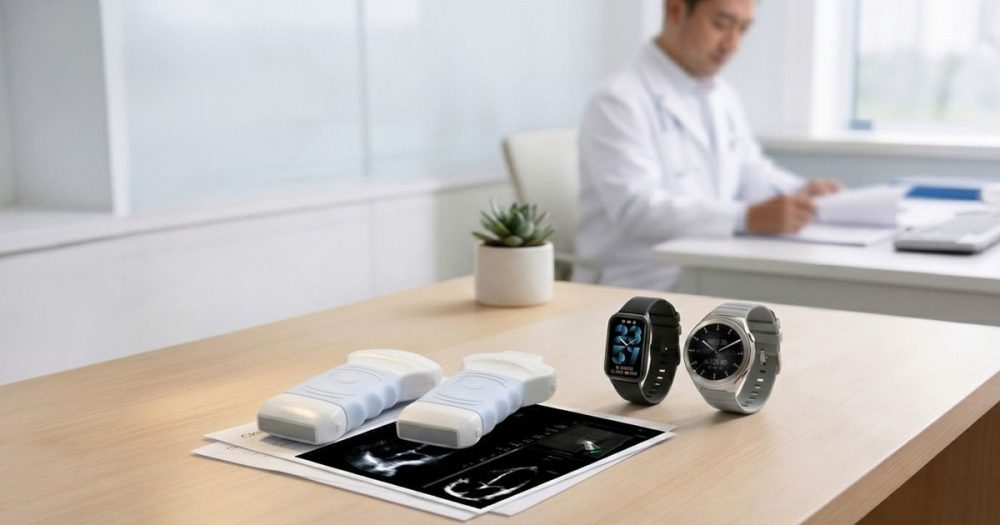
ASUS is betting big on AI-powered healthcare with a new ecosystem that connects medical devices directly to artificial intelligence platforms. The company announced its healthcare push at Computex 2026, showing off two new devices designed to work together: a portable ultrasound scanner and an advanced health monitoring smartwatch.
The system aims to help doctors make faster decisions by automatically processing patient data in real time. ASUS says its approach creates a "closed-loop" where devices continuously collect health information, AI analyzes it instantly, and doctors get actionable insights without delay.
What's the news?
ASUS unveiled two main healthcare products at the Taiwan tech show:
- Handheld Ultrasound DuoScan: A portable ultrasound device with 192-element high-definition imaging and dual-probe design
- VivoWatch 6 Plus: A health monitoring smartwatch with blood pressure tracking, ECG monitoring, and new sleep analysis features
Both devices connect to what ASUS calls its "AI Agent healthcare platform," which processes the collected health data and provides clinical insights. The ultrasound scanner offers three hours of battery life and IP68 water resistance for use in emergency rooms and intensive care units.
The VivoWatch 6 Plus includes a 1.43-inch AMOLED display with sapphire crystal glass and titanium construction. It monitors sleep breathing patterns and analyzes walking gait to assess chronic disease risks.
Why does it matter?
This represents a major tech company's serious entry into medical devices, not just health tracking. ASUS is positioning itself to compete with established medical device manufacturers by combining consumer electronics expertise with clinical-grade hardware.
The timing reflects growing interest in AI-powered healthcare tools. ASUS cited a survey showing 68% of healthcare professionals expect AI agents to meaningfully impact clinical workflows. The COVID-19 pandemic also accelerated adoption of portable medical devices that can work outside traditional hospital settings.
For patients, this could mean faster diagnoses and more continuous health monitoring. The portable ultrasound particularly addresses a real need - traditional ultrasound machines are expensive and stationary, limiting access to imaging in rural areas or emergency situations.
The context
Major tech companies are increasingly targeting healthcare as a growth market. Apple has built significant health monitoring into its watches, Google is developing AI diagnostic tools, and Amazon has made multiple healthcare acquisitions.
The medical device market presents both opportunities and challenges for consumer tech companies:
- Healthcare devices require regulatory approval and clinical validation
- Doctors and hospitals have different purchasing processes than consumers
- Medical accuracy standards are much higher than typical consumer gadgets
- The potential market size is enormous - global medical devices hit $432 billion in 2020
ASUS's approach focuses on creating an integrated ecosystem rather than standalone devices. This mirrors successful strategies in consumer tech but remains relatively uncommon in medical devices, where specialized single-purpose tools dominate.
The company's emphasis on "AI agents" that can take actions autonomously also reflects broader industry trends toward more intelligent medical systems that assist clinical decision-making rather than just collecting data.
Latest @
Blueprint lands in the UAE as longevity moves from policy to product
M42 launches 10,000-patient wearable pilot in Abu Dhabi to reshape chronic disease care
Unilabs Middle East and Takalam link diagnostics to mental health in one app
Al Ghurair enters healthcare with Trellis Health launch in Dubai
💡Did you know?
You can take your DHArab experience to the next level with our Premium Membership.👉 Click here to learn more
🛠️Featured tool
 Easy-Peasy
An all-in-one AI tool offering the ability to build no-code AI Bots, create articles & social media posts, convert text into natural speech in 40+ languages, create and edit images, generate videos, and more.
👉 Click here to learn more
