

Abu Dhabi opens its first shared biotech lab as Masdar City bets big on life sciences
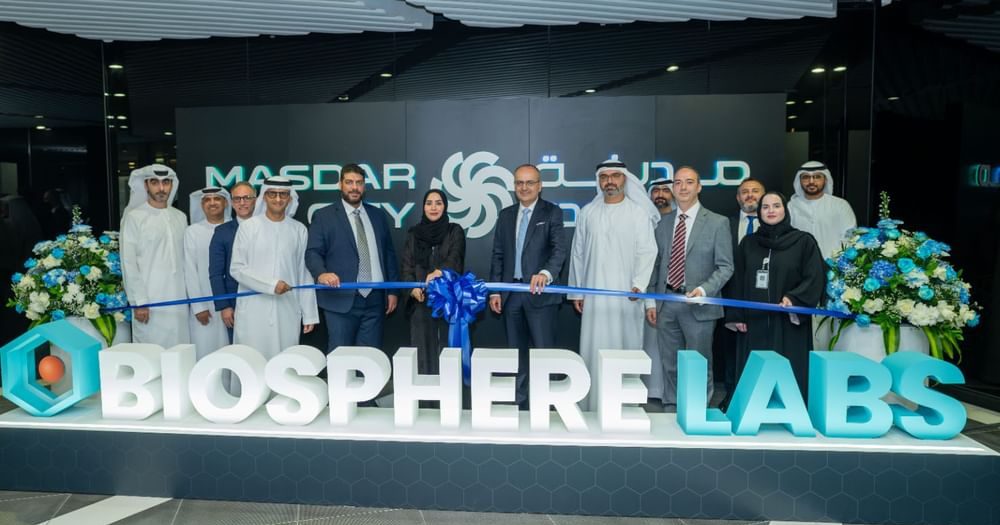
Abu Dhabi has a new card to play in the global life sciences race. Masdar City announced Biosphere Labs this week at the BIO International Convention in San Diego, billing it as the Gulf region's first commercially scaled shared laboratory. Built in partnership with healthcare group M42 and biotech operator Attentive Science, the facility is designed to give researchers and companies a fast path into the Abu Dhabi biotech ecosystem without the usual overhead of setting up a lab from scratch.
The announcement matters because infrastructure has long been the missing piece for life sciences ambitions in the Gulf. Talent and funding are increasingly available, but access to specialist bench space and advanced equipment has been a real barrier, particularly for startups and early-stage companies that cannot justify the capital cost of building their own facilities. Biosphere Labs is a direct attempt to close that gap.
The facility sits within Masdar City's HELM cluster, which launched in 2025. HELM, which stands for Health, Endurance, Longevity, and Medicine, is Abu Dhabi's designated hub for pharmaceutical manufacturing, medical innovation and advanced biotechnology. Biosphere Labs adds shared, commercially available lab space to that mix, making the cluster more accessible to outside organizations and researchers.
How will it work?
Biosphere Labs operates as a shared infrastructure model. Rather than building and equipping a private lab, users pay for access to what they need, when they need it. The facility offers:
- Specialist bench space for individual researchers and teams
- Advanced laboratory equipment without the capital outlay of ownership
- Operational support to help teams hit the ground running
- Connections into Abu Dhabi's wider life sciences network, including clinical, manufacturing and commercialization partners
Attentive Science is the initiator and day-to-day operator of the facility. The company says the model is built around one goal: letting scientists and biotech companies focus on their research from day one, rather than spending months setting up operations. The partnership with M42 adds clinical and healthcare expertise to the mix, which could prove valuable for companies working on diagnostics, therapeutics or precision medicine applications.
Why does it matter?
Shared lab models have proven effective in cities like Boston, London and Singapore, where they helped build dense, competitive biotech clusters by lowering the cost of entry for small companies and international teams testing a new market. Abu Dhabi is making a similar bet.
For international biotech companies thinking about the Middle East, Biosphere Labs reduces the friction of entering the region considerably. Instead of a multi-year process of setting up local operations, a company can move into ready-made lab space, access regional networks and start generating data relatively quickly. That is a meaningful change in the value proposition Abu Dhabi can offer.
There is also a broader signal here. The UAE has been investing heavily in life sciences as part of its economic diversification push, and Biosphere Labs is evidence that the country is moving past announcements and into actual infrastructure. The presence of organizations like Thermo Fisher Scientific, Oxford Nanopore Technologies and Insilico Medicine at Masdar City suggests the cluster is gaining credibility with global players.
The context
Biosphere Labs is part of a bigger pattern across the Gulf, where governments are trying to build knowledge-based industries to reduce dependence on oil revenues. Life sciences and biotech have become a priority target because they combine high-value jobs, intellectual property creation and long-term healthcare benefits.
Abu Dhabi has moved faster than most. The Abu Dhabi Biobank, which collects genomic data from the local population, gives researchers access to a dataset that is genuinely valuable for precision medicine research in non-Western populations, a segment of the global market that has historically been underserved by clinical research. That kind of asset, combined with shared lab access through Biosphere Labs, makes the proposition more concrete.
The HELM cluster model also draws on lessons from established biotech hubs. Co-locating research, manufacturing, clinical development and commercialization in one place reduces the friction that typically slows the journey from discovery to product. Whether Abu Dhabi can attract enough international talent and companies to make that model work at scale is still an open question, but Biosphere Labs is a step toward answering it.
Latest @
Blueprint lands in the UAE as longevity moves from policy to product
M42 launches 10,000-patient wearable pilot in Abu Dhabi to reshape chronic disease care
Unilabs Middle East and Takalam link diagnostics to mental health in one app
Al Ghurair enters healthcare with Trellis Health launch in Dubai
💡Did you know?
You can take your DHArab experience to the next level with our Premium Membership.👉 Click here to learn more
🛠️Featured tool
 Easy-Peasy
An all-in-one AI tool offering the ability to build no-code AI Bots, create articles & social media posts, convert text into natural speech in 40+ languages, create and edit images, generate videos, and more.
👉 Click here to learn more
