

Abu Dhabi and California form life sciences partnership to connect two major biotech hubs
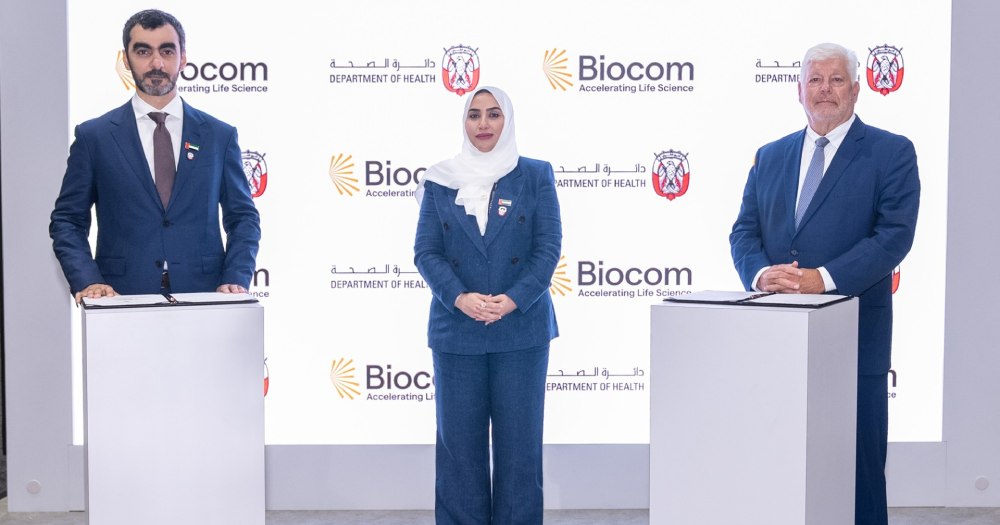
Abu Dhabi's Department of Health (DoH) has signed a strategic partnership with Biocom California, one of the largest life sciences trade groups in the world, to build a formal link between the emirate's health sector and California's sprawling biotech industry. The agreement was announced on June 24, 2026, during Abu Dhabi's participation at the BIO International Convention in the United States.
Biocom California represents more than 1,800 biotechnology, pharmaceutical, and medical technology companies. The partnership will give those firms structured access to Abu Dhabi's life sciences ecosystem, while Abu Dhabi-based researchers and companies gain visibility within one of the most active biotech markets on the planet.
The deal is part of a broader push by Abu Dhabi to position itself as a serious player in global health innovation, not just a market for importing medical products but a place where drugs, therapies, and health technologies are actually developed and tested.
How will it work?
The partnership is built around a few concrete areas of activity rather than vague ambitions. According to both parties, the collaboration will include:
- Sharing expertise on building life sciences clusters, including policy frameworks and industry best practices
- Joint events, trade delegations, and industry engagements between the two regions
- Connecting California-based companies with Abu Dhabi's HELM Cluster (Health, Endurance, Longevity and Medicine), which is managed by the Abu Dhabi Investment Office
- Workforce development and capacity building programs to grow local talent in both markets
The HELM Cluster is central to Abu Dhabi's pitch here. It is designed to bring together research institutions, investors, healthcare providers, and companies in one place, so that a discovery made in a lab can move to clinical validation and then real-world use without jumping between entirely separate ecosystems. Think of it as a vertically integrated biotech environment.
US companies joining through the Biocom relationship would get access to that environment, including what Abu Dhabi describes as a "living lab" model where new health technologies can be tested and validated in a real healthcare setting.
Why does it matter?
For US biotech companies, the appeal is market access combined with a testing environment. Abu Dhabi has a small but wealthy population, a government willing to invest heavily in health infrastructure, and a regulatory environment that is actively trying to attract foreign companies rather than slow them down.
For Abu Dhabi, the calculus is different. California's life sciences sector is responsible for a significant share of global drug and medical technology development. Getting formal ties to Biocom's network means Abu Dhabi companies and institutions get in front of investors, partners, and potential acquirers that most emerging health ecosystems never reach.
Joe Panetta, President Emeritus of Biocom, pointed to the mutual interest in connecting companies looking for partners: "We look forward to cooperating jointly in events, providing opportunities to find partners for companies in both California and Abu Dhabi and connecting Abu Dhabi to our other partners."
Dr. Noura Khamis Al Ghaithi, Undersecretary of the Department of Health Abu Dhabi, framed it as a speed play: "Scientific discoveries can be translated into real-world impact faster and at scale." That is a claim worth watching, but the structure of the HELM Cluster does at least give it some credibility.
The context
Abu Dhabi has been systematically building out its life sciences credentials over the past several years. The delegation attending BIO 2026 includes representatives from a wide range of Abu Dhabi institutions:
- Abu Dhabi Investment Office (ADIO)
- M42, the health technology company
- Hub71, Abu Dhabi's tech startup hub
- New York University Abu Dhabi
- Khalifa University
- Masdar City
- PureHealth and Mubadala Bio
- Arcera and the Institute for Healthier Living Abu Dhabi
That list reflects how seriously the emirate is treating this sector. These are not token appearances. Abu Dhabi is showing up at one of the most important biotech conferences in the world with a full delegation and a signed partnership to announce.
The broader trend here is that Gulf states are racing to move beyond oil-dependent economies, and healthcare and life sciences have become a primary target for that diversification. Abu Dhabi, in particular, has been more aggressive than most in trying to build genuine research and development capacity rather than simply buying stakes in foreign companies. The Biocom deal fits that pattern. It is about building pipelines, not just writing checks.
Latest @
Blueprint lands in the UAE as longevity moves from policy to product
M42 launches 10,000-patient wearable pilot in Abu Dhabi to reshape chronic disease care
Unilabs Middle East and Takalam link diagnostics to mental health in one app
Al Ghurair enters healthcare with Trellis Health launch in Dubai
💡Did you know?
You can take your DHArab experience to the next level with our Premium Membership.👉 Click here to learn more
🛠️Featured tool
 Easy-Peasy
An all-in-one AI tool offering the ability to build no-code AI Bots, create articles & social media posts, convert text into natural speech in 40+ languages, create and edit images, generate videos, and more.
👉 Click here to learn more
