

Saudi Arabia is tracking diabetic pilgrims’ blood sugar in real time during Hajj
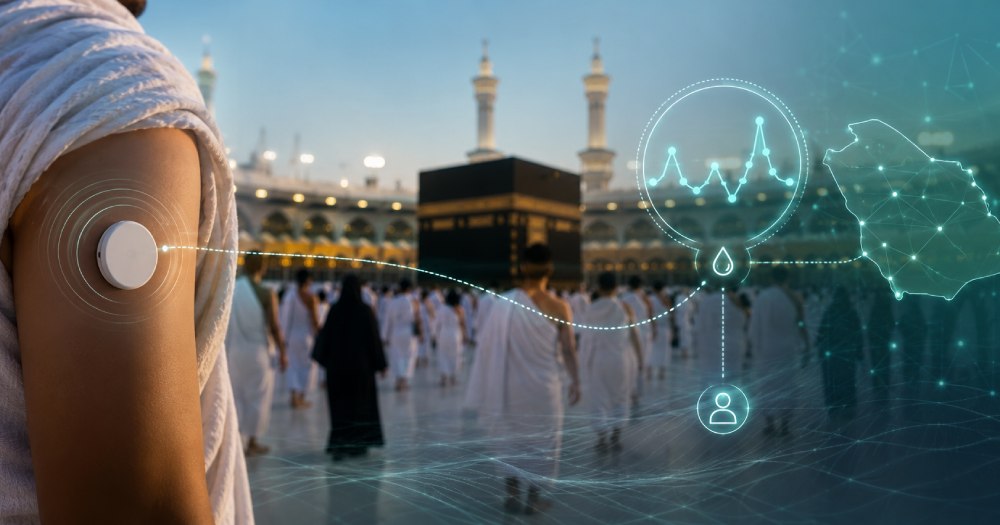
Managing a chronic condition like diabetes is hard enough at home. During Hajj, when millions of pilgrims walk miles in intense heat, change their routines, and often eat differently, the risks multiply fast. Saudi Arabia's Health Holding Company is trying to close that gap with technology.
As part of the Healthy Hajj Initiative for the 1447H (2026) season, the organization has distributed more than 3,036 continuous glucose monitoring sensors to domestic pilgrims with diabetes. The sensors track blood sugar levels around the clock, allowing medical teams to spot problems and respond before they become emergencies.
The program runs across all 20 of Saudi Arabia's health clusters and is partly funded through a partnership with Arab National Bank. It also includes nutrition guidance, medication advice, and physical activity recommendations tailored to the demands of the pilgrimage.
How does it work?
Pilgrims enrolled in the initiative receive a small adhesive sensor, typically worn on the upper arm, that measures blood glucose continuously without requiring finger-prick tests. The data feeds into a digital monitoring system that health teams can access remotely.
Beyond the hardware, the program includes:
- Health education sessions before and during Hajj
- Digital check-ins between pilgrims and care teams
- Personalized guidance on food, medication timing, and managing physical exertion
- Faster medical response when glucose levels go outside safe ranges
The goal is to catch dangerous dips or spikes early, when they are still easy to treat, rather than after a pilgrim has collapsed or needed emergency care.
Why does it matter?
Hajj draws around two million pilgrims to Mecca each year, many of them elderly and many managing chronic conditions. Diabetes is one of the most common. The combination of heat, physical exertion, disrupted sleep, and changes in diet can cause blood sugar to swing unpredictably, and not everyone carries enough supplies or knows the warning signs well enough to act in time.
Last year, the initiative's first edition reached more than 123,000 pilgrims and logged over 224,000 health screenings. This year's target is 160,000 pilgrims. That scale makes this one of the larger deployments of real-time glucose monitoring outside a clinical setting anywhere in the world.
For the pilgrims involved, the practical benefit is straightforward: continuous monitoring means less guesswork and a faster safety net if something goes wrong in an unfamiliar environment far from home.
The context
The Healthy Hajj Initiative sits inside a broader push by Saudi Arabia to modernize its healthcare system under Vision 2030, the country's long-term economic and social reform plan. The Health Sector Transformation Program, one of Vision 2030's delivery arms, has pushed the country's public health providers to adopt digital tools and shift focus toward prevention rather than just treatment.
Continuous glucose monitors have become more common in diabetes care globally over the past decade. Devices from companies like Abbott and Dexcom have moved from hospital settings into everyday consumer use, and the underlying technology has become cheaper and more reliable. Deploying them at Hajj scale is a logical extension of that trend, applied to a specific high-risk window when patients need extra support.
Health Holding Company, which runs the 20 health clusters delivering care across Saudi Arabia, describes its model as putting patients at the center of care and prioritizing prevention. The Hajj program is a concrete example of what that looks like in practice: getting ahead of a predictable problem with tools that already exist, rather than waiting for things to go wrong.
Latest @
75,000 samples in: inside Abu Dhabi's AI wastewater early-warning system
Dubai-founded Enhance raises $18.2 million to push deeper into US gym market
Saudi health minister signs MoU with Portugal in push to build global health partnerships
Neuratia Labs names ten fellows for its first global neuroscience research program
💡Did you know?
You can take your DHArab experience to the next level with our Premium Membership.👉 Click here to learn more
🛠️Featured tool
 Easy-Peasy
An all-in-one AI tool offering the ability to build no-code AI Bots, create articles & social media posts, convert text into natural speech in 40+ languages, create and edit images, generate videos, and more.
👉 Click here to learn more
