

Abu Dhabi locks in 22 partnerships on US life sciences tour
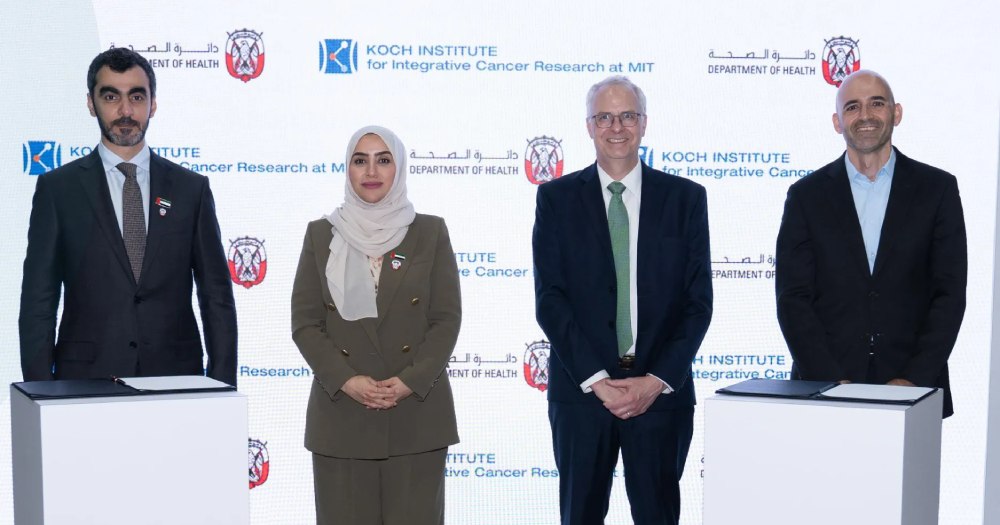
Abu Dhabi's Department of Health completed its fifth strategic mission to the United States last week, returning with 22 signed partnerships and agreements across some of the most active areas in modern medicine. The delegation visited San Francisco, San Diego, and Los Angeles, held more than 30 meetings, and toured 15 facilities run by leading healthcare and life sciences organizations.
More than 40 senior representatives made the trip, drawn from 16 organizations across government, healthcare, research, and industry. The list included Abu Dhabi Investment Office, M42, Hub71, NYU Abu Dhabi, Masdar City, Khalifa University, PureHealth, and Mubadala Bio, among others.
The deals span a wide range of areas, from genomics and AI-enabled drug discovery to biomanufacturing, gene therapy, and eye banking. Taken together, they point to a clear ambition: turn Abu Dhabi into a place where new medical technologies can be developed, tested, and deployed at scale, without having to cross multiple jurisdictions to do it.
What's the news?
The headline agreements from the mission cover several distinct areas:
- Precision medicine: The Department of Health signed collaborations with Boehringer Ingelheim, Novartis, and Eli Lilly to advance research into the genetic drivers of disease, expand AI-powered genomics work, and push forward innovation in obesity and Alzheimer's treatment.
- Virtual human twins: M42 announced a partnership between Abu Dhabi Biobank and BioTwin to bring Virtual Human Twin technology to the UAE, which creates digital models of individual patients to simulate how they might respond to treatment.
- Biotech infrastructure: Masdar City, M42, and Attentive Science launched Biosphere Labs, a new facility designed to speed up biotechnology research and commercialization.
- Clinical trials: Hub71 startup BioSapien advanced to Phase 1 clinical trials, an early but meaningful sign that Abu Dhabi can support biotech companies from early-stage innovation through to human testing.
- Biomanufacturing: Mubadala Bio signed an agreement with Biosidus to manufacture biologic medicines locally, reducing the region's dependence on imported therapies.
- Eye banking: Abu Dhabi Biobank and Bascom Palmer Eye Institute announced plans to establish the Middle East's first eye bank in Abu Dhabi, which will support transplantation, reduce reliance on donor tissue from abroad, and anchor a new center for ophthalmic research.
- California corridor: The Department of Health partnered with Biocom California to create a formal life sciences link between Abu Dhabi and California, opening channels for research collaboration, investment, and commercialization between the two regions.
Why does it matter?
The scale and variety of these agreements reflect something more than routine diplomatic activity. Abu Dhabi is trying to build the kind of end-to-end life sciences environment that typically only exists across multiple countries or institutions. The goal is to have genomics data, AI infrastructure, clinical research capacity, regulatory frameworks, and manufacturing all operating in one place.
That matters because the biggest bottleneck in modern medicine is rarely the science itself. It's the distance between a discovery and its use in a real patient. Moving a new therapy from a lab result to a clinical trial to regulatory approval to actual treatment can take over a decade, partly because each of those steps happens in a different place, under different rules, with different funding. Abu Dhabi is betting that collapsing that process into a single ecosystem will attract the companies and researchers who are tired of fighting that friction.
The Bascom Palmer eye bank deal is a good example of why this approach can deliver concrete results. Bascom Palmer is consistently ranked among the top ophthalmology programs in the world. Anchoring that kind of institution in Abu Dhabi doesn't just serve local patients; it positions the emirate as a regional reference point for a specific area of medicine, with the research output and clinical expertise that follows from that.
The context
Abu Dhabi has been building toward this position for several years. The HELM Cluster, run by Abu Dhabi Investment Office, is the main organizing structure for the emirate's health and life sciences investment strategy. HELM connects researchers, investors, companies, and healthcare providers under one framework, and the US mission was partly a showcase for what that cluster can offer international partners.
The broader backdrop is a global race among emerging life sciences hubs. Singapore, Saudi Arabia, and several European cities are all competing to attract pharmaceutical investment, clinical research, and biotech startups. Abu Dhabi's pitch is built on a few specific advantages:
- A large, relatively young population with high rates of conditions like diabetes and obesity, which makes it a useful place to run trials for metabolic disease treatments
- A national genomics program through Abu Dhabi Biobank that gives researchers access to population-level genetic data
- A regulatory environment that, by regional standards, moves quickly
- Significant sovereign wealth and investment capacity through vehicles like Mubadala
California is a deliberate choice of partner. The San Francisco Bay Area and San Diego are two of the most concentrated life sciences regions in the world, home to hundreds of biotech companies, major university research programs, and deep pools of venture capital. A formal corridor between Abu Dhabi and California gives companies in both places a structured way to explore markets, talent, and funding on the other side of the world.
Her Excellency Dr. Noura Khamis Al Ghaithi, Undersecretary of the Department of Health, framed the mission's purpose clearly: "The future of life sciences will not be defined by discovery alone, but by how quickly discovery can be translated into meaningful impact for people and communities." That framing, speed of translation rather than scientific priority, is central to how Abu Dhabi is positioning itself relative to more established research centers.
Latest @
75,000 samples in: inside Abu Dhabi's AI wastewater early-warning system
Dubai-founded Enhance raises $18.2 million to push deeper into US gym market
Saudi health minister signs MoU with Portugal in push to build global health partnerships
Neuratia Labs names ten fellows for its first global neuroscience research program
💡Did you know?
You can take your DHArab experience to the next level with our Premium Membership.👉 Click here to learn more
🛠️Featured tool
 Easy-Peasy
An all-in-one AI tool offering the ability to build no-code AI Bots, create articles & social media posts, convert text into natural speech in 40+ languages, create and edit images, generate videos, and more.
👉 Click here to learn more
