

VUNO signs five-country Middle East deal for its AI heart monitor
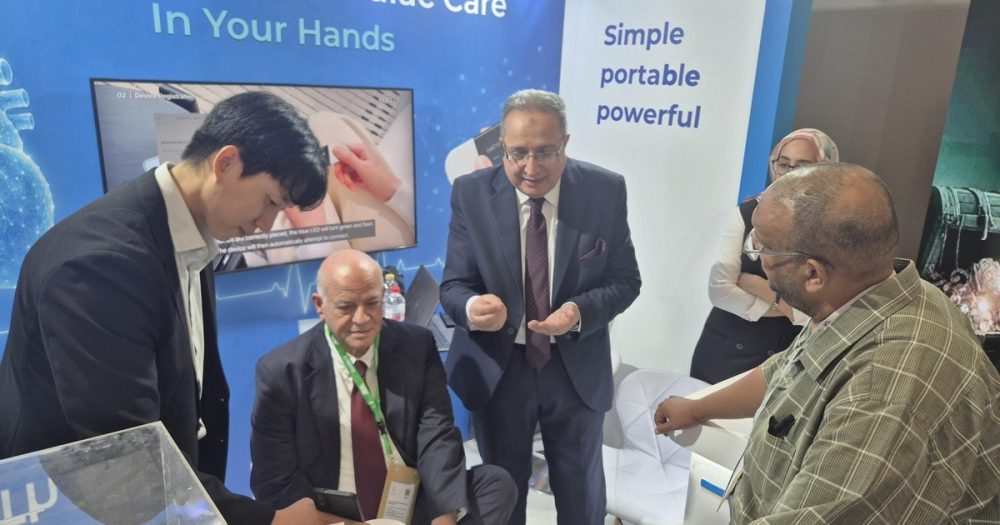
South Korean medical AI company VUNO has signed its first export deal in the Middle East, partnering with Egyptian healthcare distributor Health Arena to sell its portable electrocardiogram device across five countries in the region.
The agreement covers Egypt, the United Arab Emirates, Saudi Arabia, Kuwait, and Iraq. It gives Health Arena exclusive sales rights for VUNO's HATIV P30, a six-lead portable ECG device that uses AI to read heart data quickly and accurately. The deal was announced at CardioAlex, the largest cardiology conference in the Middle East and Africa, held in Alexandria, Egypt, in mid-June.
Around the same time, VUNO was also exhibiting in Thailand at the 38th Asia-Pacific Association of Cataract and Refractive Surgeons (APACRS) conference, where it promoted a second AI product aimed at detecting eye disease. The back-to-back appearances signal a clear push to build a foothold across two fast-growing healthcare markets.
How does it work?
VUNO makes AI software that helps doctors interpret medical images and data. The two products on show at these conferences do quite different things:
- HATIV P30 is a portable device that records a six-lead ECG. It is designed to be simple enough for use outside of hospitals, where trained cardiologists may not be available. The AI analyses the reading and flags abnormalities.
- VUNO Med-Fundus AI analyses photographs of the back of the eye (the fundus) and checks for signs of 12 different conditions. Research has shown it helps reduce inconsistencies that occur when staff with different levels of experience interpret the same images.
Both products have regulatory clearance in multiple markets. HATIV P30 holds approvals from the EU (CE-MDR), the UK (UKCA), Egypt, and Indonesia, which helped the company demonstrate credibility to local officials at CardioAlex.
Why does it matter?
This deal marks VUNO's first actual export result in the Middle East, which the company describes as a meaningful step rather than just a commercial agreement. The region has been expanding telemedicine services, and there is growing demand for tools that can bring decent diagnostic capability to areas with limited specialist coverage.
The same logic applies in Southeast Asia. At APACRS, VUNO and its Thai partner Hollywood International focused attention on public hospitals and clinics in Thailand that do not have ophthalmologists on staff. An AI tool that can read eye scans without a specialist present addresses a real gap in those settings.
For VUNO, these two regions represent different but connected opportunities:
- The Middle East deal gives the company a structured sales channel across five countries in one agreement.
- Southeast Asia offers a longer-term market entry play, starting with Thailand and potentially spreading to other countries in the region.
- Both markets could also feed into VUNO's stated goal of expanding into Europe and the wider Middle East with its eye-disease product.
The context
VUNO is listed on South Korea's KOSDAQ exchange (338220.KQ) and has been working to grow its revenue base outside Korea. Like many Korean medical AI companies, it has solid domestic clinical evidence but needs international regulatory approvals and local distribution partners to scale. The five-country Middle East agreement is a clear attempt to solve both problems at once.
The broader medical AI sector is seeing more deals of this type, where technology companies from Asia pair with regional distributors rather than trying to build their own sales teams from scratch. It is a faster route to market, though it does mean sharing margin and depending on a partner's existing relationships.
VUNO CEO Lee Ye-ha said the conferences confirmed strong local interest in the company's products and that the Middle East result would help the company speed up its push into global markets.
Latest @
75,000 samples in: inside Abu Dhabi's AI wastewater early-warning system
Dubai-founded Enhance raises $18.2 million to push deeper into US gym market
Saudi health minister signs MoU with Portugal in push to build global health partnerships
Neuratia Labs names ten fellows for its first global neuroscience research program
💡Did you know?
You can take your DHArab experience to the next level with our Premium Membership.👉 Click here to learn more
🛠️Featured tool
 Easy-Peasy
An all-in-one AI tool offering the ability to build no-code AI Bots, create articles & social media posts, convert text into natural speech in 40+ languages, create and edit images, generate videos, and more.
👉 Click here to learn more
