

Medcare becomes first healthcare provider in EMEA to go all-in on AI-native electronic health records
Most hospitals that have adopted AI in recent years have done so in pieces: a diagnostic tool here, an automation layer there. The underlying electronic health record system stays the same, and AI sits on top of it like a plugin. Medcare Hospitals and Medical Centres, a premium UAE-based healthcare group under the Aster DM Healthcare umbrella, is taking a different approach.
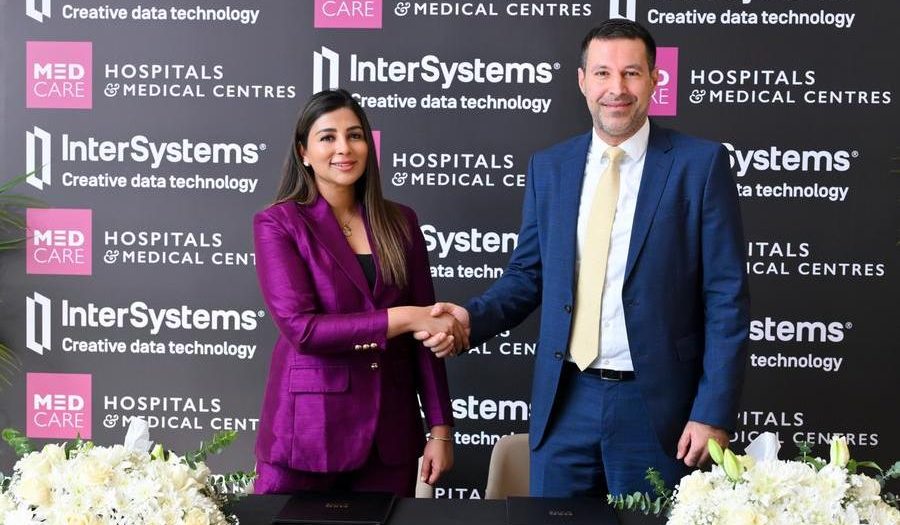
Medcare has signed a deal with InterSystems to implement IntelliCare, an electronic health record (EHR) platform built from the ground up with AI at its core. The agreement, signed in Dubai by Alisha Moopen, Group CEO of Aster DM Healthcare, and Ali Abi Raad, Managing Director of InterSystems Middle East, India and South Africa, makes Medcare the first healthcare provider in Europe, the Middle East, and Africa to adopt the platform.
The rollout covers 6 hospitals and 25 medical centres across the UAE. It is one of the most significant healthcare technology commitments in the region this year, and it signals a broader shift in how health systems are thinking about AI: not as a feature, but as the foundation.
How does it work?
IntelliCare is not a traditional EHR with AI added on. InterSystems designed it with AI built directly into the clinical workflow. In practice, that means physicians get access to tools that would otherwise require switching between multiple systems or manually searching through records.
Key capabilities include:
- Ambient documentation: The platform can listen to clinical conversations and generate notes automatically, reducing the time doctors spend typing after appointments.
- Natural language interaction: Clinicians can ask the system questions in plain language to pull up relevant patient history, test results, medications, and prior notes.
- AI-powered information retrieval: Instead of searching through records manually, physicians get the right information surfaced at the right time.
- Agentic AI (coming in future releases): The platform will deploy background AI agents that work in parallel with clinicians, supporting decision-making and managing workflow tasks, while keeping a human in the loop at all times.
For patients, the practical benefit is more face time with their doctor. When physicians are not buried in screens or paperwork, consultations become more substantive. A unified patient record also means less duplication and better continuity of care across different hospitals and specialists.
Why does it matter?
Physician burnout is a well-documented crisis in healthcare globally, and administrative burden is one of its biggest drivers. Studies have repeatedly shown that doctors spend as much time on documentation as they do on actual patient care. Any technology that meaningfully reduces that burden has real clinical and human value.
What makes this deal notable is the scope and the approach. Medcare is not piloting a single AI tool in one department. It is replacing its core health record infrastructure with a platform where AI is the default, not an add-on. That is a harder decision to make and a bigger bet to place.
IntelliCare also carries some external validation worth noting:
- It is the first unified AI EHR to earn EU Class IIa Medical Device Regulation (MDR) certification, a rigorous standard for clinical safety.
- It has already been deployed at EMC Healthcare in Indonesia, where it runs across eight hospitals.
- Medcare has worked with InterSystems since 2020, previously running the company's TrakCare platform, so this is an upgrade from a known system rather than a cold switch.
For the wider EMEA region, this also sets a reference point. Healthcare systems looking to modernize their records infrastructure now have a live, large-scale example to watch.
The context
The global EHR market is crowded, and most of the dominant players, including Epic and Oracle Health, have been adding AI features to existing platforms rather than rebuilding from scratch. InterSystems is making a different argument with IntelliCare: that the architecture of the underlying system matters, and that bolting AI onto legacy infrastructure limits what you can actually do with it.
That argument is gaining traction as agentic AI, where AI systems take actions and manage tasks autonomously rather than just responding to prompts, moves from research into commercial products. Healthcare is one of the most complex environments to deploy agentic AI responsibly, given the stakes involved. The fact that IntelliCare's agentic features are designed to keep a human in the loop reflects the cautious approach most health systems will demand.
The UAE has been pushing hard to position itself as a regional hub for health technology investment, and this deal fits that broader direction. Aster DM Healthcare, Medcare's parent group, operates across the Gulf and India, so the implications of this partnership could extend well beyond the UAE if the rollout delivers on its promises.
For now, the industry will be watching closely. A fully AI-native EHR running across a multi-hospital network in a live clinical environment is still relatively rare. How it performs over the next 12 to 18 months will do more to shape the conversation around AI in healthcare than any press release.
Latest @
Blueprint lands in the UAE as longevity moves from policy to product
M42 launches 10,000-patient wearable pilot in Abu Dhabi to reshape chronic disease care
Unilabs Middle East and Takalam link diagnostics to mental health in one app
Al Ghurair enters healthcare with Trellis Health launch in Dubai
💡Did you know?
You can take your DHArab experience to the next level with our Premium Membership.👉 Click here to learn more
🛠️Featured tool
 Easy-Peasy
An all-in-one AI tool offering the ability to build no-code AI Bots, create articles & social media posts, convert text into natural speech in 40+ languages, create and edit images, generate videos, and more.
👉 Click here to learn more
