

Midjourney is building a full-body ultrasonic scanner and spa clinics to house them
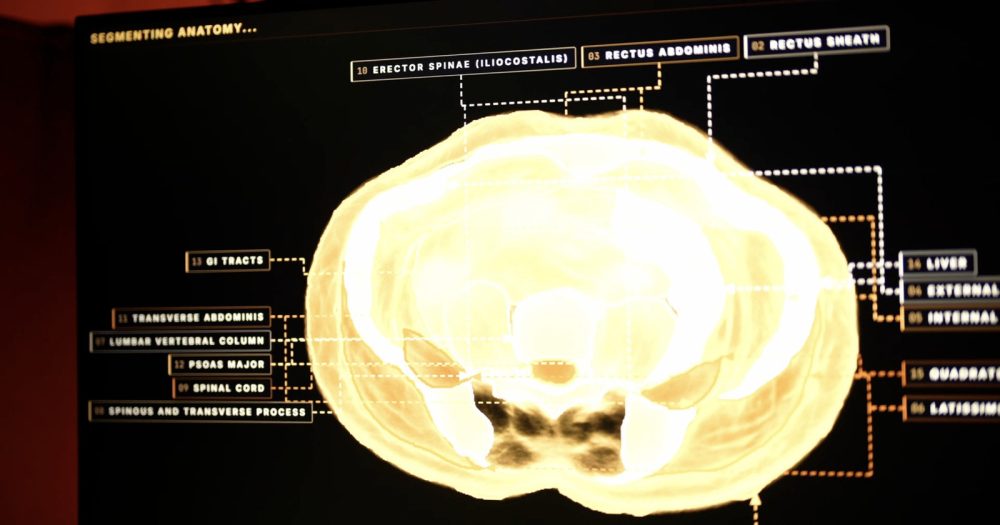
Midjourney is best known for turning text prompts into images. Now it wants to scan your internal organs. The company has announced Midjourney Medical, a new division focused on healthcare hardware, with its first product being a full-body ultrasonic scanner it claims can complete a scan in under 60 seconds.
The announcement is jarring, even by tech industry standards. Midjourney itself acknowledged in its blog post that this has nothing to do with anything the company has built before. But it says it's asking itself bigger questions now, like what it wants to become, and apparently the answer involves medical imaging and day spas.
The company is planning to open physical locations it's calling Spas, starting with one in San Francisco, where people can walk in and get scanned. Think of it as a wellness visit, but instead of a massage, you get a detailed 3D map of your insides.
What's the story?
Here's how the scanner works. You step onto a platform and get slowly submerged in water at about 2 inches per second. Your body passes through a ring packed with roughly half a million tiny squares, each about the size of a grain of sand. Each square can emit ultrasonic waves and detect the ripples that bounce back from your body, building up a picture of what's inside.
Midjourney compares the process to dolphin echolocation, which is a reasonable analogy. The result, the company says, is a 3D image of your body accurate to a fraction of a millimeter, similar in detail to an MRI but produced in a fraction of the time. A full-body MRI typically takes between 60 and 90 minutes. Midjourney's target is under 60 seconds.
The company is not building this alone. It signed a licensing agreement in November 2025 with Butterfly Network, a medical hardware firm that makes handheld ultrasound devices. That deal gave Midjourney exclusive rights to Butterfly's ultrasound-on-chip technology, which is the core of what makes the scanner possible. The project is led by Tom Calloway PhD, Head of Medical at Midjourney.
Why does it matter?
If the scanner works as described, the implications for preventive medicine are significant. Most people never get a full-body MRI because the process is slow, expensive, and requires a hospital or specialist clinic. A fast, accessible scan available at a walk-in location could make early detection of conditions like cancer or cardiovascular disease far more common.
Midjourney has set out some ambitious targets:
- First Spa location opens in San Francisco in 2027
- FDA approval for diagnostic use is the next regulatory hurdle
- A third-generation machine using custom silicon is planned for 2028, which the company says is when image quality will become competitive with standard MRIs
- 50,000 scanners available worldwide by 2031
The company also made a bold claim in its announcement: "We think it's completely possible that with enough early imaging in the future, the world could avoid 30 percent of all deaths and 50 percent of all healthcare costs." That's an extraordinary statement, and the company will need substantial clinical evidence to back it up.
The context
Midjourney's pivot into medical hardware is unusual, but it fits a broader pattern of AI software companies looking for physical products to build. Apple did it with health sensors in the Apple Watch. Google has pushed into medical imaging AI. And Elon Musk launched Neuralink while running multiple other companies. The idea that a software-first company can reinvent itself around hardware is not new, but it's rarely straightforward.
The partnership with Butterfly Network is worth paying attention to. Butterfly's ultrasound-on-chip technology has already been validated in clinical settings through its handheld devices, which are used by doctors in hospitals. That gives Midjourney a credible technical foundation rather than starting from scratch.
The bigger question is regulatory. Getting FDA approval for a diagnostic medical device is a long and expensive process. Midjourney's roadmap puts serious diagnostic capability in 2028 at the earliest, which means the early Spa locations will likely be offering wellness scans rather than clinical diagnoses. That's a meaningful distinction, and one that will matter to anyone hoping to use the scanner to catch a health problem early.
Still, the concept is worth watching. Ultrasound is already widely used in medicine because it's safe, non-invasive, and doesn't use radiation. If Midjourney and Butterfly Network can genuinely deliver MRI-quality imaging at a fraction of the time and cost, that would be a real shift in how preventive healthcare works.
Latest @
Blueprint lands in the UAE as longevity moves from policy to product
M42 launches 10,000-patient wearable pilot in Abu Dhabi to reshape chronic disease care
Unilabs Middle East and Takalam link diagnostics to mental health in one app
Al Ghurair enters healthcare with Trellis Health launch in Dubai
💡Did you know?
You can take your DHArab experience to the next level with our Premium Membership.👉 Click here to learn more
🛠️Featured tool
 Easy-Peasy
An all-in-one AI tool offering the ability to build no-code AI Bots, create articles & social media posts, convert text into natural speech in 40+ languages, create and edit images, generate videos, and more.
👉 Click here to learn more
