

Clair Health raises $11.6M to build a wearable that tracks hormones in real time
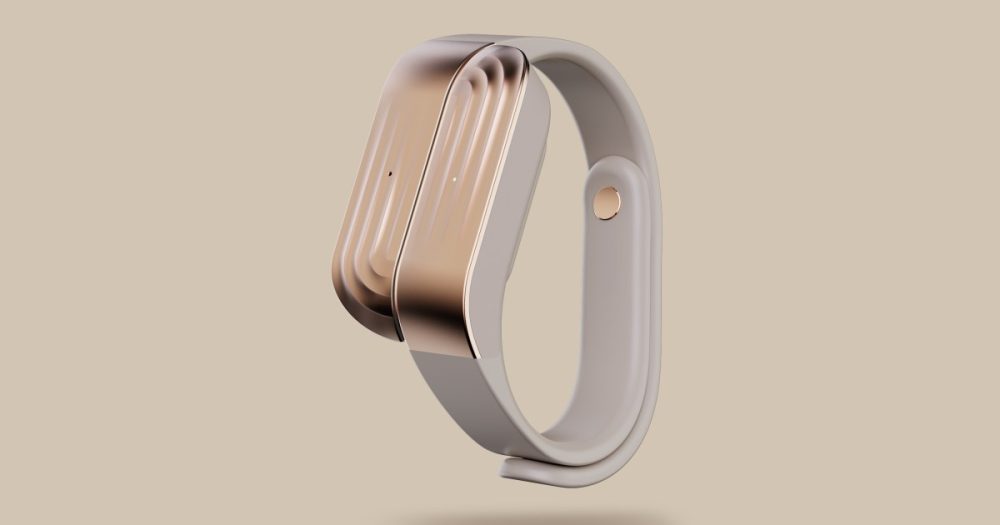
Tracking your heart rate or step count is easy. Tracking your hormones is a different problem entirely. Most wearables on the market today were not designed with women's hormonal health in mind, and the gap between what women experience and what current devices can actually measure has been largely ignored by the industry.
Clair Health, founded by Stanford graduates Jenny Duan and Abhinav Agarwal, wants to fix that. The startup is building a wearable device and companion app designed to track hormonal fluctuations, cycle phases, inflammation, and perimenopause symptoms, then turn that data into something useful for users and their doctors.
The company has raised $11.6 million in a funding round led by Khosla Ventures. Other backers include a16z speedrun, Brydge Club, Treehub, Cartan Capital, AGI House, Insiders VC, Anne Wojcicki, and Stephanie Coleman. The device is priced at $369 paired with a $9.99 monthly subscription, with beta units expected to ship in November. Preorders are open now.
How does it work?
The core of Clair Health's pitch is its hardware. Where a typical smartwatch uses three or four sensors, the Clair device has 10 biosensors. One of them is a novel biomagnetic sensor the company says can pick up hormonal signals that standard optical and temperature sensors simply cannot detect.
"Until today, there hasn't been a single device, be it invasive or noninvasive, that can capture insights into hormones in real time and get to the source of a problem. We didn't start by thinking of building a particular piece of hardware. We just wanted to track hormones continuously," Duan told TechCrunch.
The device tracks across all four phases of the menstrual cycle, not just around menstruation. From those signals, the app generates information on:
- Cycle phase classification and irregularities
- Perimenopause and hormonal fluctuations
- Inflammation and bloating markers
- Energy levels and rate of perceived exertion
- Pace of biological aging
Alongside the hardware, Clair Health uses voice-based onboarding to collect user health data. The company says it has trained its own AI to analyze voice biomarkers and determine which phase of the cycle a user is in after a short conversation. The idea is to let women describe their symptoms in their own words rather than forcing them to pick from a fixed list inside an app.
"With our voice stack, we are giving our users a way to communicate their own problems in their own way," Duan said.
Why does it matter?
The case for Clair Health comes down to a simple problem: women with hormonal conditions still often rely on periodic blood draws and verbal symptom recounts to get answers. That process is slow, imprecise, and depends heavily on the quality of the appointment.
Mary Minno, an investor at Treehub, put it plainly: "Hormonal health measurement today is still archaic. My perimenopausal friends are still getting blood draws to understand the efficacy of hormone treatments."
Continuous monitoring changes that dynamic. If Clair Health's device works as described, women with conditions like endometriosis, PMDD, or perimenopause would have a much richer picture of their health to share with healthcare providers, rather than trying to remember and explain weeks of symptoms in a single visit. That kind of data could lead to faster diagnoses and better-matched treatments.
The context
Women's health technology has attracted serious investment attention in recent years, but hormone tracking specifically remains a technically difficult area. Most startups in this space have taken different routes to the same problem:
- Level Zero Health uses a continuous glucose monitor-style device for real-time tracking
- Hormona relies on home testing kits
- Ourself Health uses AI to generate insights from manual symptom logging
Clair Health's approach, combining novel sensor hardware with AI-driven voice analysis and a large dataset of electronic health records, is more ambitious than most. The company says it has data partnerships giving it access to several million electronic health records and longitudinal health data, which it is using to build condition-specific models for endometriosis, PMDD, perimenopause, and other issues.
Whether the hardware performs as claimed is still an open question. The device is currently being tested with a closed group of beta users, and independent validation of the biomagnetic sensor's hormonal tracking capabilities has not yet been published. That will matter a great deal to both consumers and the healthcare providers Clair Health hopes to work alongside.
Latest @
Blueprint lands in the UAE as longevity moves from policy to product
M42 launches 10,000-patient wearable pilot in Abu Dhabi to reshape chronic disease care
Unilabs Middle East and Takalam link diagnostics to mental health in one app
Al Ghurair enters healthcare with Trellis Health launch in Dubai
💡Did you know?
You can take your DHArab experience to the next level with our Premium Membership.👉 Click here to learn more
🛠️Featured tool
 Easy-Peasy
An all-in-one AI tool offering the ability to build no-code AI Bots, create articles & social media posts, convert text into natural speech in 40+ languages, create and edit images, generate videos, and more.
👉 Click here to learn more
