

Saudi hospital removes pancreatic and liver tumors in a single robotic operation
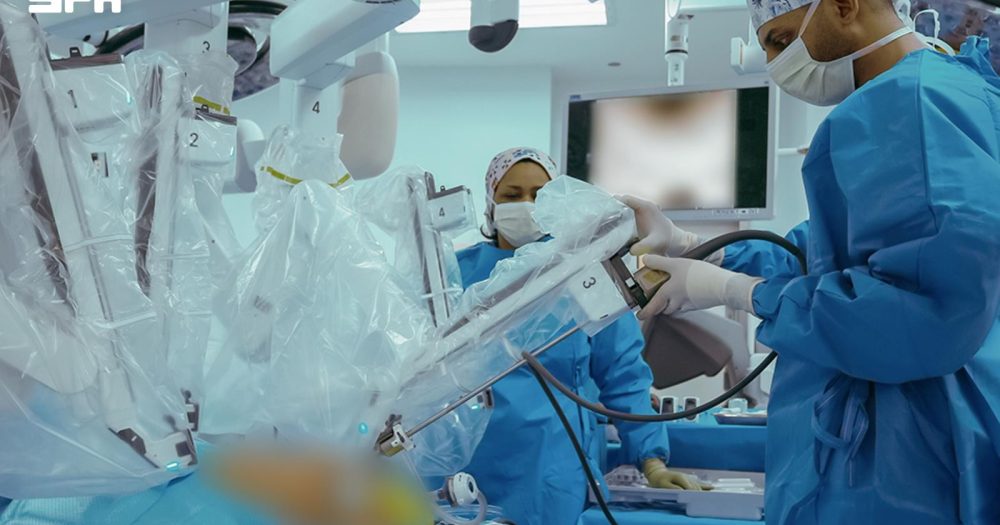
Surgeons at King Faisal Specialist Hospital and Research Centre (KFSH) in Jeddah have performed a single robotic operation to remove tumors from both the pancreas and the liver of a 74-year-old patient. The procedure combined two of the most demanding operations in abdominal surgery into one session, and the team completed it without converting to open surgery.
The patient arrived with symptoms of cholangitis, a bacterial infection of the bile ducts. Scans revealed a tumor in the head of the pancreas blocking the bile duct, and a separate tumor in a section of the liver. A multidisciplinary team reviewed the case and decided to tackle both in one operation, accounting for the patient's age and other health conditions.
KFSH announced the result on June 17, 2026, describing it as a significant case given how rarely these two cancers appear at the same time and how difficult they are to treat together.
How did it work?
The surgical team performed two separate but connected procedures in the same session:
- A pancreaticoduodenectomy, also called the Whipple procedure, which removes the head of the pancreas, part of the small intestine, the gallbladder, and part of the bile duct
- A partial hepatectomy, which removes the affected section of the liver
- Reconstruction of the digestive and biliary pathways to restore normal function after both removals
The robotic system gave surgeons high-definition, three-dimensional visuals and fine instrument control inside tight anatomical spaces where a small error can have serious consequences. The team included hepatopancreatobiliary surgeons, anesthesiologists, radiologists, gastroenterologists, oncologists, pathologists, critical care specialists, and nursing staff, all coordinating before, during, and after the operation.
Why does it matter?
Having cancer in both the pancreas and the liver at the same time is rare. Treating them together in one operation is harder still, because both organs sit in sensitive areas with major blood vessels nearby, and the reconstruction work after each removal adds its own risk. Traditionally, surgeons might have staged these as two separate open operations, which means two rounds of anesthesia, two recoveries, and more overall risk for an older patient with existing health problems.
Completing both in a single robotic session matters for a few reasons:
- One round of anesthesia instead of two reduces risk for the patient
- Robotic surgery typically means less blood loss and less physical trauma to surrounding tissue
- Recovery tends to be faster than after open surgery, which is important for a 74-year-old
- The hospital did not need to convert to open surgery, which is often a sign that the planning and execution went well
For the broader field, the case adds to the evidence that robotic platforms can handle compound cancer operations that would previously have been split up or avoided altogether in high-risk patients.
The context
Robotic surgery has been expanding steadily in oncology over the past decade. Early adoption focused on prostate and gynecological cancers, where the confined space and need for precision made the technology an obvious fit. More recently, hospitals have pushed into hepatopancreatobiliary surgery, one of the last areas where open surgery remained dominant because of the complexity involved.
KFSH is currently ranked first in the Middle East and North Africa and 12th globally among the world's top 250 academic medical centers for 2026, according to its own rankings citation. Newsweek also listed it among the world's best hospitals, best smart hospitals, and best specialized hospitals for 2026. The hospital has been building its robotic surgery program as part of a wider push in Saudi Arabia to develop advanced medical capabilities domestically, in line with the country's Vision 2030 goals for the healthcare sector.
Pancreatic cancer in particular carries a poor prognosis partly because it is hard to detect early and hard to operate on safely. Cases where it appears alongside liver tumors are studied closely because the surgical and oncological decisions involved push the limits of what combined robotic procedures can achieve.
Latest @
Blueprint lands in the UAE as longevity moves from policy to product
M42 launches 10,000-patient wearable pilot in Abu Dhabi to reshape chronic disease care
Unilabs Middle East and Takalam link diagnostics to mental health in one app
Al Ghurair enters healthcare with Trellis Health launch in Dubai
💡Did you know?
You can take your DHArab experience to the next level with our Premium Membership.👉 Click here to learn more
🛠️Featured tool
 Easy-Peasy
An all-in-one AI tool offering the ability to build no-code AI Bots, create articles & social media posts, convert text into natural speech in 40+ languages, create and edit images, generate videos, and more.
👉 Click here to learn more
