

This 3-gram patch could replace your doctor’s stethoscope
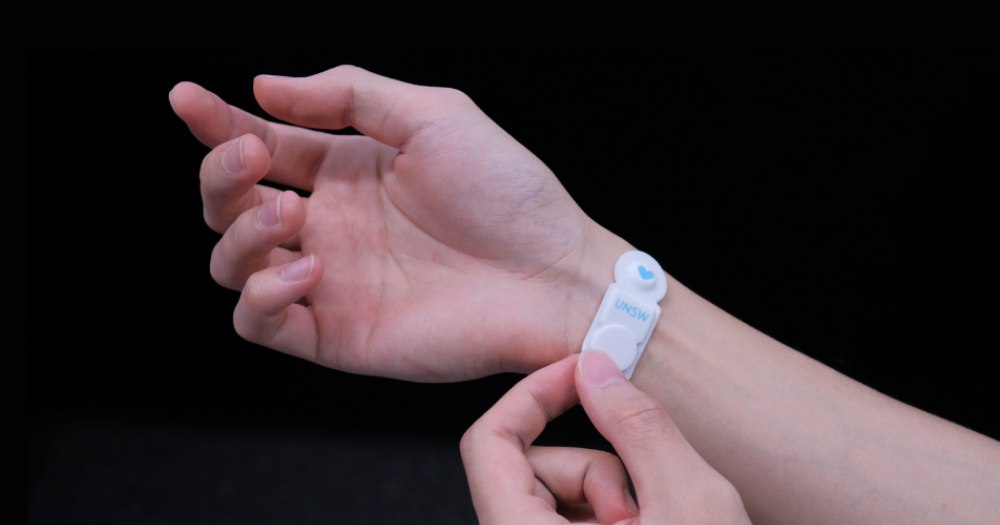
Heart disease and chronic respiratory conditions are among the leading causes of death worldwide, yet most patients only get a brief check-up during occasional clinic visits. By the time symptoms are serious enough to warrant a trip to the doctor, the disease may have already progressed. Researchers at the University of New South Wales think a small adhesive patch could change that.
The device, called the AusculPatch, is a flexible sensor that sticks to the chest or over peripheral arteries and continuously picks up the mechanical vibrations produced by the heart, lungs, blood vessels, and pulse waves. It weighs 3.2 grams and measures roughly 20 by 47 by 3 millimetres, making it significantly smaller than most existing wearable health monitors.
The proof-of-concept research, led by Scientia Associate Professor Hoang-Phuong Phan and published in Nature Communications, describes how the patch was tested on a small group of healthy participants while they carried out everyday tasks including walking, eating, climbing stairs, and holding conversations. The team is now planning a much larger clinical trial.
How does it work?
At the core of the AusculPatch is an ultra-thin silicon sensing element. When the heart beats, it sends acoustic pressure waves through the body's fluids and tissues. The sensing element picks up those tiny vibrations directly through the skin.
What sets this apart from a standard microphone is its frequency range. Conventional microphones are built to capture audible sound. This sensor can detect extremely low-frequency vibrations that are hard to pick up with current wearable technology, which means it can capture a broader set of physiological signals:
- Heart sounds, including subtle valve movements
- Breathing patterns
- Pulse waves
- Blood flow vibrations
- Blood pressure indicators
The team also designed the sensor to filter out environmental noise, a known weak point for acoustic wearables. "The sensor element is designed to shield the sound coming from one direction, typically from the human body," said Tran Bach Dang, the study's first author and a PhD candidate at UNSW's School of Mechanical and Manufacturing Engineering. "In that way, it is less susceptible to ambient sound."
In early tests, the patch showed strong agreement with established clinical tools including electrocardiograms, ultrasound scans, blood pressure monitors, and digital stethoscopes.
Why does it matter?
The problem the AusculPatch is trying to solve is straightforward. Most people with chronic heart or respiratory conditions are not being monitored between appointments. When they do see a doctor, the window is short.
"When they go to a clinic, patients often only have a 15-minute window for assessment," said Dr Anthony Sunjaya, a medical doctor and Program Lead for Chronic Respiratory Disease at UNSW's School of Population Health, who co-authored the study. "The danger is that the abnormalities experienced will not be fully recognised during that short period of time they are being seen."
This is especially true for people in regional and remote areas, or those who are reluctant to visit hospital until symptoms become severe. By that point, outcomes are often worse even with treatment.
Continuous home monitoring could close that gap. The research team also sees significant potential in combining the patch with machine learning. Because the device collects large amounts of physiological data over time, an AI system could be trained to spot patterns that indicate a deterioration in health before the patient feels significantly worse.
"We can potentially apply machine learning to identify abnormal signals and warn the patients, and also notify their doctor," said Dr Chi Cong Nguyen, an Associate Lecturer and co-corresponding author of the paper.
The context
Wearable health tech is a fast-growing market. Smartwatches and fitness trackers can already measure heart rate and blood oxygen levels, but they rely on optical sensors rather than acoustic ones. They give a relatively limited picture of what the heart and lungs are actually doing mechanically. The AusculPatch is trying to capture the kind of information that, until now, has mostly required clinical equipment and a trained clinician to interpret it.
The study is still at an early stage. The initial tests involved only a small number of healthy volunteers, and the patch has not yet been tested on people with the conditions it is designed to monitor. Larger studies are needed before anyone can draw firm conclusions about its clinical value.
That said, the UNSW team has a clear roadmap:
- A trial involving around 200 patients, including people with heart valve disease or implanted heart assist devices, is planned for later this year
- A follow-up study targeting around 1,000 patients is planned for subsequent years, focused on developing AI-assisted diagnostic tools
- Full regulatory approval for a medical-grade device is estimated to be around four to five years away
- A consumer wellness version of the technology could potentially arrive sooner
The researchers also demonstrated an early-stage application beyond cardiorespiratory monitoring: the patch can detect vocal cord vibrations through the throat. In proof-of-concept experiments, they used machine learning to recognise spoken words and wirelessly control a robotic arm, which could eventually support people with speech disorders or physical disabilities. That work is still at a very early stage, but it points to a broader range of possible uses for the underlying sensor technology.
Latest @
Blueprint lands in the UAE as longevity moves from policy to product
M42 launches 10,000-patient wearable pilot in Abu Dhabi to reshape chronic disease care
Unilabs Middle East and Takalam link diagnostics to mental health in one app
Al Ghurair enters healthcare with Trellis Health launch in Dubai
💡Did you know?
You can take your DHArab experience to the next level with our Premium Membership.👉 Click here to learn more
🛠️Featured tool
 Easy-Peasy
An all-in-one AI tool offering the ability to build no-code AI Bots, create articles & social media posts, convert text into natural speech in 40+ languages, create and edit images, generate videos, and more.
👉 Click here to learn more
