

South Korea is the first country to officially recommend a blood pressure ring for hypertension treatment
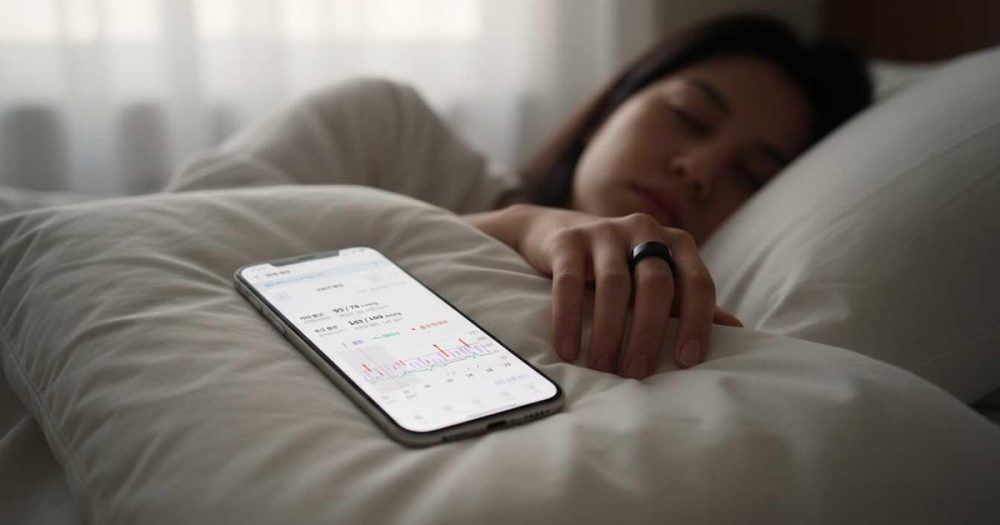
South Korea has become the first country in the world to officially recommend a ring-type cuffless blood pressure monitor as part of standard hypertension care. The Korean Society of Hypertension (KSH) included the device in the sixth revised edition of its clinical guidelines for managing hypertension, published in June 2026.
The device in question is Sky Labs' CART BP pro, a ring worn on the finger that tracks blood pressure continuously without a traditional cuff. Under the new guidelines, the device may be used for out-of-office blood pressure monitoring in patients with prehypertension and high-risk groups who need close blood pressure control. It received a Class IIb recommendation, meaning doctors can prescribe it with formal clinical backing.
Sky Labs told MobiHealth News that the inclusion gives physicians clear justification to prescribe the device as a validated medical tool, rather than a consumer gadget. Since receiving national health insurance reimbursement in South Korea in June 2024, the CART BP pro has been prescribed more than 250,000 times and is in active use at nearly 2,000 hospitals and clinics across the country.
How does it work?
The CART BP pro is worn like a ring on the finger. It uses photoplethysmography, a light-based sensor technology, to collect blood pressure data continuously. That data is then processed using deep learning AI to generate blood pressure readings around the clock.
This is different from standard blood pressure cuffs, which inflate around the arm and take single-point readings. Cuffless monitors can track blood pressure during sleep and first thing in the morning, two windows that traditional devices often miss entirely.
To earn its place in the KSH guidelines, the device had to meet ISO 81060 accuracy requirements when compared with 24-hour ambulatory blood pressure monitoring (ABPM), the current gold standard for out-of-office measurement. The results showed:
- A mean error within 5 mmHg
- A standard deviation within 8 mmHg
- Consistent accuracy during both daytime and nighttime monitoring
Why does it matter?
Hypertension societies around the world have been slow to recommend cuffless blood pressure devices. The main sticking points have been a lack of standardised validation protocols and concerns about accuracy. South Korea's decision to formally include a cuffless ring in its national guidelines is a significant shift.
The clinical case for continuous monitoring is real. The KSH cited local research showing that nocturnal hypertension, defined as blood pressure of at least 120/70 mmHg during sleep, affects around 18 to 23 percent of the general population. More than 90 percent of those people have masked hypertension, meaning their blood pressure appears normal in a standard clinic setting. A separate Korean study found that 15.9 percent of patients with hypertension also have morning hypertension, which is blood pressure of at least 135/85 mmHg shortly after waking.
These are conditions that a one-time clinic reading will almost certainly miss. Wearable, continuous monitoring addresses that gap directly. It also removes common barriers to compliance:
- No cuff means no compression pain
- Wearing a ring overnight does not disrupt sleep the way an arm cuff does
- Patients who struggle with standard cuff monitoring have a practical alternative
The context
South Korea's 2026 hypertension guidelines introduced stricter blood pressure targets across the board. For patients with diabetes, chronic kidney disease, stroke history, or high-risk hypertension, the new target is below 130/80 mmHg. That tighter threshold makes continuous, accurate monitoring even more important.
The guidelines also recommend that patients with prehypertension actively consider ABPM or home blood pressure measurement to detect masked hypertension early, and they formalise 24-hour ABPM as the method for evaluating both nocturnal and morning hypertension.
The CART BP pro sits within that framework as a practical, insurance-covered option for patients who need frequent monitoring but cannot or will not tolerate a traditional cuff.
Looking ahead, the KSH is running a five-year large-scale cohort study using the CART BP pro to track long-term outcomes in hypertension patients. Sky Labs says data from that study could support a higher recommendation grade for cuffless monitors in future guidelines.
Sky Labs CEO Jack ByungHwan Lee said the company now plans to pursue overseas regulatory approvals following the guideline inclusion. For other national health bodies still sitting on the fence about cuffless devices, South Korea's move gives them a concrete, guideline-backed reference point to work from.
Latest @
Blueprint lands in the UAE as longevity moves from policy to product
M42 launches 10,000-patient wearable pilot in Abu Dhabi to reshape chronic disease care
Unilabs Middle East and Takalam link diagnostics to mental health in one app
Al Ghurair enters healthcare with Trellis Health launch in Dubai
💡Did you know?
You can take your DHArab experience to the next level with our Premium Membership.👉 Click here to learn more
🛠️Featured tool
 Easy-Peasy
An all-in-one AI tool offering the ability to build no-code AI Bots, create articles & social media posts, convert text into natural speech in 40+ languages, create and edit images, generate videos, and more.
👉 Click here to learn more
