

A new MRI-guided cancer centre brings adaptive radiotherapy to Sharjah
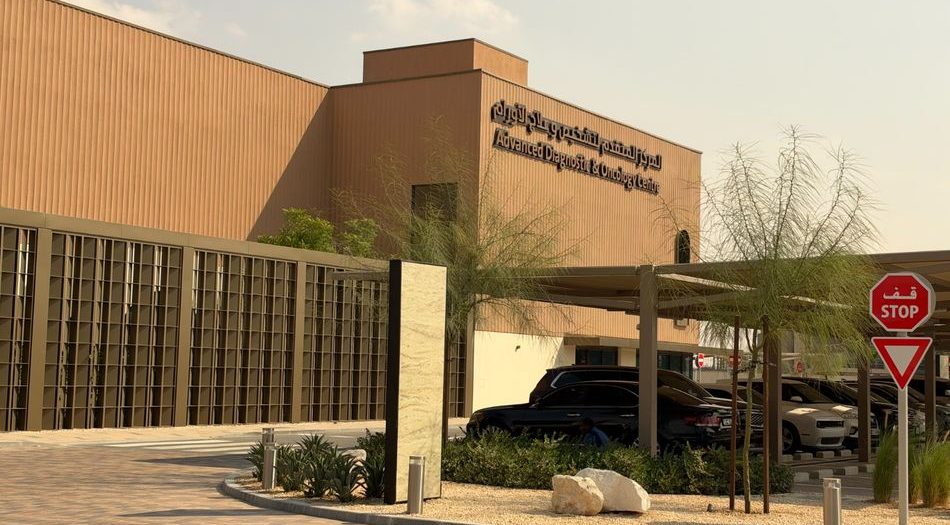
Radiation therapy has a long-standing blind spot. Tumours move, organs shift and patients change over a course of treatment lasting weeks, yet plans are usually built from scans taken beforehand. A centre now being developed in Sharjah is designed to close that gap by watching the tumour while it treats it.
The Advanced Diagnostics and Oncology Center (ADOC) sits in Sharjah Healthcare City. It spans about 6,500 square metres and will bring radiation oncology, medical oncology, brachytherapy and advanced diagnostic imaging under one roof. Its centrepiece is MR-Linac technology, backed by AI-supported adaptive radiotherapy.
What's the news?
MR-Linac combines magnetic resonance imaging with a radiation delivery system in a single machine. Conventional treatment relies mainly on imaging done before the session. With MRI guidance, clinicians can see the tumour and surrounding structures during treatment, which supports more accurate targeting.
The system also lets teams track anatomical changes between sessions and, where clinically appropriate, adapt the treatment plan using updated images. That matters most for tumours affected by natural organ movement or changes in nearby tissue.
AI plays a supporting role. It helps with image processing, treatment planning and the analysis of anatomical changes, so teams can review and adjust plans when a tumour's position or shape changes. It may also speed up parts of the planning process, especially in complex cases near sensitive organs.
Human judgement stays in charge. Radiation oncologists review the imaging, weigh the options and approve clinical decisions in line with recognised medical standards. AI is an added support, not a substitute.
The article provides no pricing, opening date or patient capacity figures, so those remain open questions for now.
Why does it matter?
Dr Aly Abdelrazek, Executive Director and Head of Radiation Oncology at Gulf International Cancer Center (GICC) and a Fellow of the American College of Radiation Oncology, argues that the technology is only part of the answer. "Advances in cancer treatment are not simply about introducing sophisticated medical equipment," he said. They require "a comprehensive clinical framework" that combines expertise, accurate planning, continuous monitoring and collaboration between disciplines.
He is right, and the access argument is just as strong. Radiation therapy can mean multiple sessions over several weeks. For a patient in Ras Al Khaimah or Umm Al Quwain, repeated long journeys add cost, fatigue and disruption to family life. ADOC is expected to serve residents of Sharjah, Ajman, Umm Al Quwain, Ras Al Khaimah and surrounding communities.
"Providing specialised treatment closer to patients' communities can help reduce the burden of repeated travel," Dr Abdelrazek said. Fewer missed sessions and easier follow-up are practical gains that never show up in an equipment brochure.
The centre's design reflects this thinking. It aims to coordinate several specialties in one place, with attention to patients' clinical, practical and psychological needs.
The context
The UAE has been pushing hard on precision medicine, AI and advanced imaging, and oncology is one of the clearest tests of that strategy. Cancer care is complex, expensive and dependent on specialist skills, so it rewards exactly the kind of coordinated investment national health agendas call for.
The same pattern is visible across the GCC. Saudi Arabia's Vision 2030 health programmes and wider regional digital health plans also prioritise specialised services, local capacity and fewer overseas referrals. Adaptive radiotherapy fits that direction because it depends on imaging, data and software as much as on hardware.
Geography is the other half of the story. Much of the UAE's most advanced oncology capacity has clustered in the larger urban centres. Placing MR-Linac technology in Sharjah Healthcare City widens the map for the Northern Emirates.
Several questions will decide whether ADOC delivers on its promise:
- How quickly clinical teams are trained on MR-guided adaptive workflows
- How well radiation, medical oncology and diagnostics coordinate in daily practice
- Whether patients in outlying emirates can reach the centre easily
- How outcomes and safety data are tracked and shared
Machines of this kind are still relatively new, and adaptive treatment demands time from physicists, radiographers and physicians. But if the model works, Sharjah could become a reference point for regional cancer care, showing that precision oncology can be built close to the communities who need it.
Latest @
A new MRI-guided cancer centre brings adaptive radiotherapy to Sharjah
UAE's MoHAP bets that the next health fix will come from its own corridors
Dubai and Abu Dhabi bring their AI research bodies together
Dubai bets on precision medicine with a new dedicated centre
Abu Dhabi wants to find lung cancer in X-rays it has already taken
💡Did you know?
You can take your DHArab experience to the next level with our Premium Membership.👉 Click here to learn more
🛠️Featured tool
 Easy-Peasy
An all-in-one AI tool offering the ability to build no-code AI Bots, create articles & social media posts, convert text into natural speech in 40+ languages, create and edit images, generate videos, and more.
👉 Click here to learn more
