

Dubai and Abu Dhabi bring their AI research bodies together
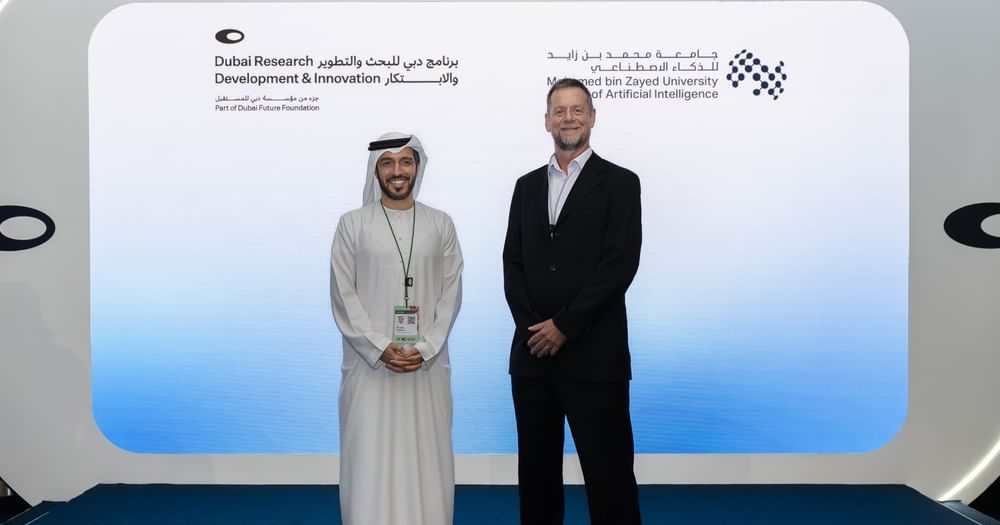
Two of the UAE's most closely watched future-focused institutions have decided to work side by side. That matters more than a signing ceremony usually does. The Dubai Future Foundation (DFF) and the Mohamed bin Zayed University of Artificial Intelligence (MBZUAI) signed a collaboration agreement during Dubai Future Week 2026, organised by DFF from 18 to 21 November, with the aim of strengthening their scientific and research cooperation.
One body is rooted in Dubai's experimental approach to policy and innovation. The other is Abu Dhabi's dedicated graduate-level AI university. Putting them in the same project is a clear signal about direction.
How will it work?
The source material available to me is partial. It confirms the agreement, the venue and the dates, and says the collaboration has defined goals, but the full list of those goals was not provided. So I will not invent specifics about joint labs, funding or timelines. What the agreement does establish is a formal framework for shared scientific and research work between the two institutions.
In practice, agreements of this kind usually cover a few familiar areas:
- Joint research projects on applied AI
- Exchange of expertise between researchers and policy teams
- Talent development and training programmes
- Shared use of events and platforms to present results
Details of which of these apply here should come from DFF and MBZUAI directly, and readers should watch for follow-up announcements.
Why does it matter?
AI research only helps a health system or an economy if it reaches real settings. MBZUAI brings academic depth. DFF brings a track record of testing new technologies in a live city, through its pilots, its regulatory sandboxes and its convening power. Combine the two and a research finding has a shorter route to a hospital, a clinic or a government service.
For healthcare professionals, that is the part to follow. Diagnostics, predictive analytics, clinical documentation and population health planning are all areas where Gulf health systems are keen to move from pilots to routine use. Better links between laboratories and implementers help with that. And for business leaders, a visible research partnership between two emirates gives investors and startups a clearer picture of where the UAE's AI effort is heading.
The context
The agreement fits a pattern across the GCC. Saudi Arabia is pursuing AI and digital health goals under Vision 2030, and Qatar and Oman have their own national digital strategies. The UAE, for its part, has had a national AI strategy for years and appointed a dedicated minister for the field well before most countries considered it.
But strategies are only as strong as the institutions carrying them out. Competition between emirates and cities has helped the UAE move fast, though it can also lead to duplicated effort. A formal tie between a Dubai body and an Abu Dhabi university points toward coordination instead.
Dubai Future Week is itself a useful setting for this kind of announcement. It gathers policymakers, scientists and industry in one place, and it has become a regular venue for the UAE to set out its priorities.
Whether the partnership produces results will depend on what follows the signature: named projects, published research and deployments people can point to. That is the test. For now, the direction is clear, and the region's health and technology communities have good reason to pay attention.
Latest @
A new MRI-guided cancer centre brings adaptive radiotherapy to Sharjah
UAE's MoHAP bets that the next health fix will come from its own corridors
Dubai and Abu Dhabi bring their AI research bodies together
Dubai bets on precision medicine with a new dedicated centre
Abu Dhabi wants to find lung cancer in X-rays it has already taken
💡Did you know?
You can take your DHArab experience to the next level with our Premium Membership.👉 Click here to learn more
🛠️Featured tool
 Easy-Peasy
An all-in-one AI tool offering the ability to build no-code AI Bots, create articles & social media posts, convert text into natural speech in 40+ languages, create and edit images, generate videos, and more.
👉 Click here to learn more
