

Adult-trained AI misplaces newborn tubes by 4 centimetres. Sidra Medicine helped fix that
Four point three centimetres. In a newborn's chest, that is the average error an adult-trained AI model made when locating anatomical landmarks on X-rays. For a baby on a ventilator, that margin is far too wide. A new international study, with Sidra Medicine among its contributors, brought the error down to 0.67 centimetres.
The research, published in Nature Biomedical Engineering, is titled "Repurposing Adult AI Radiograph Models for Neonatal Care Through Continual Learning: An International Multicenter Study." It drew on 30 neonatal intensive care units across 20 countries and territories, and was run through the Medical AI Data for All (MAIDA) initiative at Harvard Medical School.
What's the news?
The team focused on endotracheal tubes, which help critically ill newborns breathe. Placement matters, because a tube sitting in the wrong position can cause serious complications. The question was whether an AI model trained on adult X-rays could learn to find anatomical landmarks and flag poorly positioned tubes in infants.
It could. Using continual learning, the researchers trained the model in sequence on neonatal chest X-rays from the participating hospitals. Each site supplied 100 to 300 images. Sidra Medicine contributed 100 anonymized radiographs, selected by Dr. Abdusamea Shabani, Chair of Radiology.
The numbers are clear. Average landmark error fell to 0.67 cm, against 1.29 cm for hospital-specific fine-tuning and 4.30 cm for the original adult model. Localization improved at 29 of 30 sites, and detection of deeply positioned tubes improved at 27.
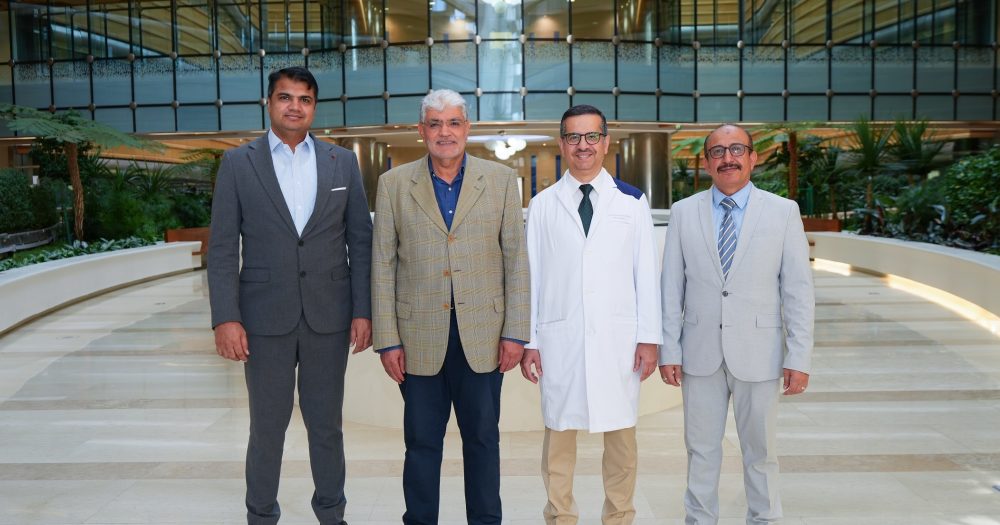
Sidra's team was led by Dr. Khalid Al-Kharazi, Senior Attending Physician, and Zafar Iqbal, Manager of Imaging Information Systems. Prof. Khaled Al-Surimi of the University of Doha for Science and Technology helped broker the partnership with MAIDA.
Why does it matter?
Most commercial medical imaging AI is built on adult data. Fewer than one in five products are cleared for pediatric use. Newborns are not small adults, and a model that ignores that can mislead the clinicians relying on it.
The privacy angle matters just as much. Hospitals did not have to send images to a central database. For health systems in the Gulf, where data protection rules are tightening and cross-border data transfer is a live policy question, that is a practical advantage. It lets a single hospital take part in global research without handing over its patient records.
As Dr. Al-Kharazi put it, an AI tool's value depends on "how well it performs across different patient populations." Smaller institutions with limited neonatal data can now contribute and benefit.
The context
Qatar has been building its research and AI capacity under Qatar National Vision 2030, and Sidra Medicine is one of the institutions carrying that work. Similar ambitions run across the GCC, from Saudi Arabia's Vision 2030 health programmes to the UAE's push to embed AI in clinical care. Federated and continual learning approaches fit these plans, because they allow collaboration without moving sensitive data.
Caution is still warranted. The study tested one task, tube positioning, on one imaging type. Regulatory clearance for pediatric AI remains a separate hurdle, and local validation will matter before any tool enters a Gulf NICU.
But the direction is encouraging. Regional hospitals have patients, imaging systems and clinical expertise. This study shows they can add to global AI development on their own terms, and that newborns, so often left out of the technology, can be part of it.
Latest @
UTOPIA backs Mentix, putting surgical mentoring on Qatar's startup map
UAE-made diagnostic kits are about to travel further
Saudi Arabia and the UK want new medicines to reach patients faster
Abu Dhabi doctors perform the world's fifth reported transplant for NIK deficiency
💡Did you know?
You can take your DHArab experience to the next level with our Premium Membership.👉 Click here to learn more
🛠️Featured tool
 Easy-Peasy
An all-in-one AI tool offering the ability to build no-code AI Bots, create articles & social media posts, convert text into natural speech in 40+ languages, create and edit images, generate videos, and more.
👉 Click here to learn more
