

Zoom’s healthcare pitch deserves a closer look from Gulf health leaders
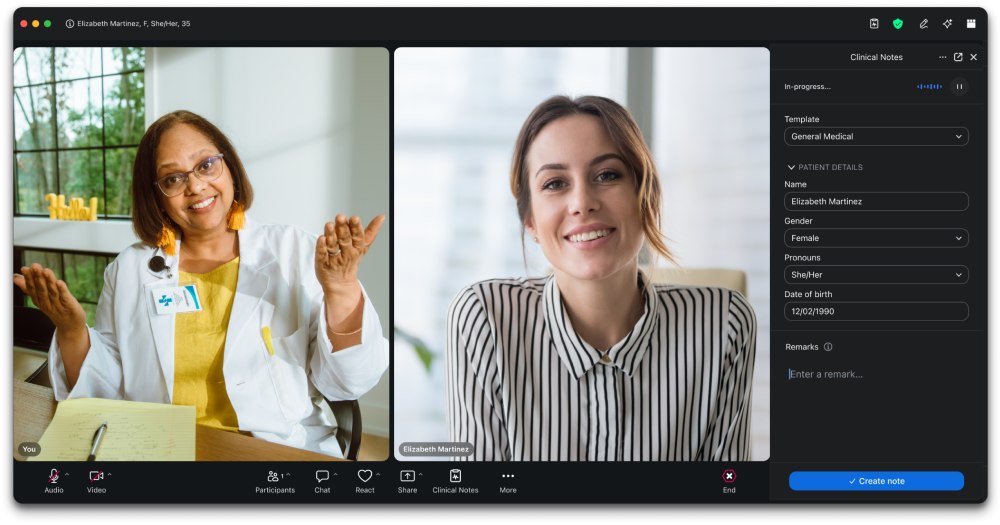
A navigation menu is not news. But sometimes it tells you more than a press release. Zoom's site lists Healthcare as its own industry track, next to Government, Education and Financial Services, and that placement says a lot about where the company expects its growth to come from.
The page we reviewed holds no announcement, no pricing and no clinical data. It is a directory of how Zoom sorts its customers: by industry, by audience, by developer need and by partner type. Healthcare sits in the first group, alongside Manufacturing, Retail and Frontline. So the story here is positioning, not a product launch.
How does it work?
Zoom organizes its offer in four layers. Industry pages tailor the platform to a sector such as healthcare. Audience pages speak to roles, including IT, customer experience, sales, facilities and marketing. Developer pages cover the building blocks, and partner pages cover resale and support.
The developer layer is the most relevant for hospitals and health-tech firms. It includes:
- Video SDK and Meeting SDK, for embedding video into your own app
- Co-Browse, for guiding a user through a screen in real time
- AI Services and MCP, for connecting AI tools to Zoom data
- Realtime Media Streams and APIs, for feeding live audio and video into other systems
- Zoom Apps and Zoom Marketplace, for add-ons and integrations
In practice, a telehealth provider could embed a video consultation in its patient app rather than send patients to a separate meeting link.
Why does it matter?
Video consultation is now routine. The harder question is what sits around it: records, billing, triage, interpreter support and follow-up. Tools that let developers plug video into those workflows are where the value lies. Real-time media streams, for example, could feed live transcription into a clinical note. That is useful. It also raises hard questions about consent and data handling.
For GCC buyers, those questions come first. Hospitals will want to know where data is stored, who can access recordings, and whether the vendor meets local rules. Saudi Arabia's data protection law and the UAE's health data regulations both limit how patient information may leave the country. A global platform has to answer clearly, not generally.
The context
The Gulf has spent years building digital health infrastructure. Saudi Vision 2030 sets out a model of care that relies on virtual services, and platforms such as Seha Virtual Hospital show the ambition. The UAE has pushed telemedicine licensing, and Malaffi in Abu Dhabi and Riayati in Dubai link patient records across providers. Those systems need tools that connect, not tools that sit alone.
That is why the partner section matters here. Few Gulf hospitals will build on a developer kit themselves. Most will rely on local integrators, and the quality of those partners will shape results more than any feature list.
Our advice is simple. Treat a vendor's menu as a starting point. Ask for the data residency terms, the integration references in the region and the Arabic language support. Then decide.
Latest @
Abu Dhabi wants your smartwatch data to count in the clinic
Zoom's healthcare pitch deserves a closer look from Gulf health leaders
Seha Group bets on software and skills to fix Egypt's insurance paperwork
Toothpick and Paymob bring payments into the dental clinic dashboard
A 43-year-old in Abu Dhabi no longer needs blood transfusions
💡Did you know?
You can take your DHArab experience to the next level with our Premium Membership.👉 Click here to learn more
🛠️Featured tool
 Easy-Peasy
An all-in-one AI tool offering the ability to build no-code AI Bots, create articles & social media posts, convert text into natural speech in 40+ languages, create and edit images, generate videos, and more.
👉 Click here to learn more
