

A reflux operation performed from a distance shows where Saudi surgery is heading
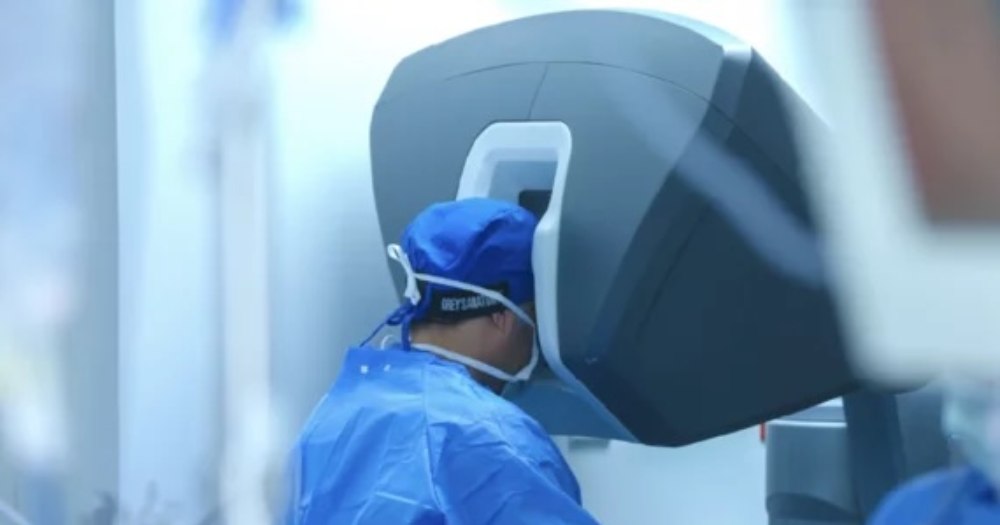
Distance has always decided who gets a specialist surgeon and who doesn't. In Saudi Arabia, that rule is being rewritten one operation at a time. King Saud University Medical City (KSUMC) has now completed its seventeenth remote robotic surgery, this time for a woman who had lived with chronic acid reflux for years.
The team was led by Dr. Suha Kaaki, Consultant in Thoracic and Esophageal Surgery. She repaired the patient's hiatal hernia and reconstructed the gastroesophageal valve, the muscular gate that keeps stomach acid out of the esophagus. The operation was coordinated between KSUMC and the Virtual Health Hospital.
How does it work?
The surgeon sits at a console and controls robotic instruments that operate on the patient in another location. The surgeon doesn't need to be in the same medical city, or even the same facility, as the patient. A secure connection carries her movements to the robot, which carries them out inside the body.
In this case the goal was precise. Repairing the hernia returns the stomach to its proper position below the diaphragm. Rebuilding the valve restores its normal function. Together, the two steps are meant to end the reflux at its source rather than manage the symptoms with daily medication.
The program began with sixteen operations across general surgery, obstetrics and gynecology, bariatric, colorectal and thoracic procedures. The seventeenth adds to that range, and it shows the model is not limited to a single specialty.
Why does it matter?
Chronic reflux is easy to dismiss and hard to live with. Left untreated, it erodes quality of life and can lead to complications. The surgery that fixes it properly requires skill that is concentrated in a handful of major centers.
Remote robotics breaks that concentration. Patients in distant regions of the Kingdom, and beyond it, can reach rare expertise without traveling to Riyadh or waiting for a specialist to relocate. For health systems across the GCC, where populations are spread over large territories, that is a practical answer to an old access problem.
And the number matters. Seventeen operations is not a pilot stunt. KSUMC describes the program as efficient and sustainable, and a steady run of cases across several specialties supports that claim.
The context
This fits squarely inside Saudi Vision 2030 and its push to digitize healthcare and widen access to it. The Virtual Health Hospital, a Ministry of Health initiative, is a central part of that effort, linking expertise in one place to patients in another.
The same ambition is visible elsewhere in the Gulf. The UAE has made digital health and AI-supported care national priorities, and regional governments increasingly see advanced surgery as a service to export, not just to host. KSUMC leadership says it intends to keep expanding the program and strengthen the Kingdom's position as a regional surgical hub.
Challenges remain. Reliable connectivity, clear safety protocols, training and cost will decide how far the model can spread. But the direction is clear. In Saudi Arabia, the surgeon's location is becoming less important than the surgeon's skill.
Latest @
A 43-year-old in Abu Dhabi no longer needs blood transfusions
A reflux operation performed from a distance shows where Saudi surgery is heading
Walk for Her turns 19 million steps into 1,900 free mammograms
A thyroid operation with no scar on the neck: the UAE performs its first robotic procedure
Nabta Health lands PVP backing as it moves from R&D to selling
💡Did you know?
You can take your DHArab experience to the next level with our Premium Membership.👉 Click here to learn more
🛠️Featured tool
 Easy-Peasy
An all-in-one AI tool offering the ability to build no-code AI Bots, create articles & social media posts, convert text into natural speech in 40+ languages, create and edit images, generate videos, and more.
👉 Click here to learn more
