

Abu Dhabi looks east for its next health breakthroughs
Good science often fails on the way to the bedside. Promising research stalls in labs, in approval queues, or in the gap between a start-up and a hospital. Abu Dhabi's health regulator now wants to shorten that journey, and it has gone to China to do it.
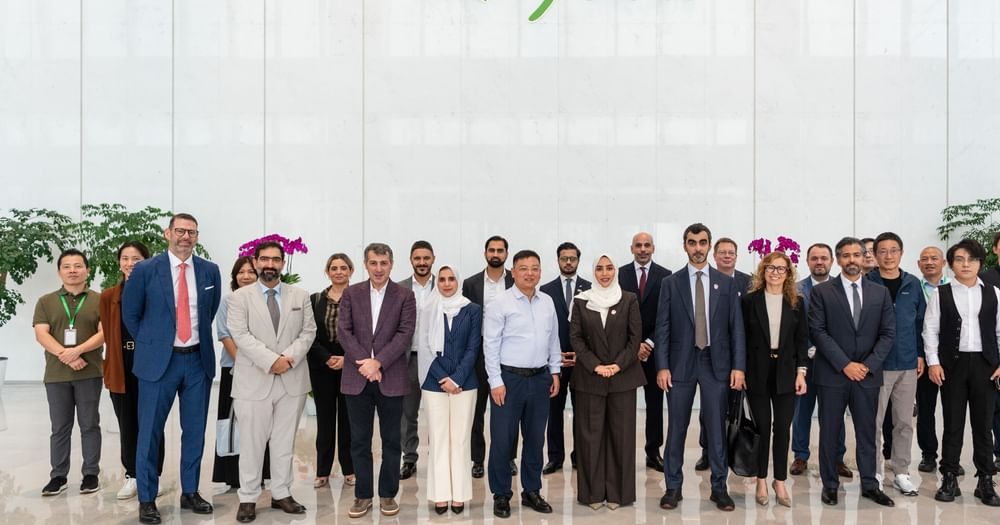
The Department of Health, Abu Dhabi (DoH), has concluded its inaugural health and life sciences mission to the country. The visit was built around priority areas of collaboration, all aimed at speeding up the translation of scientific and technological innovation into better health outcomes.
What's the news?
DoH is the regulator of the emirate's healthcare sector, so a first-of-its-kind mission from that office carries weight. This was not a trade fair appearance. The focus was on advancing specific areas where Abu Dhabi and Chinese institutions can work together, from research to the practical business of getting innovations into use.
The word that matters here is translation. Many health systems are good at funding research and good at buying finished products. Fewer are good at the messy middle, where a discovery is tested, regulated, adopted and paid for. A regulator leading the mission suggests Abu Dhabi sees that middle stage as its own responsibility.
The announcement, as published, gives only a summary of the mission's aims. Details of specific agreements and partners will determine how much of this becomes real.
Why does it matter?
For healthcare leaders in the GCC, the signal is about direction. Abu Dhabi is widening its network of scientific partners beyond the traditional Western hubs. China has deep strength in biotechnology, genomics, medical devices and digital health, and its research output in these fields has grown fast.
There is also a practical benefit. A regulator in the room can resolve questions about standards, clinical trials and market entry early, rather than leaving companies to find the obstacles themselves. That is attractive to investors and to hospital groups weighing which technologies to adopt.
And patients stand to gain. Faster translation means new diagnostics, therapies and digital tools reaching clinics sooner, which matters in a region carrying a heavy burden of diabetes, cardiovascular disease and other chronic conditions.
The context
This mission fits a pattern. Abu Dhabi has spent years positioning itself as a life sciences destination, investing in genomics, clinical research and a regulatory environment designed to attract international partners. The wider UAE has made similar moves, treating health as both a public service and an economic sector.
The same logic runs across the Gulf. Saudi Arabia's Vision 2030 sets out health sector transformation and localization of medical industries as national goals, and other GCC states are pursuing their own diversification plans. Each wants less dependence on imports and more homegrown capability.
China, meanwhile, is a natural partner for countries with these ambitions. Its scale and speed in manufacturing and technology development complement what Gulf states offer: capital, strong regulators, modern hospital infrastructure and populations that adopt digital services readily.
The test will come after the delegation returns home. Partnerships announced in principle are easy. Joint studies, shared data frameworks and products in actual use are harder. If Abu Dhabi can show results from this first mission, expect other GCC health authorities to follow with missions of their own.
Latest @
Toothpick and Paymob bring payments into the dental clinic dashboard
A 43-year-old in Abu Dhabi no longer needs blood transfusions
A reflux operation performed from a distance shows where Saudi surgery is heading
Walk for Her turns 19 million steps into 1,900 free mammograms
A thyroid operation with no scar on the neck: the UAE performs its first robotic procedure
💡Did you know?
You can take your DHArab experience to the next level with our Premium Membership.👉 Click here to learn more
🛠️Featured tool
 Easy-Peasy
An all-in-one AI tool offering the ability to build no-code AI Bots, create articles & social media posts, convert text into natural speech in 40+ languages, create and edit images, generate videos, and more.
👉 Click here to learn more
