

Fawry and DMS link payment terminals directly to hospital management systems in Egypt
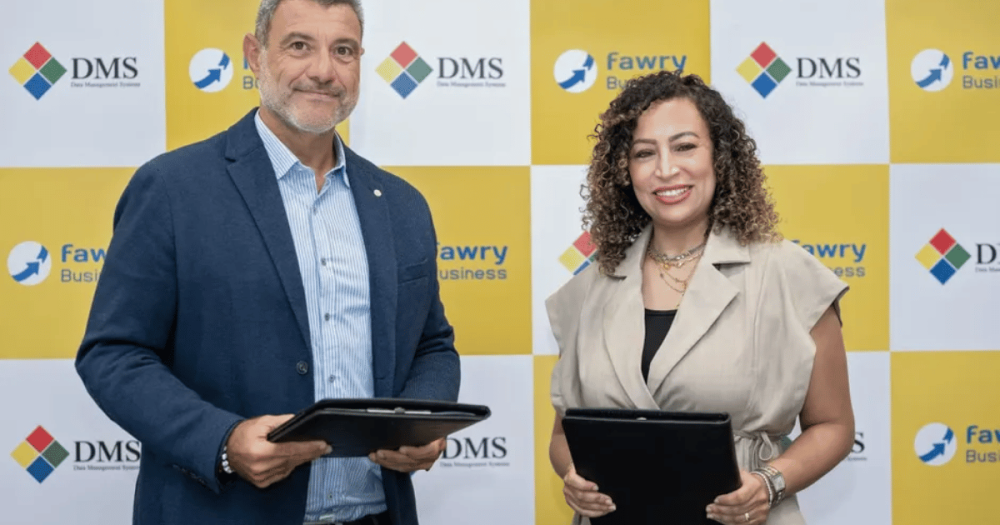
Manual data re-entry is one of those quiet inefficiencies that costs healthcare facilities real money and real time. Egypt's Fawry is now moving to close that gap. The fintech company has announced a direct integration between its Fawry Business point-of-sale solutions and the medical management systems built by DMS, a software firm serving the healthcare, financial, and industrial sectors.
The partnership is straightforward in concept but significant in practice. Transaction amounts are sent automatically from cashier screens to the Fawry Business POS terminal. Once a payment is completed, the transaction status updates in the DMS system in real time. No one types the same number twice. No one checks a printout against a spreadsheet at the end of the day.
For hospitals and clinics running high volumes of daily transactions, that kind of automation matters. Payment bottlenecks at the front desk affect patient flow, staff productivity, and revenue reconciliation. Solving them through system-level integration, rather than workarounds or manual processes, reflects a broader shift in how healthcare facilities in the region are approaching operational management.
How will it work?
The integration creates a direct channel between DMS's medical management platform and the Fawry Business POS infrastructure. Key features of the integration include:
- Automatic transfer of transaction amounts from cashier screens to the POS terminal
- Real-time status updates within the DMS system once payment is confirmed
- Elimination of manual data re-entry between the POS and the back-office system
- Faster settlement processes with improved data accuracy
- Reduced risk of human error across payment and reconciliation workflows
Bassem Lotfy, Head of Business Development at Fawry, described the logic behind the move: "Our collaboration with DMS represents a practical step toward connecting payments with business management systems, contributing to the automation of processes, reducing manual intervention, and improving the accuracy and speed of transactions across the healthcare sector."
Roaa Mamdouh, Strategic Alliances Director at DMS, added that the goal is to allow "transaction data and status to move automatically between the system and the POS without the need for manual intervention," pointing to both hospitals and businesses as the intended beneficiaries.
Why does it matter?
Healthcare administration in the Arab world is under growing pressure to modernise. Patient volumes are rising, regulatory expectations around billing and data accuracy are tightening, and staff shortages make manual processes increasingly unsustainable. An integration that removes a layer of human intervention from the payment cycle is not a small thing. It directly affects how quickly patients move through a facility and how confidently finance teams can close their books.
But the implications stretch beyond hospitals. DMS also works in the financial and industrial sectors, meaning the Fawry Business integration could extend its reach across multiple verticals. For Fawry, which has spent years building Egypt's largest electronic payments network, this kind of embedded integration is a logical next step. Payments that sit inside workflows are stickier, more useful, and harder to replace than standalone terminals.
The context
Egypt's digital payments sector has expanded rapidly over the past several years, driven by regulatory reform, a growing base of banked and digitally active consumers, and deliberate investment in fintech infrastructure. Fawry is central to that story. It processes millions of transactions daily across a network that spans consumer payments, bill settlement, and now business-to-system integrations.
Across the wider region, the direction of travel is the same. GCC countries, particularly Saudi Arabia and the UAE, have placed healthcare digitisation at the centre of their national development agendas. Saudi Vision 2030 includes explicit targets for connected health systems. The UAE has invested heavily in unified health platforms and integrated billing environments. Egypt's private healthcare sector is watching those models closely, and partnerships like this one signal that the infrastructure to support similar integration is now being built locally.
So this is one partnership, in one market. But it points toward something larger: a regional shift in which payments are no longer processed beside healthcare systems, but inside them.
Latest @
Fawry and DMS link payment terminals directly to hospital management systems in Egypt
Egypt eyes national digital health platform to unify patient records and AI services
M42 taps Oracle to unify clinical and genomic data across its global network
Kanaf Centre adopts forensic imaging system to strengthen child protection in the UAE
💡Did you know?
You can take your DHArab experience to the next level with our Premium Membership.👉 Click here to learn more
🛠️Featured tool
 Easy-Peasy
An all-in-one AI tool offering the ability to build no-code AI Bots, create articles & social media posts, convert text into natural speech in 40+ languages, create and edit images, generate videos, and more.
👉 Click here to learn more
