

UAE oncologists are using AI to decode why the same cancer treatment works for some patients and not others
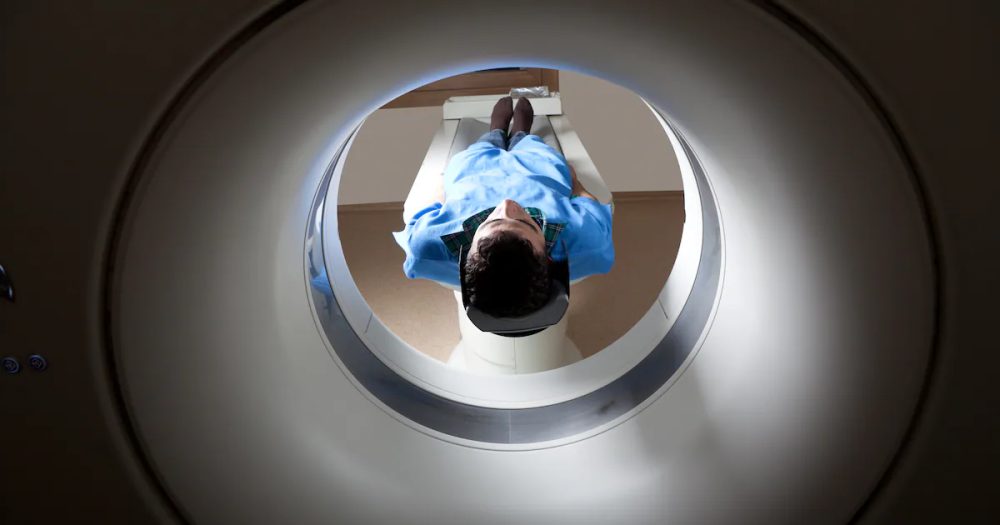
Two patients. Same cancer type. Same stage. Same treatment. Completely different outcomes. That clinical reality has frustrated oncologists for decades, and a Dubai-based company founded in part by one of the UAE's most prominent cancer specialists is now applying artificial intelligence to find out why.
Nexomic was co-founded by Prof Humaid Al Shamsi, who leads cancer care at Burjeel Medical City and heads the Burjeel Cancer Institute. The company is developing an AI platform called DeepOmic, designed to analyse multiple layers of tumour biology simultaneously, rather than searching for a single genetic fault. The goal is to identify patterns that explain why some patients respond well to treatment for years while others deteriorate within months.
"Cancer is much more complicated than a single mutation," Prof Al Shamsi said. "A patient may have the same diagnosis, the same stage and even the same recognised biomarkers as another patient, but their cancers can behave very differently. The question we are trying to answer is: what is happening underneath that explains the difference?"
In the UAE, breast cancer accounts for 94 cases per 100,000 women, making it the most common cancer among females. Colorectal, prostate and lung cancers lead the figures in men. As incidence rates across the GCC continue to rise with ageing populations and shifting lifestyle patterns, the pressure to move from broad treatment protocols to more targeted approaches is growing.
How does it work?
Rather than focusing on individual mutations such as HER2, KRAS or BRCA, DeepOmic combines several types of molecular information at once, including gene activity and DNA alterations. This approach is known as multi-omics, and it produces a far richer picture of how a tumour is actually behaving inside a patient's body.
Leading the AI development is Dr Ghadeer Ghosheh, Nexomic's chief AI officer, who trained in computer engineering and computational health informatics at New York University Abu Dhabi and the University of Oxford. "Cancer is not a single data point," she said. "It is a complex biological system and each layer of information tells us something different. The real opportunity is to move beyond identifying individual abnormalities and begin recognising the biological patterns that explain how a cancer behaves and responds to treatment."
The platform is being built to support researchers, pharmaceutical companies and clinical oncologists, helping all three groups understand not just whether a therapy works, but why it works, or why it stops working.
Why does it matter?
Precision oncology has made real progress over the past two decades, but it has a well-documented ceiling. Many cancers lack a clear molecular target. Others that do have one eventually develop resistance, and treatment fails. The one-marker-at-a-time model that has driven much of modern oncology is running up against the biological complexity of cancer itself.
AI is already being used globally to improve cancer detection. Algorithms can identify early signs of breast or lung cancer in imaging before symptoms appear. Pairing radiologists with AI tools reduces both false positives and false negatives. But Nexomic is working at a different level, not just finding cancer sooner, but understanding the biology more completely to inform treatment decisions.
Access to quality data is critical here. To validate and improve DeepOmic outside its original development environment, Nexomic has signed a formal data-access agreement in the UK with Genomics England and Cancer Research Horizons. That agreement gives the company access to carefully governed genomic and clinical datasets, which is an important step for any medical AI system that needs to prove it performs reliably across different populations.
The context
The UAE has positioned health innovation as central to its national agenda. Abu Dhabi recently introduced robot-assisted procedures to improve lung cancer detection, and the broader UAE health strategy places early diagnosis and precision medicine among its key priorities. Nexomic fits squarely into that direction.
Dr Mohammad Ghosheh, the company's chief executive, is direct about what Nexomic is trying to fix. "Medicine has made extraordinary progress, but many treatment decisions are still based on what works for the average patient," he said. "We are building Nexomic to help close the gap between what we know about cancer biology and what we can use in practice."
So the scientific ambition is clear. The harder question, as with most medical AI ventures, is whether the platform can prove its clinical value at scale, across diverse patient populations, and in healthcare systems with very different data infrastructures. That work is still ahead. But the direction of travel is the right one.
Latest @
Blueprint lands in the UAE as longevity moves from policy to product
M42 launches 10,000-patient wearable pilot in Abu Dhabi to reshape chronic disease care
Unilabs Middle East and Takalam link diagnostics to mental health in one app
Al Ghurair enters healthcare with Trellis Health launch in Dubai
💡Did you know?
You can take your DHArab experience to the next level with our Premium Membership.👉 Click here to learn more
🛠️Featured tool
 Easy-Peasy
An all-in-one AI tool offering the ability to build no-code AI Bots, create articles & social media posts, convert text into natural speech in 40+ languages, create and edit images, generate videos, and more.
👉 Click here to learn more
