

KFSH Jeddah performs scarless hysterectomy using natural-orifice technique
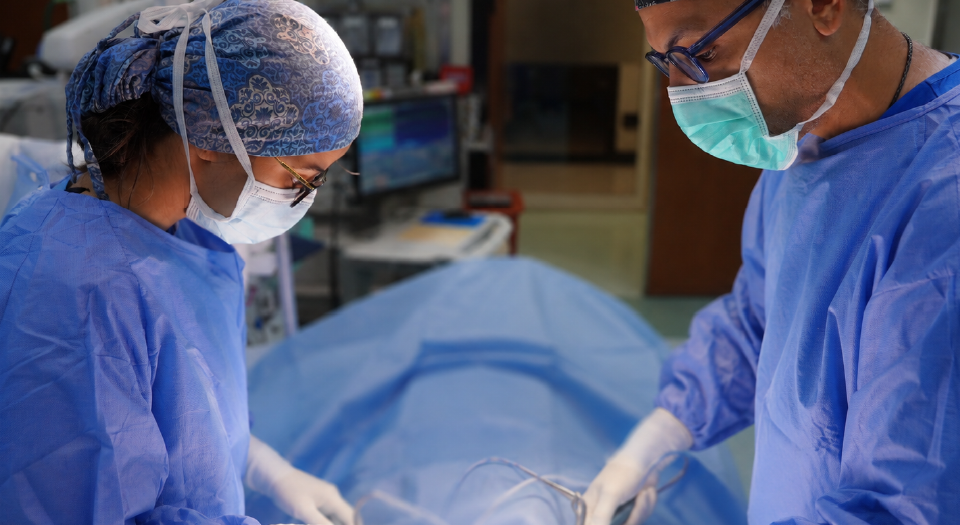
No cuts on the abdomen. No visible scars. And a faster return to normal life. King Faisal Specialist Hospital and Research Centre (KFSH) in Jeddah has performed a hysterectomy using a technique that enters the body entirely through a natural orifice, leaving no external marks on a patient who had been suffering from severe vaginal bleeding caused by uterine fibroids.
The procedure is called VNOTES, short for Vaginal Natural Orifice Trans-Endoscopic Surgery. It was carried out by the hospital's Department of Obstetrics and Gynecology on a patient in her fifties. Where conventional laparoscopic hysterectomy requires small incisions in the abdominal wall to insert instruments, VNOTES uses the vaginal canal as the sole access point. The result, clinically, is less blood loss, reduced need for pain medication, and a shorter hospital stay.
But the benefits go beyond recovery time. KFSH noted that the team also weighed aesthetic and psychological considerations alongside clinical outcomes. For many women, the absence of visible scarring is not a minor detail. It is part of how they experience and recover from major surgery.
How did it work?
The procedure combined high-definition visualization technology with specialized surgical instruments designed for the narrow operative space of vaginal access. A multidisciplinary team, including surgical, anesthesia, and nursing staff, coordinated throughout. That level of coordination is not incidental. VNOTES is technically demanding precisely because it requires expertise in both advanced vaginal surgery and minimally invasive endoscopy at the same time. That dual requirement is why the technique is still relatively rare globally, and why it tends to be limited to highly specialized centers.
Patient selection also plays a critical role. Not every woman requiring a hysterectomy is a suitable candidate for VNOTES, and careful pre-operative assessment is part of what makes the procedure safe when it is performed.
Why does it matter?
Uterine fibroids are among the most common gynecological conditions affecting women of reproductive and perimenopausal age across the GCC and the broader Arab world. Severe bleeding, as in this case, can significantly impair quality of life and, when left untreated, lead to anemia and other complications. Having access to a surgical option that addresses the condition with minimal physical disruption is meaningful for patients and for the healthcare systems responsible for their care.
The clinical advantages of VNOTES over standard laparoscopic approaches include:
- No external abdominal incisions or visible scarring
- Reduced intraoperative blood loss
- Lower post-operative pain and reduced analgesic use
- Shorter hospital stay and faster return to daily activities
- Improved psychological outcomes related to body image
The context
KFSH Jeddah sits within Saudi Arabia's broader push to position the Kingdom as a center for advanced medical care, a goal closely tied to Vision 2030's health sector targets. The hospital was ranked first in the Middle East and North Africa among the world's top 250 Academic Medical Centers for 2026, and 12th globally in the same ranking. Newsweek also listed it among the World's Best Hospitals, Best Smart Hospitals, and Best Specialized Hospitals for 2026. Brand Finance recognized it as the most valuable healthcare brand in the Kingdom and the Middle East that same year.
So this is not simply a clinical milestone for one patient, it reflects a wider institutional ambition. As GCC health systems compete to retain patients who might otherwise seek complex procedures abroad, cases like this one signal that the region's top-tier hospitals are building real, procedural depth in minimally invasive surgery. That matters for patients. And it matters for policymakers tracking how far domestic clinical capability has come.
Latest @
Tunisia bets on telehealth as it prepares to host Telehealth Connect 2026
Wearable AI system developed by Qatar medical students flags cardiac risk outside hospital
GLP-1 consultations surge 60% at Valeo Health as UAE weight management shifts toward continuous care
Abu Dhabi sends first health mission to China, targeting AI, cancer care and new drug development
UAE pharmaceutical chief meets Moderna co-founder in New York to explore manufacturing and R&D ties
💡Did you know?
You can take your DHArab experience to the next level with our Premium Membership.👉 Click here to learn more
🛠️Featured tool
 Easy-Peasy
An all-in-one AI tool offering the ability to build no-code AI Bots, create articles & social media posts, convert text into natural speech in 40+ languages, create and edit images, generate videos, and more.
👉 Click here to learn more
