

Abu Dhabi sends first health mission to China, targeting AI, cancer care and new drug development
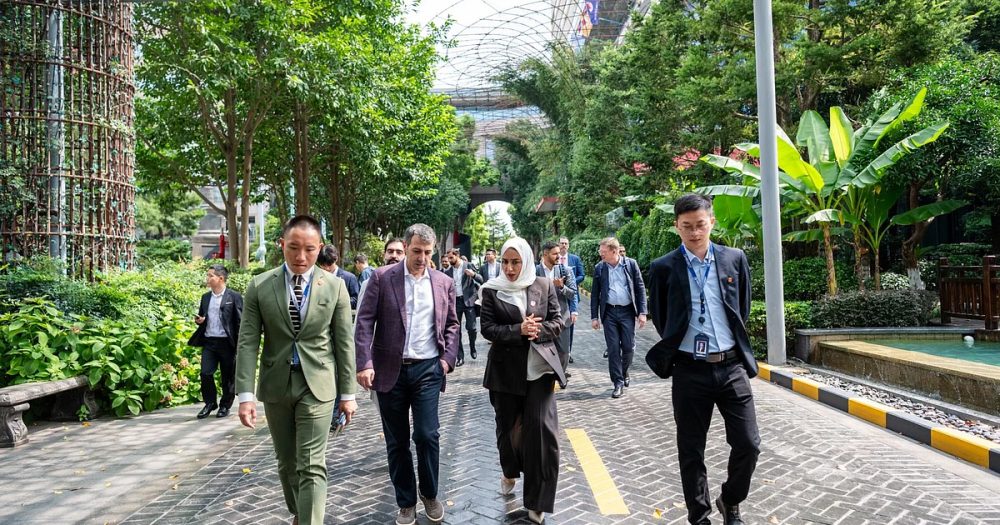
Abu Dhabi is not waiting for the world to come to it. The emirate's first dedicated health and life sciences mission to China, running from September 21 to 30, signals a deliberate move to build relationships with one of the world's fastest-growing biotech and AI ecosystems, on Chinese soil.
What's the news?
The Department of Health – Abu Dhabi (DoH) is leading a delegation across three Chinese cities, Shanghai, Shenzhen and Beijing, where officials will meet government bodies, hospitals, universities and technology companies. The ten-day visit has four main areas of focus: AI, robotics and medical technology; precision cancer care and advanced diagnostics; drug development and clinical trials; and healthcare regulation and traditional medicine.
The delegation is not a small one. It includes representatives from Cleveland Clinic Abu Dhabi, PureHealth, the Abu Dhabi Investment Office, Mohamed bin Zayed University of Artificial Intelligence and L'IMAD. That mix of clinical, investment and academic players suggests Abu Dhabi is approaching this as a serious long-term play, not a diplomatic photo opportunity.
One stated priority is shortening the gap between medical research and real-world treatment. DoH wants to explore how discoveries made in laboratories can reach patients faster, whether through regulatory alignment, joint clinical trials or technology transfer agreements.
Chinese healthcare and life sciences organisations will also be invited to attend the Abu Dhabi Future Health Summit 2026, scheduled for October 20 to 22, giving the mission a concrete next step beyond handshakes and memoranda.
Why does it matter?
China has built genuine strength in biotechnology, AI-driven diagnostics and advanced manufacturing. Abu Dhabi, for its part, has health data infrastructure, genomics programmes through initiatives like the Emirati Genome Programme, and a healthcare system that is actively looking to pilot new technologies at scale. The combination is a logical one.
Dr Noura Khamis Al Ghaithi, Undersecretary of DoH, put it plainly: "China and Abu Dhabi share an ambition to ensure that scientific progress translates into better health. By connecting our researchers, clinicians and innovators, we want to create lasting pathways for collaboration that benefit both ecosystems."
That framing matters. This is not just about importing Chinese technology. It's about positioning Abu Dhabi as a co-developer and testing ground, a role that fits squarely within the UAE's broader ambition to shift from a consumer of global innovation to a contributor to it.
The context
This mission sits within a wider pattern of Abu Dhabi internationalising its health sector. In recent months, the emirate has announced an AI virtual human twin project, a partnership with Sanofi on vaccine innovation, and a smart surgical network developed with Johnson and Johnson. Each of these points to the same strategic direction: building Abu Dhabi's health system around technology partnerships rather than simply expanding traditional infrastructure.
The China visit adds a new geographic dimension to that strategy. Gulf health systems have traditionally looked to the United States and Europe for clinical and research partnerships. A dedicated mission to China, at this level, reflects how quickly that calculus is changing. And for a region investing heavily in economic diversification, access to China's biotech pipeline and AI capabilities could matter a great deal over the next decade.
Latest @
Blueprint lands in the UAE as longevity moves from policy to product
M42 launches 10,000-patient wearable pilot in Abu Dhabi to reshape chronic disease care
Unilabs Middle East and Takalam link diagnostics to mental health in one app
Al Ghurair enters healthcare with Trellis Health launch in Dubai
💡Did you know?
You can take your DHArab experience to the next level with our Premium Membership.👉 Click here to learn more
🛠️Featured tool
 Easy-Peasy
An all-in-one AI tool offering the ability to build no-code AI Bots, create articles & social media posts, convert text into natural speech in 40+ languages, create and edit images, generate videos, and more.
👉 Click here to learn more
