

A fingertip patch that reads sweat could change how Parkinson’s disease is managed
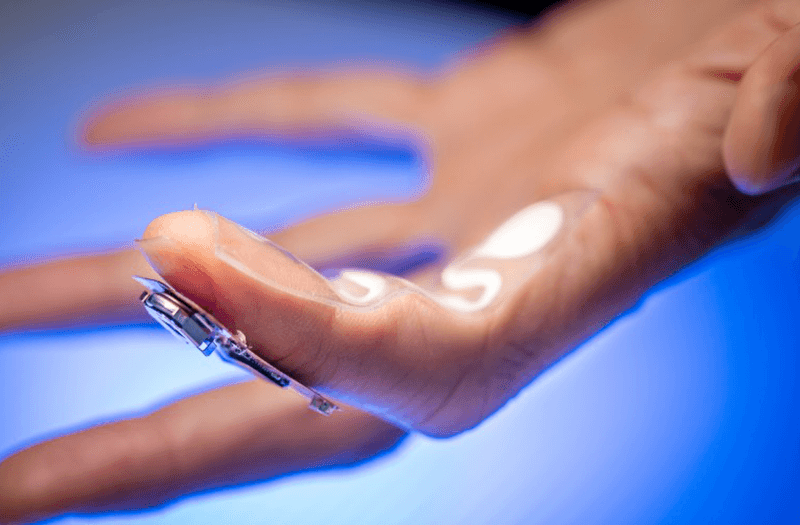
Sweat, it turns out, tells a story. For the more than 25 million people expected to be living with Parkinson's disease by 2050, that story could determine whether their next dose of medication helps them move freely or sends them into an episode of involuntary motor dysfunction. A new wearable patch developed at the University of California, San Diego measures levodopa, the primary drug used to treat Parkinson's, directly from sweat absorbed at the fingertip. And it does this continuously, without a battery.
The study, published in Proceedings of the National Academy of Sciences, describes how the device matched the accuracy of high-performance liquid chromatography, a precise laboratory technique that typically takes weeks to return results to patients. That gap between testing and treatment has long been one of the more frustrating realities of managing Parkinson's disease.
Levodopa has been the standard treatment for Parkinson's since the 1960s. The drug enters the brain and converts into dopamine, compensating for the deficit that drives the disease's characteristic tremors and movement problems. But it is metabolically fragile. Enzymes in the gut break it down quickly, and the window between too little and too much is narrow. Too low a dose and motor symptoms return. Too high and the patient develops involuntary movements. Getting the balance right, consistently, is genuinely difficult.
Right now, physicians rely heavily on patient symptom diaries to guide dosing decisions. That's an imprecise tool for a problem that demands precision.
How does it work?
The patch sits on the fingertip, a location chosen deliberately. The fingertip has roughly 400 sweat glands per square centimeter, making it one of the most productive sites on the body for passive sweat collection. A hydrogel layer absorbs sweat through osmosis, drawing it into a winding internal channel.
Inside that channel, a levodopa sensor contains enzymes that react chemically with the drug as it passes through. That reaction generates a small electrical voltage. The voltage does two things: it powers the device, eliminating the need for a battery, and it acts as a proxy measurement for levodopa concentration. Higher drug levels produce stronger signals. Lower levels produce weaker ones.
The whole assembly is sandwiched between layers of styrene-ethylene-butylene-styrene, a flexible rubber-like plastic that makes the patch comfortable to wear over extended periods.
Why does it matter?
The clinical implications are significant. In trials, the patch was tested on both healthy volunteers and a group of four Parkinson's patients. Among the patients, levodopa readings from the patch correlated closely with blood concentration levels measured by laboratory equipment. More telling: the moments when the patch recorded peak levodopa levels were the same moments when patients reported the fewest symptoms. The patch was effectively offering a window into how the brain was responding to medication in real time.
The research team, led by neurologist Irene Litvan and bioengineer Joseph Wang, envisions the patch eventually connecting wirelessly to a levodopa infusion pump. That system would adjust drug delivery automatically, keeping concentrations within the therapeutic range and reducing both under-dosing and overexposure. The goal, as the authors put it, is to define target therapeutic ranges and treat symptoms with the minimum effective dose to prevent motor complications.
The context
For health systems across the GCC, this kind of technology carries real weight. Saudi Arabia, the UAE, and their Gulf neighbors are all confronting the long-term burden of neurological disease as populations age. Saudi Vision 2030 places significant emphasis on building a prevention-first, technology-enabled health system. The UAE's national health strategy has similarly prioritized remote monitoring and personalized medicine as pillars of its healthcare transformation agenda.
Wearable diagnostics that reduce dependency on hospital visits, shorten feedback loops between patients and clinicians, and support individualized treatment are exactly the kind of tools these strategies are designed to absorb. A battery-free patch that a patient wears at home and that feeds data directly into a dosing system fits that model well.
The technology is still in early-stage validation. A group of four patients is a proof of concept, not a clinical trial. But the accuracy of the results and the elegance of the mechanism suggest this is worth watching closely. So does the timeline: with Parkinson's prevalence set to rise sharply over the next two decades, the window for building better management tools is now.
Latest @
Tunisia bets on telehealth as it prepares to host Telehealth Connect 2026
Wearable AI system developed by Qatar medical students flags cardiac risk outside hospital
GLP-1 consultations surge 60% at Valeo Health as UAE weight management shifts toward continuous care
Abu Dhabi sends first health mission to China, targeting AI, cancer care and new drug development
UAE pharmaceutical chief meets Moderna co-founder in New York to explore manufacturing and R&D ties
💡Did you know?
You can take your DHArab experience to the next level with our Premium Membership.👉 Click here to learn more
🛠️Featured tool
 Easy-Peasy
An all-in-one AI tool offering the ability to build no-code AI Bots, create articles & social media posts, convert text into natural speech in 40+ languages, create and edit images, generate videos, and more.
👉 Click here to learn more
