

Jordan’s Crown Prince pushes for wider hospital integration into national digital health network
Forty-five thousand teleradiology reports. Fifty-five thousand monitored dialysis sessions. More than 2,000 intensive care cases managed remotely. In just one year of operation, the Jordan Digital Health Centre has put up numbers that would impress any health system. So the question now isn't whether it works. It's how quickly the country can connect the rest of its hospitals to it.
What's the news?
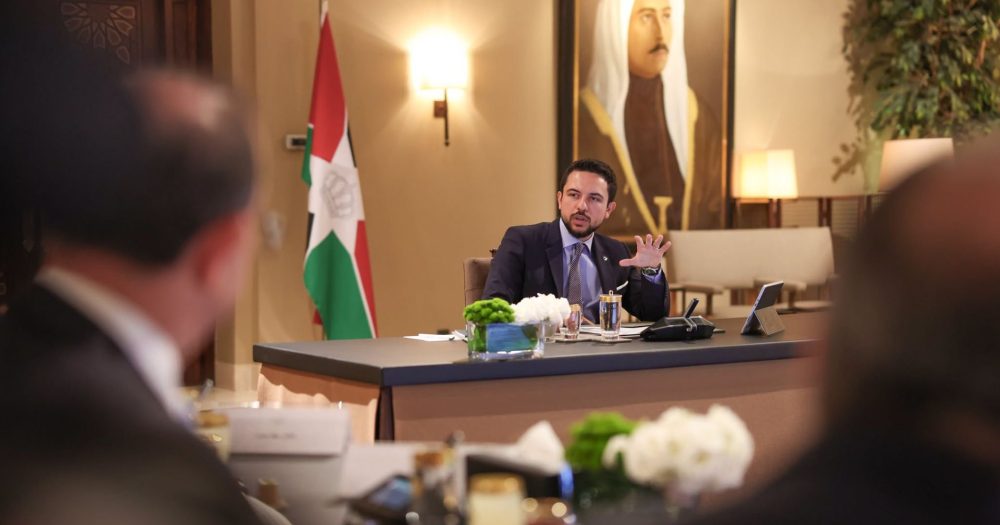
Crown Prince Al Hussein bin Abdullah II, serving as Regent, chaired a meeting of Jordan's National Council for Future Technology on Tuesday, where he called for expanding the number of hospitals and health centres connected to the Jordan Digital Health Centre. Prime Minister Jafar Hassan, who chairs the council, was also present.
Minister of Health Ibrahim Bdour gave a progress report on the centre's first year of operations, detailing the services it currently delivers across the country. Those include:
- A dialysis unit and intensive care unit linked to 12 hospitals
- A digital radiology unit connected to 19 hospitals
- A telemedicine unit linked to three healthcare centres
- More than 45,000 teleradiology reports delivered
- Over 55,000 dialysis sessions remotely monitored
- More than 2,000 ICU cases supervised
- Hundreds of specialist consultations extended to affiliated facilities
The Crown Prince stressed the need to keep building on the centre's technological capabilities to improve services for citizens and reduce pressure on the health system.
Why does it matter?
Remote care is only as useful as its reach. Right now, the Jordan Digital Health Centre's telemedicine unit covers three health centres. Its dialysis and ICU monitoring reaches 12 hospitals. That's a solid foundation, but Jordan has over 100 public hospitals and hundreds of primary care facilities. The push from the palace to expand integration is essentially a directive to close that gap.
The efficiency case is also strong. Bdour pointed to improved resource management of medical supplies and hospital beds as a measurable benefit, which translates to real savings in government hospital budgets. For a country that has long worked to stretch its healthcare spending, that's a meaningful outcome. And by reducing the need for patients to travel to specialist centres, the telemedicine component directly addresses one of the most persistent frustrations in public healthcare across the region.
The context
Jordan isn't alone in this direction. Across the GCC and the broader Arab world, governments are moving to digitise and centralise health infrastructure. Saudi Arabia's Vision 2030 has placed health technology at the centre of its reform agenda. The UAE has built out a network of smart health systems tied to its national digital identity framework. And Qatar has invested heavily in integrated health data platforms ahead of and following the 2022 World Cup.
Jordan's approach is notable because it's being driven from the top. Royal and prime ministerial involvement in a council dedicated to future technology signals that digital health isn't being left to ministry-level bureaucracy alone. It has political priority. That tends to accelerate things.
Still, the real test will come in implementation. Connecting 12 hospitals to a dialysis network is one thing. Scaling that across a national system, with consistent data standards, trained staff, and reliable connectivity, requires sustained investment and coordination. The Crown Prince's call for broader integration is a clear mandate. But what matters next is the plan to execute it, and the timeline attached to it.
For health system planners and technology vendors operating across the region, Jordan's model is worth watching. It demonstrates that a mid-sized Arab economy can build functioning digital health infrastructure at scale, even within tight resource constraints. If the expansion goes well, it could offer a replicable blueprint for others in the region considering similar centralised care coordination models.
Latest @
Tunisia bets on telehealth as it prepares to host Telehealth Connect 2026
Wearable AI system developed by Qatar medical students flags cardiac risk outside hospital
GLP-1 consultations surge 60% at Valeo Health as UAE weight management shifts toward continuous care
Abu Dhabi sends first health mission to China, targeting AI, cancer care and new drug development
UAE pharmaceutical chief meets Moderna co-founder in New York to explore manufacturing and R&D ties
💡Did you know?
You can take your DHArab experience to the next level with our Premium Membership.👉 Click here to learn more
🛠️Featured tool
 Easy-Peasy
An all-in-one AI tool offering the ability to build no-code AI Bots, create articles & social media posts, convert text into natural speech in 40+ languages, create and edit images, generate videos, and more.
👉 Click here to learn more
