

UAE health minister leads US institutional tour to build future medicine partnerships
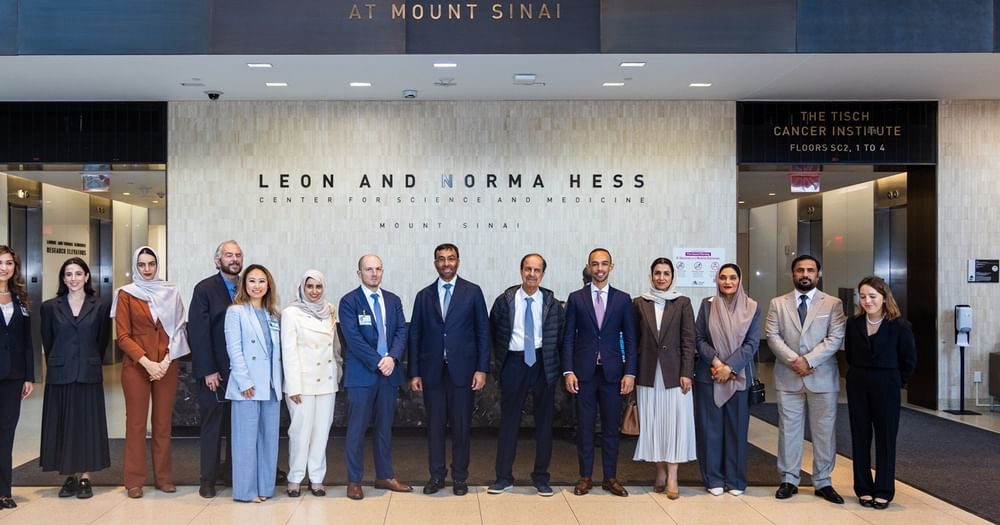
The UAE is not waiting for the future of medicine to arrive. Minister of Health and Prevention Ahmed bin Ali Al Sayegh led a high-level delegation through some of America's most respected healthcare and research institutions in Boston and New York, with one clear objective: to build the partnerships that will shape what Emirati healthcare looks like in the next decade. The trip covered genomic medicine, early disease detection, and the application of artificial intelligence in clinical settings, three areas where the gap between ambition and infrastructure can close quickly with the right institutional relationships.
How will it work?
The delegation met with leadership at several leading academic medical centers and research institutions, though specific names were not disclosed in early reports. The focus was on identifying areas of mutual interest that could translate into formal agreements, research exchanges, and capacity-building programs for UAE-based professionals.
Priority areas from the visit included:
- Genomic medicine and population-level genetic research
- Early disease detection technologies
- AI-assisted diagnostics and clinical decision support
- Academic partnerships for training and research development
- Innovation pipelines connecting US institutions with UAE healthcare systems
The structure of these engagements suggests the UAE is looking for more than licensing deals. The emphasis on research and academic collaboration points toward longer-term institution-building, the kind that produces local expertise rather than imported solutions.
Why does it matter?
For the UAE, this is about more than prestige visits. The country has made health sovereignty a strategic priority, and that requires homegrown research capacity, not just world-class hospitals. Genomics is a particular gap. Population-scale genetic data programs need years of investment before they generate clinically useful insights, so the urgency to start, and to start with credible partners, is real.
AI in diagnostics is the other pressure point. Gulf health systems are dealing with a familiar set of chronic disease burdens, diabetes, cardiovascular disease, obesity-related conditions, and AI tools trained on relevant population data could meaningfully improve early detection rates. But those tools need to be built with, or at least validated against, local data. That makes academic partnerships a precondition, not an optional extra.
The context
This visit sits within a broader pattern of UAE health diplomacy that has accelerated since the post-pandemic period. The country's National Strategy for Advanced Technology and its commitments under various Vision-aligned frameworks have all pointed toward healthcare as a sector where the UAE wants to move from consumer to contributor. Hosting COP28 last year, with its significant health and climate agenda, also raised the profile of UAE health policy internationally.
Boston and New York are not random choices. Both cities concentrate an unusual density of academic medical institutions, biotech companies, and research hospitals. For a delegation focused on future medicine, these are the right rooms to be in. And if the partnerships announced in the coming months reflect the ambition of the conversations, the UAE's research ecosystem could look meaningfully different by the end of the decade.
Latest @
DarDoc launches AI intelligence layer that reads a patient's full history before the doctor walks in
Abu Dhabi brings advanced heart surgery home with two new cardiac programmes at Al Ain medical city
Saudi health-tech firm SDM wins KPMG's 2026 Global Tech Innovator competition
UAE health minister leads US institutional tour to build future medicine partnerships
Egypt presses Orange Group to join digital health expansion as tech investment deepens
💡Did you know?
You can take your DHArab experience to the next level with our Premium Membership.👉 Click here to learn more
🛠️Featured tool
 Easy-Peasy
An all-in-one AI tool offering the ability to build no-code AI Bots, create articles & social media posts, convert text into natural speech in 40+ languages, create and edit images, generate videos, and more.
👉 Click here to learn more
