

Tiny fiber probe tracks three crucial health markers in real time
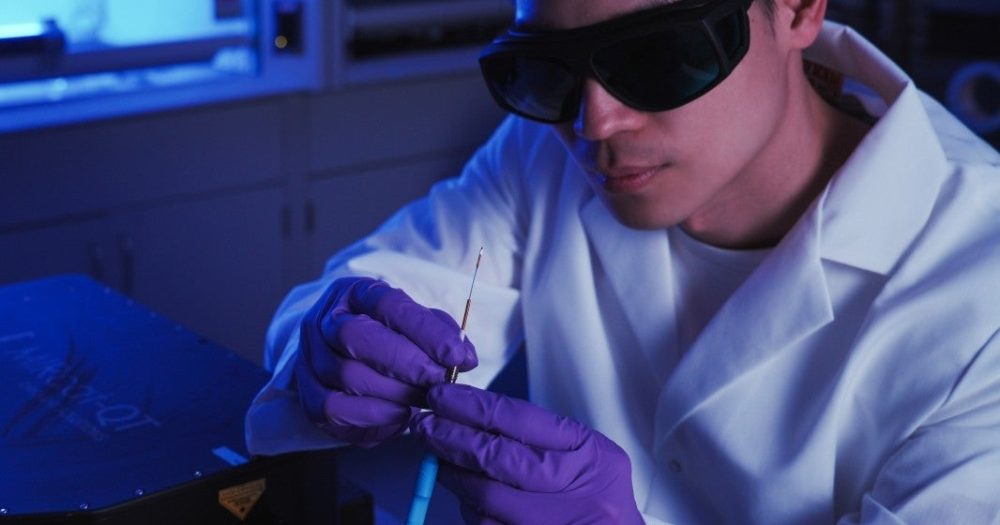
A new fiber probe developed at The University of Texas at Austin can monitor three critical health markers at once in real time. The device is smaller than any similar technology, measuring just 1.1 millimeters in diameter.
The probe tracks glucose, lactate, and ethanol levels simultaneously inside living tissue without requiring blood samples or complex lab analysis. Traditional methods require separate devices for each marker and often involve invasive procedures that delay results.
How does it work?
The probe uses mid-infrared light to detect molecules directly in tissue. It's built with two silver halide optical fibers inside a protective tube, surrounded by a semi-permeable membrane that prevents direct contact with tissue while allowing molecules to pass through.
Here's the process:
- A quantum cascade laser sends mid-infrared light through the probe
- Each type of molecule absorbs light at specific wavelengths
- The amount of light absorbed indicates the concentration of each molecule
- Results are available instantly without disturbing the surrounding tissue
"Unlike microdialysis, it doesn't disturb the local tissue environment, so it is more representative of what's actually happening inside the tissue," said Tse-Ang Lee, a Ph.D. student who worked on the project.
Why does it matter?
Current monitoring methods create significant delays that can be dangerous in critical care situations. For example, patients with severe traumatic brain injuries need constant monitoring of brain chemistry to guide treatment decisions.
Traditional microdialysis requires inserting a probe to collect fluid samples, which are then analyzed in a lab. This process is labor-intensive and provides delayed information when doctors need to respond quickly to changing conditions.
"In an intensive care unit where every second counts; they need this information rapidly," said Tanya Hutter, the lead researcher and professor in UT's Walker Department of Mechanical Engineering.
The three markers this probe tracks are critical for different reasons:
- Glucose levels are essential for diabetes management and metabolic health
- Lactate can indicate sepsis or tissue oxygen deficiency
- Ethanol monitoring is crucial for alcohol poisoning cases and addiction treatment
The context
This research addresses a major gap in medical monitoring technology. While continuous glucose monitors have become common for diabetes patients, no device has been able to track multiple biomarkers simultaneously in real time within tissue.
The project was funded by the National Institute on Alcohol Abuse and Alcoholism, though the technology has broader applications. Hutter began working on this concept more than a decade ago during her Ph.D. studies at Cambridge University, when clinicians approached her about improving care for traumatic brain injury patients.
The University of Texas has filed a patent application for the technology through its commercialization unit, Discovery to Impact. While designed for hospital use, the technology could potentially be adapted into wearable devices for general health monitoring.
The research was published in Nature Communications, marking a significant step toward more responsive and less invasive patient monitoring in critical care settings.
Latest @
Blueprint lands in the UAE as longevity moves from policy to product
M42 launches 10,000-patient wearable pilot in Abu Dhabi to reshape chronic disease care
Unilabs Middle East and Takalam link diagnostics to mental health in one app
Al Ghurair enters healthcare with Trellis Health launch in Dubai
💡Did you know?
You can take your DHArab experience to the next level with our Premium Membership.👉 Click here to learn more
🛠️Featured tool
 Easy-Peasy
An all-in-one AI tool offering the ability to build no-code AI Bots, create articles & social media posts, convert text into natural speech in 40+ languages, create and edit images, generate videos, and more.
👉 Click here to learn more
